
9 Leading AI Customer Service Platforms for US Ecommerce Brands in 2026

The best AI chatbot software for U.S. eCommerce customer service automates support, reduces ticket volume, improves response time, and integrates with platforms like Shopify, WhatsApp, and messaging channels.
AI‑powered chatbots deliver:
-
24/7 customer engagement
-
Instant answers to product, order, and shipping questions
-
Automated workflows that reduce support costs
-
Multichannel support across website, WhatsApp, Instagram, and Messenger
But not all AI chatbots are created equal — especially for U.S.–based online stores with high expectations, privacy regulations, and competitive customer expectations.
This guide explores the 9 leading AI chatbot software solutions that U.S. eCommerce brands rely on for scalable, intelligent customer service in 2026.
Why AI Chatbot Software Is Essential for U.S. eCommerce Support
Before we dive into the rankings, let’s clarify why AI chatbots are now essential — not optional — for U.S. online stores.
1. Customer Expectations Have Changed
Today’s shoppers demand answers instantly.
They don’t want to wait hours for email replies or be limited to business hours.
When support is slow, abandonment increases.
The hidden cost of slow replies on Shopify shows how delayed response time directly eats into conversion and customer loyalty.
2. Volume Spikes Need Intelligent Support
U.S. eCommerce stores often face:
-
Seasonal spikes
-
Black Friday/Cyber Monday
-
Holiday rush
-
Flash sales
During peak traffic, traditional teams struggle.
AI-powered customer service platforms scale automatically without adding headcount.
3. Multichannel Customer Service Is Required
U.S. customers use multiple channels:
-
Website chat
-
WhatsApp
-
Facebook & Instagram
-
SMS
-
Email
A unified system handles all these without siloed tools.
For that reason, many brands choose platforms that integrate customer support across channels, reducing friction and creating a unified experience.
How We Picked These 9 Leading AI Chatbot Software
We evaluated platforms based on:
-
AI sophistication (conversational abilities, intent understanding)
-
Ecommerce integrations (Shopify, BigCommerce, Magento)
-
Multichannel support (WhatsApp, Facebook Messenger, web, SMS)
-
Automation depth (flows, triggers, proactive messages)
-
Analytics & reporting
-
Scalability for U.S. stores
-
Ease of setup
9 Leading AI chatbot Software Solutions that U.S. eCommerce brands rely on for scalable
1. AeroChat – Best AI Chatbot for U.S. eCommerce Support
Best for: Multichannel ecommerce brands running Shopify, with WhatsApp + website + social support in one place
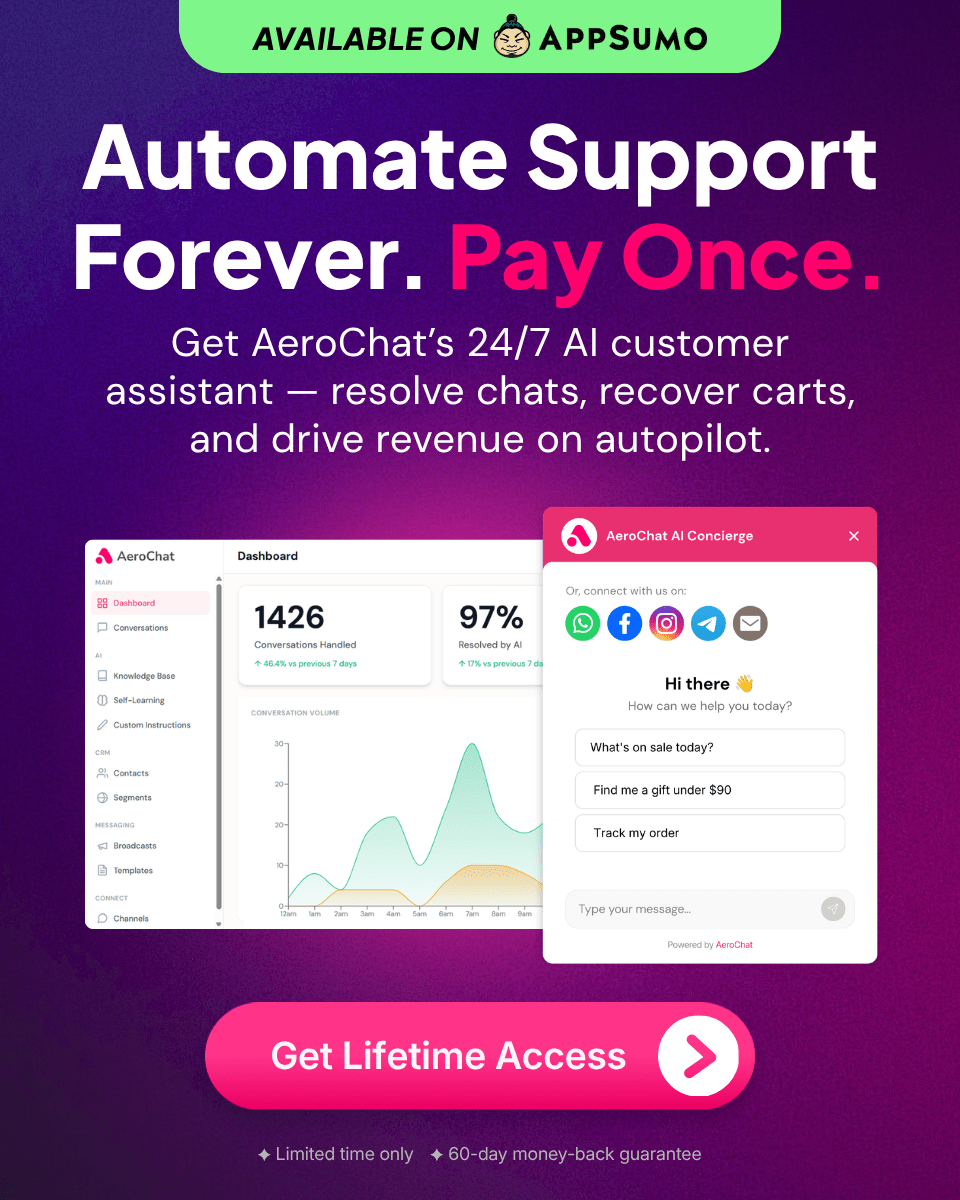
AeroChat stands out as a leading choice for U.S. eCommerce stores that want AI automation across every customer touchpoint.
It isn’t just a chatbot — it’s a unified messaging and automation engine built for high‑volume commerce.
Key Features
-
AI customer service chatbot that understands intent
-
Deep Shopify integration with access to order, shipping, and product data
-
Unified inbox for website, WhatsApp, Instagram, and Messenger
-
Automatic FAQ responses and order tracking
-
Cart abandonment automation
-
Multilingual live chat support
-
Behaviour‑based triggers (time‑on‑page, exit intent)
Unlike basic tools that only answer static questions, AeroChat uses conversational AI that improves over time — similar to advanced systems compared in chatbot vs conversational AI explorations.
U.S. eCommerce Benefits
-
Reduces support tickets while increasing conversions
-
Keeps support quality high even during peak U.S. shopping seasons
-
Personalized messages based on purchase history and behaviour
-
Optimizes order tracking automation using Shopify data
AeroChat is especially powerful for stores that want not just response automation, but intelligent, revenue‑driving customer engagement.
2. Intercom – Comprehensive Conversational AI for Support & Sales
Best for: Medium to large U.S. brands with high support volume and complex workflows
Intercom is a market leader in conversational support platforms.
It combines AI with human agent workflows, enabling seamless live + automated support.
-
Advanced AI for intent understanding
-
Automated and human‑assisted messaging
-
Deep integrations with CRMs, email, and analytics
-
Custom bots tailored to specific support intents
-
Multichannel support (app, web, mobile)
Why U.S. Retailers Like Intercom
Intercom’s AI doesn’t just answer questions — it routes them intelligently and identifies when a human should step in, providing hybrid support that minimizes manual workload without sacrificing quality.
It’s particularly effective for tech‑savvy brands with diverse support needs.
3. Zendesk AI Chat – Enterprise‑Grade Support
Best for: U.S. enterprise eCommerce teams with structured support departments
Zendesk has been a support staple for years.
With recent AI enhancements, Zendesk AI Chat offers automated replies, knowledge‑base integration, and seamless escalation workflows.
-
AI‑assisted responses using historical data
-
Integrated ticketing and live agent handoff
-
Strong analytics and reporting
-
Centralised support dashboard
U.S. Considerations
Zendesk shines when support is complex and distributed, such as when multiple departments handle separate customer issues.
It’s ideal for teams with existing Zendesk ecosystems, though automation still often requires configuration.
4. Tidio – Affordable AI Chat & Support Automation
Best for: Small to medium U.S. stores on Shopify, WooCommerce, or custom sites
Tidio balances AI features with simplicity and price. It’s a great starting point for stores with moderate traffic that still want real automation.
-
Chatbot + live chat hybrid
-
Shopify and CMS plugins
-
AI answers for FAQs
-
Basic automation flows
-
Email + chat unified inbox
U.S. Store Use Cases
Small stores use Tidio to answer product FAQs, handle shipping questions, and capture leads — especially important when building a loyal U.S. customer base quickly.
For deeper automation or high‑volume traffic, upgrading to an AI‑first platform like AeroChat is often recommended.
5. Drift – Intelligent Bots for Engagement & Support
Best for: Stores that combine support with marketing and lead qualification
Drift is known for conversational marketing, and its AI bot capabilities handle support queries effectively while driving conversions.
-
AI chat for routing and qualifying conversations
-
Meeting scheduling and calendar integration
-
Playbooks for common customer scenarios
-
Deep integration with enterprise tools (Salesforce, HubSpot)
U.S. eCommerce Angle
Drift is frequently used by brands that want to connect support and sales logic — turning support chats into opportunities to upsell or retain customers.
6. Freshchat – Modern Support for Growing U.S. Store Teams
Best for: Growing stores ready to scale beyond basic chat
Freshchat provides a strong mix of automation and human support workflows.
-
Behaviour‑based bot triggers
-
Omni‑channel support
-
Pre‑defined workflows (flows)
-
Team collaboration tools
Why Freshchat Works in U.S.
For midsize brands that need context‑aware automation but still rely on live support teams, Freshchat’s balance of tools helps reduce ticket load while maintaining control over the conversation flow.
7. Ada – Conversational AI with Self‑Service Focus
Best for: Brands that want deep automation and customer self‑help options
Ada uses AI to drive self‑service journeys and supports both automated and agent‑assisted pathways.
-
AI first, hybrid support options
-
Knowledge base & FAQ integration
-
Multiple channel support
-
Machine learning enhancements based on usage
eCommerce Use Case
Ada is often deployed by U.S. brands that need consistent messaging across chat, email, and in‑app experiences, especially when reducing support costs is a priority.
8. ManyChat – Chat Automation for Messenger & Marketing Support
Best for: Stores with strong Messenger + Instagram sales funnels
While ManyChat started as a marketing automation tool, its AI chatbot capabilities have evolved to handle customer service, FAQs, and order tracking inquiries.
-
Messenger and Instagram native support
-
Automation flows and broadcasting
-
Rich media responses
-
Integration with Shopify for order info
U.S. Store Relevance
Brands with social commerce focus (especially direct‑to‑consumer brands targeting U.S. audiences on Instagram or Messenger) benefit greatly from ManyChat’s multi‑channel automation.
9. Crisp – Real‑Time Messaging + AI Automation
Best for: Stores that want a unified support inbox with automation
Crisp blends AI automation with a shared inbox experience, making it easy for teams to take over when necessary.
-
AI auto‑responses + human takeover
-
Multichannel integration
-
Shared team inbox
-
Automated workflows
U.S. eCommerce Fit
Crisp works well for stores that prioritize live team response but want AI to handle basic questions and FAQs automatically.
AI Chatbot Comparison for U.S. eCommerce Customer Support
|
AI Chatbot |
Best For |
Key Features |
Ecommerce Integration |
Multichannel Support |
Ideal For |
|---|---|---|---|---|---|
|
AeroChat |
Multichannel automation for ecommerce brands |
AI customer service, deep Shopify integration, unified inbox for website, WhatsApp, Instagram, Messenger, proactive messaging, multilingual support |
Shopify, WhatsApp, Instagram, Messenger |
Website, WhatsApp, Instagram, Messenger |
U.S. eCommerce stores looking for intelligent automation and customer engagement |
|
Intercom |
Medium to large U.S. brands with complex workflows |
Advanced AI for intent understanding, automated & human-assisted messaging, custom bots, CRM & email integrations |
CRM Systems, Email, Analytics |
App, Web, Mobile |
Brands with high support volume and complex needs requiring hybrid support |
|
Zendesk AI |
Enterprise support, structured departments |
AI-assisted responses, knowledge base integration, ticketing, live agent handoff, strong analytics & reporting |
Zendesk, CRM, Ticketing |
Web chat, Email, Social Media |
Large-scale enterprises with structured support teams and complex workflows |
|
Tidio |
Small to medium U.S. stores on Shopify or WooCommerce |
Chatbot + live chat hybrid, FAQ automation, email + chat unified inbox, easy setup |
Shopify, WooCommerce, CMS |
Website, Email, Messenger |
Small to medium-sized stores wanting an easy-to-implement chatbot solution |
|
Drift |
Engagement + support, lead qualification |
AI chat for routing and qualifying conversations, meeting scheduling, sales playbooks, integration with enterprise tools like Salesforce & HubSpot |
Salesforce, HubSpot |
Website, Email, Social Media, Calendar |
Stores that combine support with marketing and lead generation |
|
Freshchat |
Growing stores ready to scale |
Behaviour-based triggers, omni-channel support, pre-defined workflows, team collaboration tools |
Shopify, Magento, BigCommerce |
Web chat, SMS, Email, Social Media |
Growing eCommerce businesses needing a mix of automation and human support |
|
Ada |
Deep automation & self-service focus |
AI-first hybrid support, knowledge base & FAQ integration, machine learning enhancements, omnichannel support |
Web chat, CRM, Email |
Website, Email, Mobile, Social Media |
Brands that want self-service automation and easy-to-access support |
|
ManyChat |
Stores with strong Messenger & Instagram focus |
Messenger and Instagram support, rich media responses, automation flows, Shopify order info integration |
Shopify |
Messenger, Instagram, Web chat, SMS |
Direct-to-consumer brands targeting U.S. customers on Instagram or Messenger |
|
Crisp |
Unified support inbox with automation |
AI auto-responses + human takeover, multichannel integration, shared team inbox, automated workflows |
Shopify, WordPress, Others |
Website, WhatsApp, Facebook, Email |
Stores that prioritize live team response but want AI to handle routine questions and FAQs |
Key Considerations When Choosing AI Chatbot Software
Choosing the right AI support software depends on your store’s scale, traffic, team size, and growth goals.
1. Integration with Store Infrastructure
Make sure the chatbot integrates with your eCommerce platform —
-
Shopify (most common)
-
BigCommerce
-
Magento
-
Custom sites
Platforms like AeroChat offer deep integration with your store’s backend, tapping into order, shipment, and customer data for accurate replies — currently strongest for Shopify stores specifically. Stores comparing options specifically for Shopify can see our analysis of Shopify AI chatbots for US stores, which focuses on Shopify App Store merchant feedback and Shopify-specific operating requirements.
2. Multichannel Support
Your AI chatbot should unify:
-
Web chat
-
WhatsApp (via WhatsApp Business API)
-
Instagram & Messenger
-
SMS
-
Email integration
Multichannel customer service software ensures customers get consistent support no matter where they message from.
3. Automation Depth
Aim beyond simple FAQ bots.
Advanced AI uses machine understanding to:
-
Detect intent
-
Handle complex queries
-
Provide proactive suggestions
-
Trigger flows based on behaviour
This moves you from reactive support to intelligent assistance.
4. Analytics & Optimization
AI chatbots should provide actionable metrics like:
-
Response time
-
Escalation triggers
-
Unanswered questions
-
Satisfaction scores
These insights help refine your support strategy.
How AI Chatbots Improve U.S. eCommerce Support (Business Impact)
1. Faster Response Time
AI chatbots answer instantly — eliminating delays that kill conversion rates.
Slow replies have a measurable negative impact, as highlighted in the analysis of the hidden cost of slow replies on Shopify.
2. Reduced Support Workload
Automating repetitive questions reduces tickets, freeing human agents for complex support.
3. Customer Satisfaction
Customers expect 24/7 assistance. AI chatbots deliver responsiveness that builds trust.
-
Cost Efficiency
Fewer tickets means fewer support staff needed to handle routine queries.
-
Conversion Uplift
Bots that answer product questions, shipping details, and sizing instantly help close sales faster.
Best Practices for Implementing AI Chatbots in U.S. Stores
1. Sync with Order & Product Data
Connect your chatbot to backend systems so it can answer:
-
Order status
-
Delivery timelines
-
Returns & exchanges
This typically means integrating your chatbot with your backend order and product systems — for Shopify stores specifically, tools like AeroChat offer a native connection.
2. Enable Multilingual Support
U.S. audiences are diverse. Bots should support multiple languages for inclusivity and support reach.
3. Provide Human Escalation Options
Not all queries should be handled by AI.
When needed, customers should be able to talk to a human agent.
4. Train the AI with Real Data
Use past tickets and FAQs to train your chatbot so it understands real customer language.
5. Monitor and Improve
Regularly review analytics to:
-
Improve responses
-
Add new workflows
-
Reduce escalations
The Future of AI Support in U.S. eCommerce
AI chatbot software continues to evolve:
-
Better natural conversation understanding
-
Voice AI support
-
Automated sentiment detection
-
Smarter escalation workflows
-
Personalised support experiences
Companies that invest early will see long‑term support cost reduction and stronger customer loyalty.
The leading AI chatbot software for US customer service varies by industry and scale. The best AI chatbots for ecommerce covers the retail segment specifically, and companies using chatbots for customer service covers real-world deployments across sectors. For teams comparing platforms, AI chatbot for business covers the business-case framing that most US buying decisions start from.