
10 Best AI Chatbots for Ecommerce Sales and Customer Support in 2026
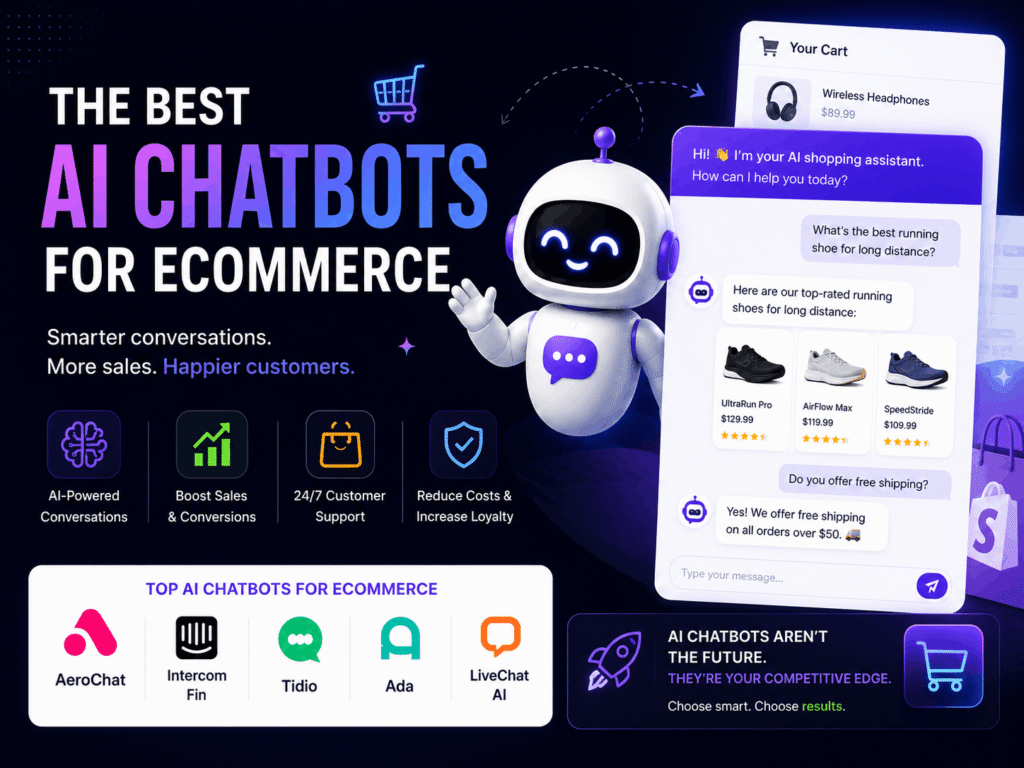
The best AI chatbot for ecommerce depends on the conversation you want it to handle. AeroChat fits growing brands that need product and order support across Shopify or WooCommerce and several customer channels. Gorgias suits agent-led ecommerce support, Rep AI focuses on sales and support for higher-traffic stores, ManyChat handles social-commerce automation, and Voiceflow is designed for teams building a custom agent.
These are different product categories, not interchangeable chat widgets. Choose the operating model first, then compare store-data access, handoff, channel coverage and cost at your expected volume.
Research note: Product information and public prices were checked against official company documentation on 20 August 2026. This is desk research, not a claim that every platform was tested hands-on. All prices are in USD and exclude taxes, usage charges and optional add-ons unless stated.
Best ecommerce AI chatbot by business need
| Business need | Strong option | Why it fits |
|---|---|---|
| Omnichannel ecommerce support | AeroChat | Supports product and order conversations across store and messaging channels |
| Agent-led ecommerce helpdesk | Gorgias | Combines service operations, ecommerce context and AI automation |
| AI plus live website chat | Tidio | Pairs Lyro AI with live chat and an agent inbox |
| Sales and support for higher-traffic stores | Rep AI | Offers separate sales and support agents with session-based pricing |
| Instagram and messaging automation | ManyChat | Centres on social conversations, campaigns and automated flows |
| Configurable knowledge-based agent | Chatbase | Connects business content with actions and channel integrations |
| Custom conversational application | Voiceflow | Gives product and technical teams tools to design and deploy agents |
| Enterprise service automation | Ada | Covers service automation across messaging, voice and email |
| Enterprise retail and platform breadth | Zowie | Focuses on retail support and shopping across several commerce platforms |
| AI for an existing Intercom operation | Intercom Fin | Adds outcome-priced AI to Intercom's service workspace |
Ecommerce AI chatbot pricing and billing models
| Platform | Public pricing position checked August 2026 | Main watch-out |
|---|---|---|
| AeroChat | From $49 per month | Better for growth-stage automation than complex enterprise case management |
| Gorgias | From $10 per month, with AI outcome costs separate | Ticket and AI billing both need forecasting |
| Tidio | Free plan; first 50 Lyro conversations free, then from $0.50 per conversation | Live-chat and AI allowances use different limits |
| Rep AI | Support AI from $49 per month; price scales with sessions and module | Traffic growth can materially change cost |
| ManyChat | Free plan; new-account paid plans from $14 per month | Price varies by active contacts, channels and account availability |
| Chatbase | Free plan; Hobby from $32 per month when billed annually | Production actions and handoff integrations may need higher tiers |
| Voiceflow | Free Starter plan; production use is credit-based or quoted | Usage and implementation effort must be modelled together |
| Ada | Custom quote | Enterprise buying and implementation process |
| Zowie | Custom quote | Public cost cannot be compared without a sales quote |
| Intercom Fin | Essential from $29 per seat per month, plus $0.99 per Fin outcome | Seat and outcome charges accumulate separately |
Pricing units are not equivalent. A message, active contact, session, ticket and AI outcome measure different things, so compare the complete bill against the work actually removed.
Which type of ecommerce chatbot do you need?
Support automation handles suitable delivery, return, policy and order questions before a person is needed. It requires trustworthy store context, clear fallback rules and a handoff route.
Shopping assistance helps customers find, compare and choose products. It needs current catalogue data, context memory and sensible clarification questions, not only FAQ retrieval.
Social-commerce automation manages Instagram, WhatsApp or Messenger conversations and campaign flows. It is useful for lead capture and short interactions, but it may not provide a complete post-purchase support operation.
Custom agent platforms give a technical team control over prompts, logic, integrations and interfaces. They offer more flexibility but also require design, testing and ongoing maintenance.
How this ecommerce chatbot comparison was researched
Each platform was reviewed using seven criteria: primary use case, ecommerce platform compatibility, data source, customer channels, human handoff, pricing basis and material limitation. Official product and pricing pages were used; unsupported hands-on or performance claims were excluded.
The shortlist includes specialised and broad platforms because ecommerce brands buy for different reasons. A WooCommerce merchant does not need the same integration as a Shopify support department, and an Instagram-led seller should not be judged by the same workflow as an enterprise service centre.
Reviews of the 10 best AI chatbots for ecommerce
1. AeroChat: Best for omnichannel ecommerce customer service
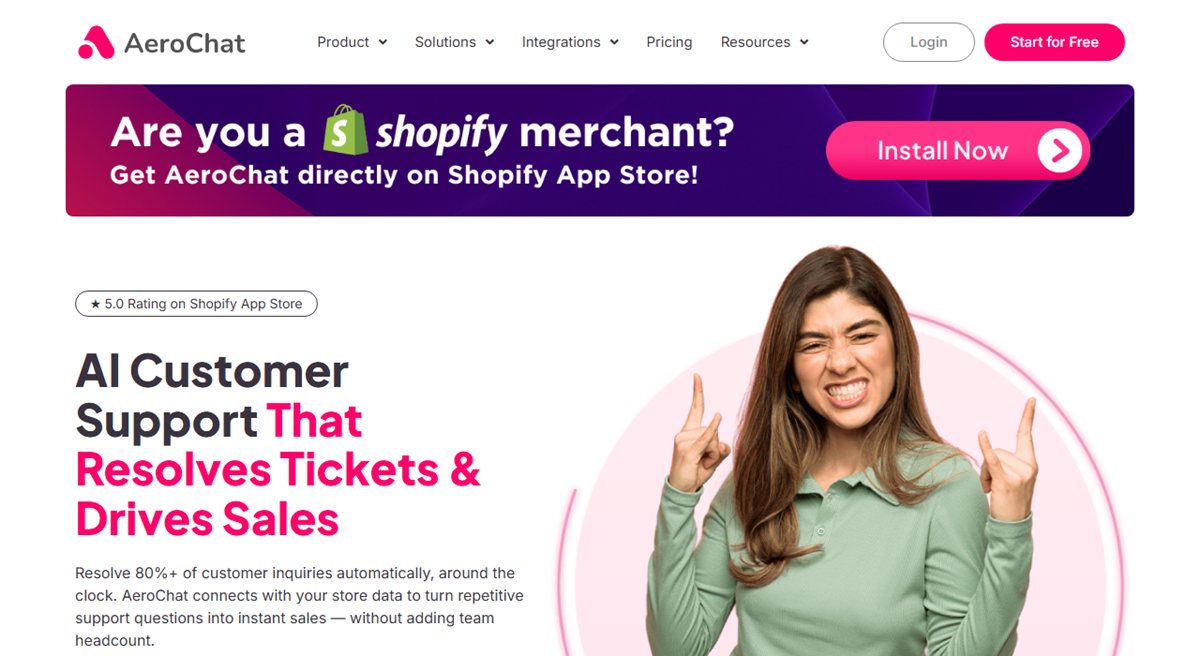
AeroChat is an AI agent platform that helps ecommerce brands run customer service on autopilot. It supports suitable product, order, delivery and policy conversations across web chat, WhatsApp, Instagram, Facebook Messenger, Telegram and email. Its store integrations cover Shopify and WordPress/WooCommerce, giving merchants a way to connect customer conversations with relevant ecommerce information.
When a case needs judgement or personal attention, AeroChat can pass the conversation to a human with its context. It is generally a growth-stage support investment rather than a required launch cost. A very new store with a few weekly messages may be better served by a simple inbox until repetitive volume appears.
Best fit: Growing ecommerce brands managing repetitive enquiries across several channels. Main limitation: It does not replace a deeply customised enterprise ticketing operation. Price: From $49 per month with a seven-day free trial; check the current AeroChat plan and usage limits.
2. Gorgias: Best for agent-led ecommerce support

Gorgias is an ecommerce helpdesk with ticket management, automation and customer or order context for support agents. It is strongest when a store already has a team that needs ownership, routing, reporting and operational control.
Its entry subscription is not the whole AI cost. Ticket volume, channels and AI Agent outcomes can all affect the bill, so estimate cost using your normal month and a peak month.
Best fit: Ecommerce teams running structured service operations, particularly on Shopify. Main limitation: Heavier and potentially more expensive than a small merchant needs. Price: From $10 per month for the entry ticket allowance, with AI outcomes priced separately.
3. Tidio: Best for AI with live website chat
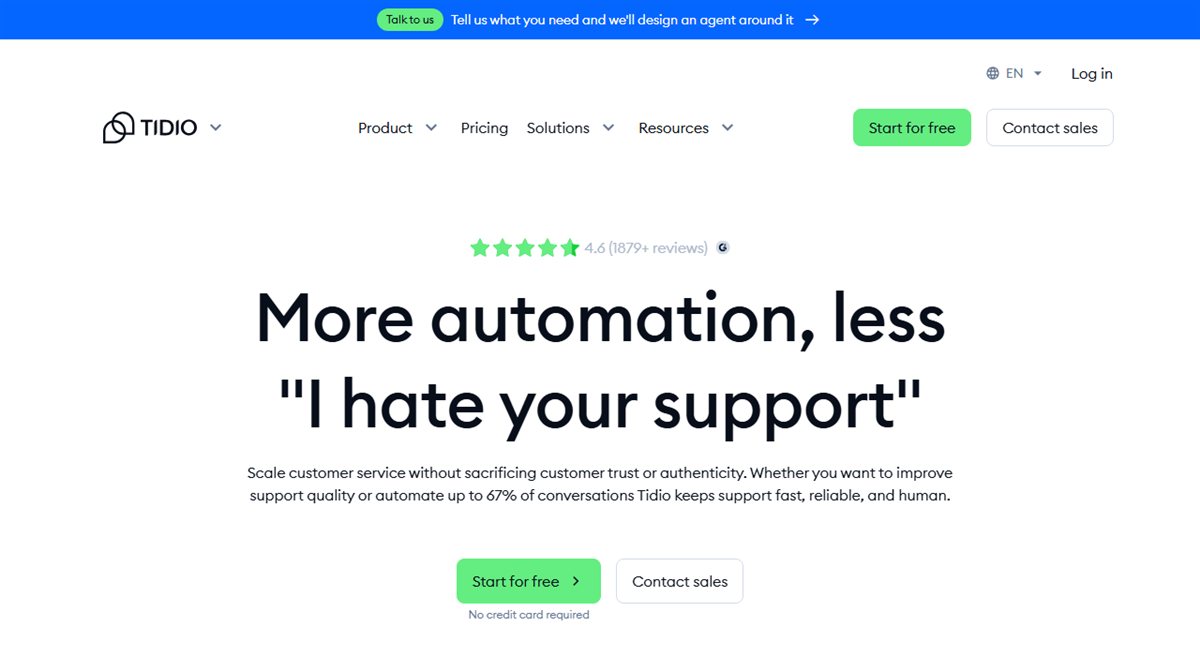
Tidio combines Lyro AI, live chat and an agent inbox. It supports Shopify and WooCommerce use cases and gives smaller teams a relatively accessible way to automate common questions while retaining live human chat.
AI and live-chat limits are separate, so the cheapest plan may not cover both at production volume. Check conversations, seats and the Lyro allowance together.
Best fit: Small and midsized stores adding AI to an existing live-chat approach. Main limitation: Separate limits make cost forecasting less obvious. Price: Free plan; the first 50 Lyro conversations are free, with paid volume from $0.50 per conversation.
4. Rep AI: Best for ecommerce sales and support agents
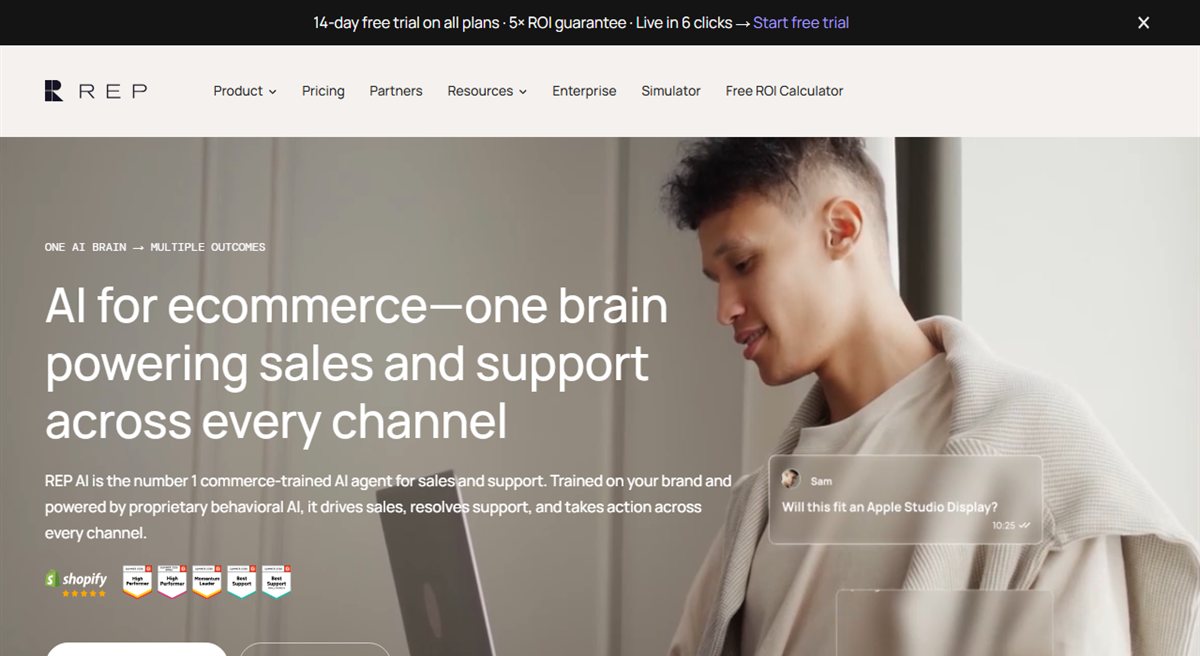
Rep AI offers ecommerce agents for sales and customer support. Its use cases cover product discovery, order questions, returns and other website or messaging conversations, with prices linked to store traffic and the selected module.
Session-based pricing deserves close attention because the bill can change as traffic grows, even if support-team size stays the same. Evaluate the sales and support modules against separate success measures.
Best fit: Higher-traffic DTC stores that want specialised sales or support automation. Main limitation: Cost scales with sessions and module choice. Price: Support AI starts from $49 per month; confirm the total at expected monthly sessions.
5. ManyChat: Best for social-commerce automation
ManyChat is designed around automated conversations on channels such as Instagram, WhatsApp and Messenger. It is useful for campaign responses, lead capture, comment-to-message flows and short shopping interactions.
That marketing strength does not automatically make it a complete service platform. Complex order exceptions, approvals and detailed ticket ownership may need another system or an integration.
Best fit: Social-led brands using messaging for acquisition and simple customer journeys. Main limitation: Marketing workflows are stronger than complex support operations. Price: Free plan; new-account paid plans start from $14 per month, with pricing affected by active contacts and channels. Availability can vary by account or region.
6. Chatbase: Best for a configurable knowledge-based agent
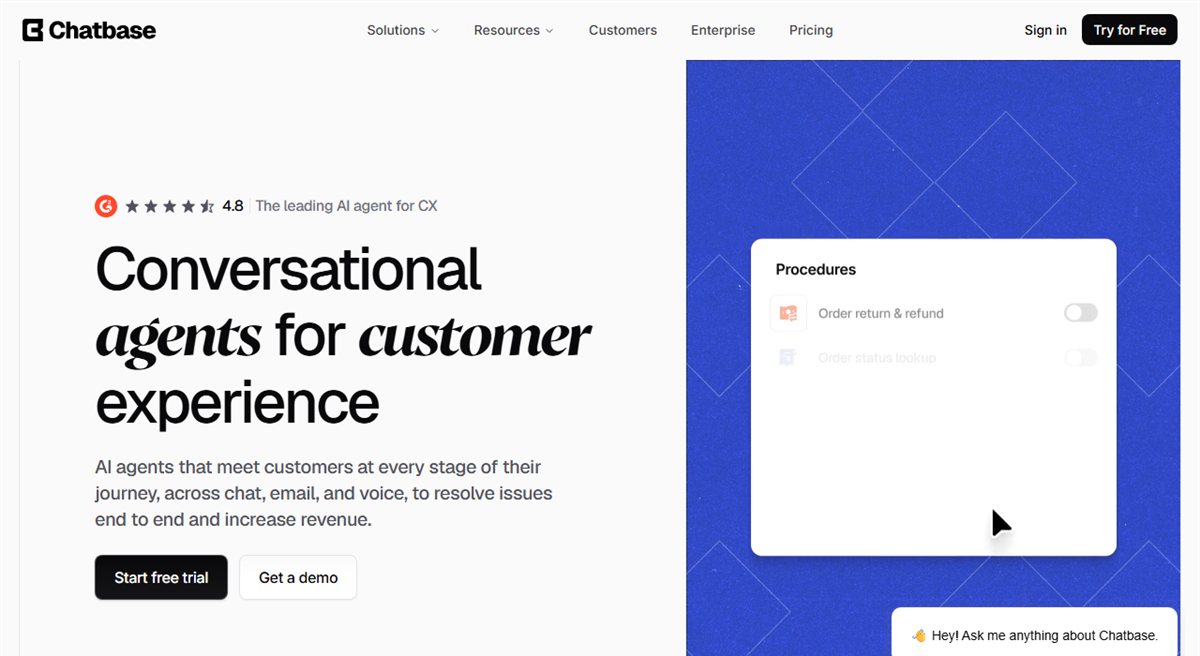
Chatbase lets teams build an AI agent from website content, documents and other knowledge, then connect actions and channels. It lists integrations for Shopify, WordPress, WhatsApp, Messenger and Instagram, which makes it relevant beyond a single storefront widget.
The configuration flexibility means the merchant must define trusted sources, instructions, fallback behaviour and integrations carefully. Some production features sit above the entry plan.
Best fit: Teams wanting control over knowledge, instructions and integrations. Main limitation: Setup quality strongly affects answer quality and important features may require higher plans. Price: Free plan; Hobby starts at $32 per month when billed annually.
7. Voiceflow: Best for building a custom ecommerce agent

Voiceflow is a platform for designing and deploying conversational agents rather than an off-the-shelf ecommerce helpdesk. Product and technical teams can define logic, knowledge, actions and integrations for a tailored support or shopping experience.
That flexibility brings implementation responsibility. The business must design verification, fallback, handoff, analytics and maintenance instead of expecting a ready-made store workflow.
Best fit: Teams with technical resources and a genuinely custom use case. Main limitation: Build effort and usage costs are part of the total investment. Price: Free Starter plan; production pricing is credit-based or provided by quote.
8. Ada: Best for enterprise service automation
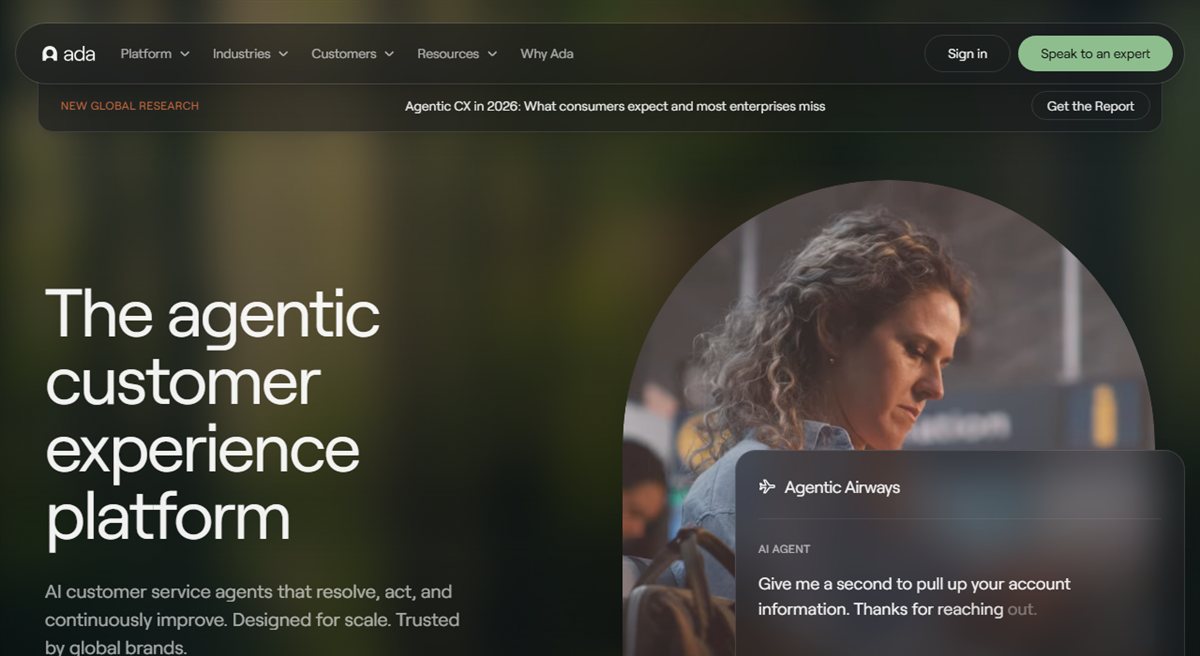
Ada provides AI customer-service automation across messaging, voice, email and other channels. Its ecommerce material covers order tracking, returns and refunds, with integrations for enterprise commerce and service systems.
It is sold through an enterprise process rather than a simple self-serve plan. Smaller stores may not need the procurement, implementation and governance involved.
Best fit: Large organisations automating service across several channels and systems. Main limitation: Enterprise buying process and no simple public price. Price: Custom quote.
9. Zowie: Best for enterprise retail platform breadth
Zowie focuses on retail and ecommerce support and shopping use cases. It supports commerce platforms including Shopify, Magento, BigCommerce, WooCommerce and Adobe Commerce, making it relevant to businesses with a broader platform estate.
The absence of a public self-serve price makes early cost comparison difficult. Confirm implementation scope, platform connections and support responsibilities during evaluation.
Best fit: Larger retailers needing AI across several commerce platforms. Main limitation: Custom pricing and a more involved evaluation. Price: Custom quote.
10. Intercom Fin: Best for teams already using Intercom
Fin is Intercom's AI agent and is strongest when the business already uses Intercom's messenger, help centre and support workspace. It can resolve suitable questions and pass unresolved conversations into an established agent workflow.
Intercom is not ecommerce-native in the same way as a Shopify or WooCommerce specialist. Store data, actions and integrations must be checked for the required use case, while seat and outcome fees need separate forecasting.
Best fit: Businesses already running customer service in Intercom. Main limitation: Ecommerce workflows may require more integration work. Price: Essential starts at $29 per seat per month, plus $0.99 per Fin outcome.
Ecommerce platform compatibility matters
Shopify stores need current catalogue and order context
A Shopify chatbot should be checked for product synchronisation, variants, inventory, discounts, order verification and fulfilment status. Merchants comparing that ecosystem in detail should use the separate Shopify AI chatbot comparison, which owns the Shopify-specific search intent.
WooCommerce stores need WordPress-aware setup
WooCommerce requirements differ because site content, plugins, hosting and checkout customisation vary widely. Confirm how the chatbot reads product information, authenticates order requests and behaves after WordPress or plugin changes. AeroChat provides a dedicated AI chatbot integration for WordPress, but the same checks should be applied to every shortlisted provider.
Platform-agnostic agents need an integration plan
A custom platform can work across several commerce systems, but compatibility is not automatic. Document the source of product truth, allowed actions, customer-verification step, fallback path, handoff destination and owner for ongoing maintenance before deployment.
How to test an ecommerce AI chatbot
Use the same test set for every platform. Include a multi-condition product request, a follow-up comparison, a normal order-status question, a missing-delivery exception, an ambiguous return, an unknown policy question and an explicit request for a person.
Record whether the answer was correct, whether the tool used current store information, whether it asked a useful clarification question, and whether the eventual handoff preserved context. This ecommerce AI chatbot testing checklist provides a repeatable process for this review.
Cost also needs a consistent denominator. Distinguish conversations merely touched by AI from conversations resolved without human work. Then calculate the cost per genuinely resolved ticket using software, usage, agent and implementation costs.
Which ecommerce AI chatbot should you choose?
Choose AeroChat when a growing Shopify or WooCommerce brand needs suitable support conversations handled across several channels. Choose Gorgias when ticket operations and agent productivity lead the decision, Tidio when live chat remains central, Rep AI when sales and support agents must serve a higher-traffic store, or ManyChat when social automation is the main job.
Chatbase provides a configurable middle ground, while Voiceflow suits a team building a custom experience. Ada and Zowie belong on enterprise shortlists, and Intercom Fin is most logical for a business already invested in Intercom.
Shortlist two or three tools from the right category. Test them with your own products and exceptions, confirm the complete USD cost, and reject any setup that cannot explain what happens when the AI does not know the answer.