
How to Build an Online Store From Scratch in 2026: 12 Practical Steps

Building an online store from scratch is no longer only about choosing a website template and adding products. Customers now expect a smooth shopping experience from the first visit to the final delivery update.
If you want to build an online store from scratch in 2026, you need to plan your niche, choose the right ecommerce platform, create strong product pages, set up payments, prepare delivery and returns, test checkout, and make sure customer support is ready before launch.
To build an online store from scratch, start by choosing a niche and business model, then select an ecommerce platform, buy a domain, design your store, add products, set up payments and shipping, create policy pages, prepare customer support, optimise for SEO and test the full buying journey before launch.
A good online store is not just a website. It is a complete shopping system that helps customers discover products, ask questions, place orders, receive updates and come back again.
Before You Build: What Your Online Store Needs
Before you start designing your store, it helps to understand what you actually need.
A basic online store should include:
- A clear niche
- A target customer
- Products or services to sell
- An ecommerce platform
- A domain name
- Product pages
- Product images
- Payment methods
- Shipping and return rules
- Customer support channels
- Legal and policy pages
- Analytics and tracking
- A launch marketing plan
If you are still deciding what type of ecommerce business to start, read this guide on how to start an ecommerce business before building the store.
Step-by-Step Guide to Build an Online Store From Scratch
1. Choose a Clear Ecommerce Niche
The first step is deciding what type of products you want to sell.
A clear niche helps you focus your product selection, branding, content and marketing. Instead of trying to sell everything to everyone, choose a specific customer group and product category.
Examples of ecommerce niches include:
- Skincare products for sensitive skin
- Fitness accessories for home workouts
- Pet supplies for new pet owners
- Handmade jewellery
- Baby products
- Home office accessories
- Eco-friendly household products
- Fashion accessories
- Digital templates
- Hobby and craft supplies
A focused niche makes it easier to write product pages, create ads, answer customer questions and build trust with your audience.
If your plan is to sell physical products online, this guide on retail ecommerce can help you understand how online retail works and what customers expect from modern ecommerce stores.
2. Define Your Target Customer
Before building your online store, be clear about who you are selling to.
Ask yourself:
- Who is the ideal customer?
- What problem are they trying to solve?
- What makes them buy?
- What makes them hesitate?
- Which channels do they use?
- What questions do they ask before buying?
- Do they care more about price, quality, speed, design or trust?
This step matters because your store should not feel generic. The homepage, product pages, FAQs and support answers should speak directly to your customer’s needs.
For example, a store selling baby products should focus on safety, comfort, materials and trust. A store selling tech accessories should focus on compatibility, durability, warranty and delivery.
3. Decide Your Ecommerce Business Model
Your business model affects how you source products, manage inventory, handle fulfilment and make profit.
Common ecommerce business models include:
| Business Model | How It Works | Best For |
|---|---|---|
| Dropshipping | Supplier ships products directly to customers | Beginners testing products with lower upfront cost |
| Private label | You sell products under your own brand | Brands that want stronger control |
| Wholesale | You buy products in bulk and resell them | Stores with inventory budget |
| Print on demand | Products are made after each order | Creators and niche merchandise brands |
| Handmade products | You make or customise products yourself | Craft and personal brands |
| Digital products | You sell downloadable files, templates or courses | Low-inventory online businesses |
Choose a model that matches your budget, skills and long-term goals.
If you are still preparing the full business launch, this ecommerce startup checklist can help you organise the steps before going live.
4. Choose the Right Ecommerce Platform
Your ecommerce platform is the system you will use to manage your online store.
Popular options include Shopify, WooCommerce, Wix, BigCommerce and Squarespace. The right platform depends on your budget, technical comfort, product type and growth plans.
When choosing a platform, check:
- Ease of use
- Design flexibility
- Mobile performance
- Payment options
- Shipping features
- App integrations
- SEO settings
- Product management
- Inventory tools
- Customer support options
- Scalability
Shopify is often easier for beginners who want an ecommerce-focused platform. WooCommerce is useful for businesses that prefer WordPress and want more control over their website.
5. Buy a Domain Name and Set Up Branding
Your domain name is your online store’s address. It should be easy to remember, easy to spell and close to your brand name.
Before buying a domain, check:
- Is it short and simple?
- Is it easy to pronounce?
- Does it match your brand name?
- Is it available on social media?
- Is it too similar to another brand?
- Does it still work if you expand your product range?
You should also prepare basic branding elements, including:
- Logo
- Brand colours
- Font style
- Brand voice
- Product photography style
- Packaging direction
- Social media handles
Your branding does not need to be perfect at the start, but it should look consistent and trustworthy.
6. Plan Your Store Structure
A good online store should be easy to navigate.
Before designing the website, plan your main pages and product categories.
Your store should include:
- Homepage
- Product category pages
- Product pages
- About page
- Contact page
- FAQ page
- Cart page
- Checkout page
- Shipping policy
- Return and refund policy
- Privacy policy
- Terms and conditions
The goal is to help customers find products, understand your business and buy without confusion.
Avoid adding too many menu items at the start. Keep the navigation simple, especially for mobile users.
7. Design a Mobile-Friendly Store
Most ecommerce customers browse from mobile devices, so your store must work well on smaller screens.
A mobile-friendly online store should have:
- Fast loading speed
- Clear product images
- Simple navigation
- Easy-to-tap buttons
- Short product summaries
- Visible price and delivery details
- Simple cart and checkout
- Easy access to support
- Readable text
- Trust signals near buying buttons
Do not make customers search hard for important information. Product price, delivery time, return policy and contact options should be easy to find.
8. Add Products With Strong Product Pages
Product pages are where customers decide whether to buy.
Each product page should include:
- Clear product title
- High-quality product images
- Price
- Product benefits
- Features and specifications
- Size, colour or variant options
- Delivery information
- Return information
- Product FAQs
- Customer reviews if available
- Clear call to action
Do not rely only on short descriptions. A strong product page should answer the questions customers usually ask before purchasing.
For example, instead of writing:
“Premium quality backpack.”
Write:
“This waterproof backpack fits laptops up to 15 inches and includes separate compartments for chargers, notebooks and daily essentials.”
Specific details reduce hesitation and help customers make faster buying decisions.
9. Set Up Payments, Shipping and Returns
Payments, shipping and returns must be ready before launch.
For payments, decide whether you will accept:
- Credit cards
- Debit cards
- Digital wallets
- Bank transfers
- Buy now, pay later options
- Local payment methods
For shipping, decide:
- Where you will ship
- Delivery time
- Shipping cost
- Free shipping threshold
- Order tracking process
- Packaging method
- Delivery partners
For returns, decide:
- Return window
- Refund process
- Exchange rules
- Damaged item process
- Who pays return shipping
- Items that cannot be returned
Make these policies clear on your website. Unclear delivery and return information can stop customers from completing checkout.
10. Prepare Customer Support Before Launch
Customer support is one of the most overlooked parts of building an online store from scratch.
New customers often ask questions before buying:
- Is this product available?
- Which product is right for me?
- How long does delivery take?
- Can I return this item?
- Do you have a discount?
- Where is my order?
- Can I speak to someone?
If these questions are not answered quickly, customers may leave and buy from another store.
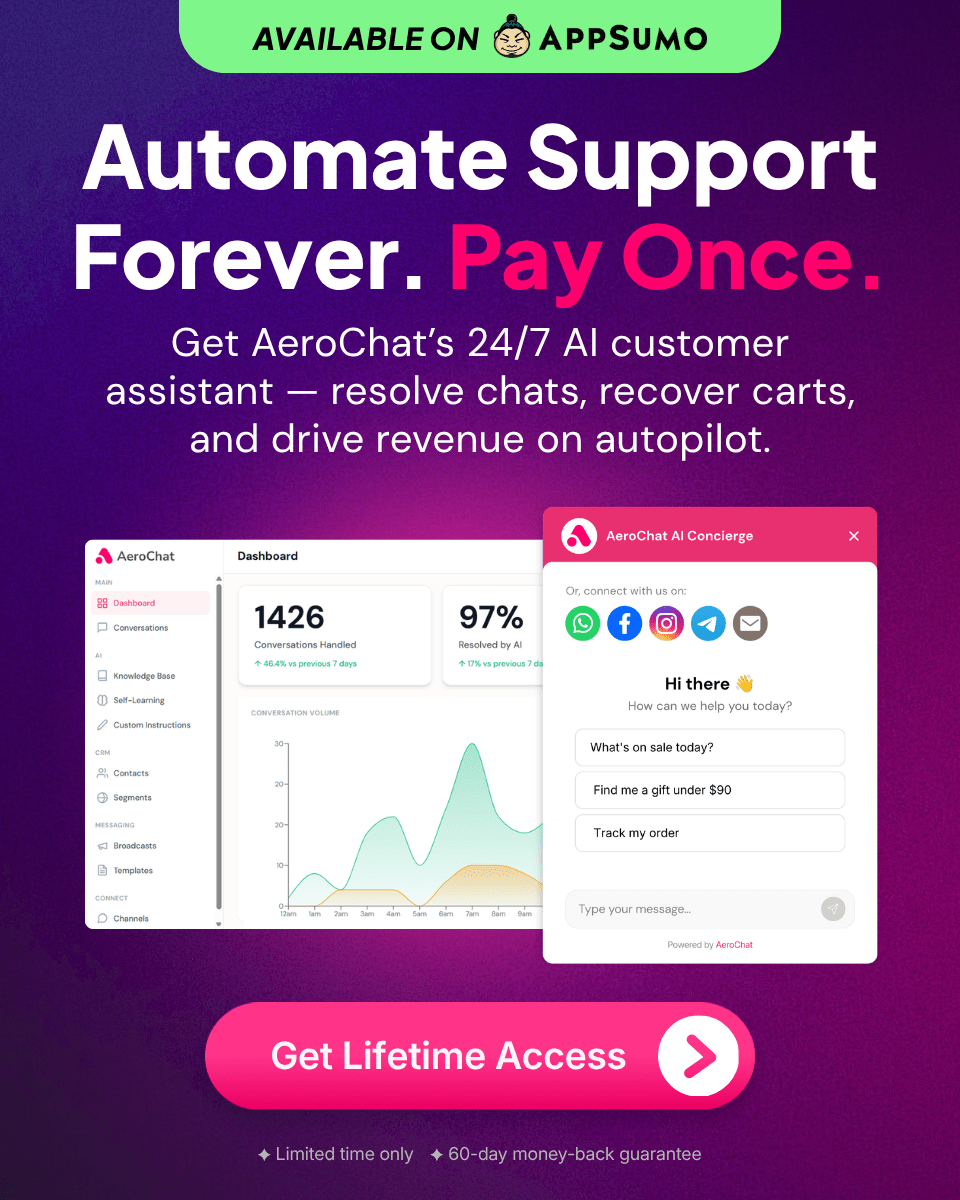
This is where support automation can help. For Shopify stores, AeroChat’s AI chatbot for Shopify stores can help answer product questions, order enquiries and repetitive customer messages without manual workflow building, flowcharts or complex chatbot setup.
For stores built on WordPress or WooCommerce, an AI chatbot for WooCommerce websites can be trained on website content, FAQs, product information and store policies to provide more accurate customer answers.
11. Connect Marketing and Messaging Channels
An online store should not depend only on website traffic. Customers may discover your products through search, social media, email, WhatsApp, Telegram or Instagram.
Before launch, prepare the channels that matter most for your audience.
Useful channels include:
- SEO blog content
- TikTok
- Telegram
- Email marketing
- Google Shopping
- Meta ads
- Influencer campaigns
- Product comparison pages
If customers use WhatsApp to ask about products, a WhatsApp automation chatbot can help manage product questions, order updates and sales conversations.
If your audience uses Telegram for community updates or direct messaging, this guide to the best Telegram AI chatbots can help you compare tools for Telegram customer support automation.
For social commerce, this guide on Instagram AI chatbot for business messages is useful if your store receives product enquiries through Instagram DMs and comments.
12. Test Your Online Store Before Publishing
Before you publish your online store, test the full customer journey.
Check:
- Homepage links
- Menu navigation
- Product categories
- Product images
- Product variants
- Add-to-cart button
- Cart page
- Checkout page
- Payment methods
- Discount codes
- Confirmation emails
- Shipping settings
- Contact forms
- Chat widget
- FAQ links
- Mobile layout
- Page speed
- Policy pages
- Analytics tracking
Place a test order from both desktop and mobile. This helps you catch problems before real customers visit the store.
Online Store Launch Checklist
Use this checklist before your store goes live.
| Task | Why It Matters | Status |
|---|---|---|
| Choose a niche | Gives your store clear direction | |
| Define target customer | Helps with messaging and product pages | |
| Choose business model | Affects cost and fulfilment | |
| Select ecommerce platform | Forms the base of your store | |
| Buy domain name | Builds brand identity | |
| Plan store structure | Improves navigation | |
| Add product pages | Helps customers make buying decisions | |
| Set up payments | Allows customers to complete orders | |
| Plan shipping and returns | Reduces confusion and support questions | |
| Prepare customer support | Prevents missed sales from unanswered queries | |
| Connect marketing channels | Helps bring traffic to the store | |
| Test checkout | Finds problems before launch | |
| Install analytics | Tracks store performance | |
| Review mobile experience | Improves shopping experience for mobile users |
Common Mistakes to Avoid When Building an Online Store
Many new ecommerce stores fail because of basic mistakes that could have been fixed before launch.
Avoid these issues:
- Choosing a niche without demand
- Using weak product images
- Writing thin product descriptions
- Making checkout too complicated
- Hiding delivery and return information
- Ignoring mobile design
- Launching without customer support
- Not testing payment methods
- Depending only on paid ads
- Forgetting SEO basics
- Adding too many apps too early
- Not tracking customer questions
A simple store with clear products, fast answers and easy checkout can perform better than a beautiful store that is confusing to use.
How AeroChat Can Help Your Online Store After Launch
AeroChat is an AI agent platform that helps ecommerce businesses run customer service on autopilot after their online store goes live.
Once your store starts getting traffic, customer conversations will increase. Shoppers may ask about products, sizes, stock availability, delivery times, discounts, returns and order updates. If these questions are not answered quickly, potential buyers may leave before completing checkout.
AeroChat helps online stores manage these conversations across website chat, WhatsApp, Instagram, Facebook Messenger, Telegram and email from one platform, without manual workflow building, flowcharts or complex chatbot setup.
For Shopify stores, AeroChat’s AI chatbot for Shopify stores can support product questions, order-related enquiries, product recommendations and sales conversations using store data such as products, inventory, pricing, discounts and order details.
For stores that receive many customer questions on social channels, AeroChat can also help manage Instagram DMs, comments and product enquiries. If Instagram is one of your main sales channels, this guide on Instagram AI chatbot for business messages explains how automation can support customer conversations.
For mobile-first support, AeroChat’s WhatsApp AI chatbot can help automate order updates, delivery questions, sales follow-ups and repetitive customer enquiries on WhatsApp.
AeroChat also supports product recommendations, discount and promotion suggestions, multilingual conversations, contact segmentation, conversion tracking and smart human handover when live support is needed.
This makes AeroChat useful for online stores that want to respond faster, reduce repetitive support work and scale customer service without adding extra manpower and costs.inesses that want to respond faster, reduce repetitive support work and scale customer service without adding extra manpower.
Final Thoughts
Learning how to build an online store from scratch is not only about creating a website. It is about building a complete ecommerce experience that helps customers discover products, trust your brand, ask questions, place orders and receive support after purchase.
Start with the basics: choose a niche, understand your customer, select the right platform, create strong product pages and test checkout properly.
Then improve the parts that affect conversions most: mobile experience, product information, customer support, delivery clarity and post-purchase communication.
The stronger your customer experience is from day one, the better your online store will be positioned to grow.
FAQs About Building an Online Store From Scratch
How do I build an online store from scratch?
To build an online store from scratch, choose a niche, select an ecommerce platform, buy a domain, design your store, add products, set up payments and shipping, create policy pages, prepare customer support and test the checkout before launch.
What is the easiest platform to build an online store?
Shopify is often one of the easiest platforms for beginners because it is built specifically for ecommerce. WooCommerce is also a strong option if you prefer WordPress and want more control over your website.
Can I build an online store without coding?
Yes, you can build an online store without coding by using ecommerce platforms such as Shopify, WooCommerce with page builders, Wix or BigCommerce. These platforms provide themes, checkout systems and store management tools.
How much does it cost to build an online store?
The cost depends on your platform, domain, theme, apps, payment provider, product sourcing and marketing budget. You can start small, then upgrade tools as your store grows.
What pages does an online store need?
An online store needs a homepage, product pages, category pages, About page, Contact page, FAQ page, shipping policy, return and refund policy, privacy policy and terms and conditions page.
How long does it take to build an online store?
A simple online store can be built in a few days if your products, images and content are ready. A more complete store with custom branding, many products and automation may take longer.
What should I test before launching an online store?
Test your product pages, cart, checkout, payment methods, shipping settings, discount codes, confirmation emails, contact forms, mobile layout, chat widget and analytics tracking.
How can AeroChat help after I build my online store?
AeroChat helps online stores automate customer service, product enquiries, order updates and sales conversations across website chat, WhatsApp, Instagram, Facebook Messenger, Telegram and email from one platform.