
Best B2B Ecommerce Solutions in 2026 – Complete Guide
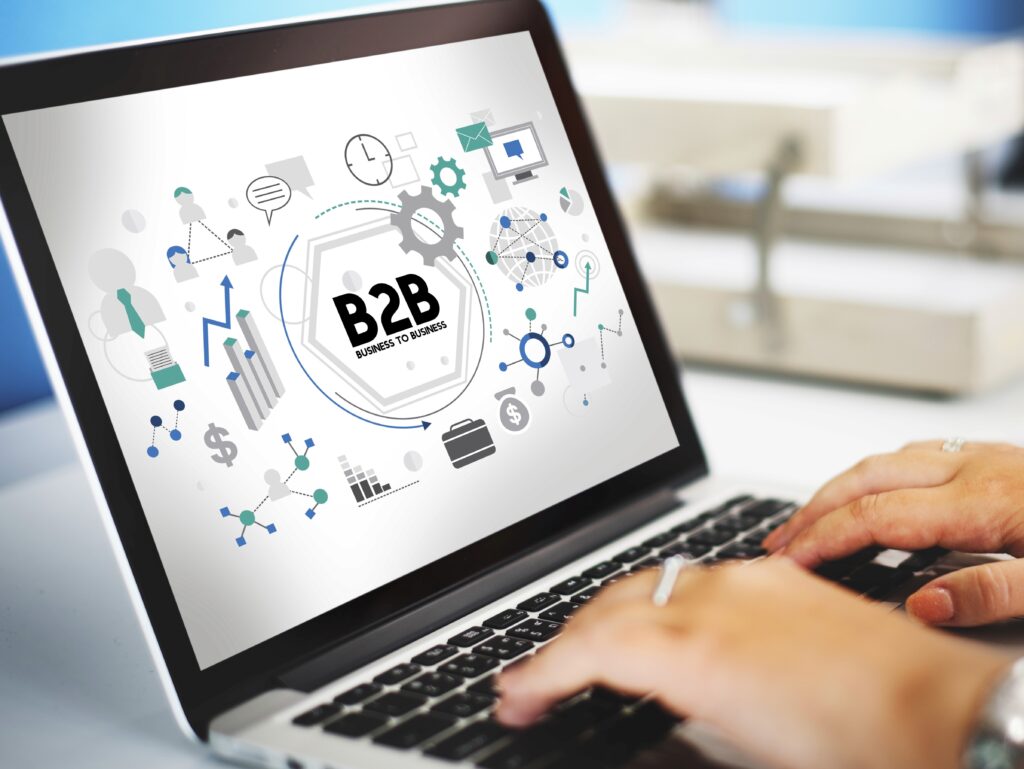
B2B ecommerce solutions are the tools and platforms that enable businesses to sell products and services to other businesses online. They cover everything from the storefront where buyers place orders to the ERP systems that process them, the payment infrastructure that handles net terms and credit, and the customer service tools that support buyers after purchase.
The global B2B ecommerce market is projected to reach $36 trillion by 2026, growing at 14.5 percent annually. That growth is being driven by a fundamental shift in how business buyers prefer to purchase. Eighty percent want the same quality of digital experience they get as consumers. Sixty-one percent of B2B buyers prefer a rep-free buying experience for at least part of their purchase journey.
The businesses winning in B2B ecommerce in 2026 are not just the ones with the best storefronts. They are the ones that have solved the full solution stack from discovery to order to delivery to support in a way that matches what modern business buyers expect.
This guide covers the seven types of B2B ecommerce solutions, the leading platforms in each category, and how to match the right solutions to your business size and needs.
The seven types of B2B ecommerce solutions
Most articles about B2B ecommerce solutions focus exclusively on storefronts. The storefront is where the buyer experience starts, but it is far from the only solution a B2B operation needs to run effectively.
Here is the complete taxonomy of B2B ecommerce solutions and what each one does.
|
Solution type |
What it does |
Key examples |
|---|---|---|
|
Storefront platform |
The online ordering interface where buyers browse, configure, and place orders |
BigCommerce B2B, Shopify B2B, OroCommerce, Magento |
|
ERP integration |
Connects the storefront to backend business systems for inventory, fulfilment, and accounting |
SAP, NetSuite, Microsoft Dynamics, Sage |
|
Payment and credit |
Handles net terms, purchase orders, credit lines, and payment processing for B2B transactions |
Stripe, PayPal Business, Apruve, Balance |
|
Order management |
Manages orders from placement through fulfilment, tracking, and returns across channels |
Gorgias, ShipStation, Brightpearl |
|
Customer service automation |
Handles buyer queries, account support, and post-order questions automatically at scale |
AeroChat, Intercom, Freshdesk |
|
Marketing automation |
Manages email, SMS, and personalised communication to B2B accounts and contacts |
HubSpot, Klaviyo, Marketo |
|
Analytics and reporting |
Tracks buyer behaviour, order patterns, revenue attribution, and performance across channels |
Google Analytics 4, Peel, Glew |
Understanding which category you need to solve first is more useful than comparing platforms within a category you do not actually need yet. Most B2B ecommerce businesses under-invest in customer service automation while over-investing in storefront features that their buyers never use.
What B2B buyers actually expect in 2026
The B2B buyer demographic has changed.
Seventy-three percent of B2B buyers today are millennials or Gen Z. These are buyers who have grown up with Amazon Prime, instant customer service, and the expectation that any question can be answered in seconds through a chat interface.
They are bringing those expectations to their professional purchasing decisions.
Eighty percent of B2B buyers say they expect B2C-quality digital experiences from their business suppliers. That means intuitive ordering interfaces, personalised pricing displayed automatically, and customer service that responds as quickly to a business buyer as to a consumer.
The gap between that expectation and what most B2B ecommerce operations deliver is significant. Most B2B businesses have invested in their storefront but left their customer service running on email chains with two to three day response times.
A business buyer who places a large order and has a question about delivery scheduling does not want to send an email and wait. They want the same instant response they get when they message a consumer brand on WhatsApp.
This is the customer service automation gap in B2B ecommerce. It is one of the most impactful areas to invest in and one of the least addressed by mainstream B2B ecommerce solution providers.
The customer service automation layer – the overlooked B2B solution
Most B2B ecommerce guides cover storefront platforms and ERP integrations in depth. Customer service automation gets a paragraph, if it is mentioned at all.
That prioritisation does not match reality. B2B buyers contact their suppliers constantly. Order status queries. Product specification questions before placing a large order. Delivery scheduling requests. Returns and replacements. Account management queries.
Each of these contacts, if handled slowly or inconsistently, damages the supplier relationship. Each of these contacts, if handled instantly and accurately, strengthens it.
An AI chatbot connected to your B2B ecommerce platform handles the routine queries automatically. A buyer who places a bulk order and wants to know the delivery timeline gets an immediate, accurate answer using live order data. A procurement manager who needs a product specification document at 10pm gets it instantly rather than waiting until the next business day.
For B2B businesses operating across markets where WhatsApp is the primary business communication channel — across South Asia, the Middle East, Latin America, and increasingly Europe — the ability to handle account queries on WhatsApp is not optional. It is what B2B buyers in those markets expect.
AeroChat connects B2B ecommerce stores to WhatsApp, Instagram, website chat, and email from a single inbox, with AI handling the routine queries automatically using live order and product data. For B2B stores on Shopify or WooCommerce, the integration connects the chatbot to live order status, product catalogue, and account information.
For a complete look at how B2B ecommerce customer service automation works in practice, that guide covers the specific query types and setup steps.
B2B ecommerce solutions by category – honest recommendations
Storefront platforms
The storefront is the buyer-facing interface. For B2B, it needs to handle capabilities that consumer storefronts do not: custom pricing by account, minimum order quantities, bulk ordering, quote requests, purchase order workflows, and multi-user account access where different people in the same business have different roles and permissions.
BigCommerce B2B Edition is the most feature-complete dedicated B2B storefront platform available. It handles custom catalogs, quote workflows, flexible payment terms, volume discounts, and ERP integrations out of the box. It is designed specifically for manufacturers, distributors, and wholesalers who need a purpose-built B2B solution.
Shopify B2B has expanded its native B2B capabilities significantly in 2026, now offering company profiles for wholesale buyers, custom catalogs with tailored pricing, volume discounts, quantity rules, vaulted credit cards, and payment terms on all main plans at no extra cost. For businesses already on Shopify that want to add a wholesale or B2B channel without a separate platform, this makes Shopify a genuinely viable option for mid-market B2B.
OroCommerce is purpose-built for B2B with an open-source architecture that allows extensive customisation. It suits enterprise manufacturers, distributors, and wholesalers with complex pricing models, multi-brand operations, and deep ERP integration requirements.
Best for small to mid-sized B2B: Shopify B2B for businesses already on Shopify, BigCommerce B2B Edition for dedicated B2B operations.
Best for enterprise: OroCommerce or BigCommerce Enterprise for complex multi-brand, multi-region operations.
ERP integration solutions
ERP integration connects your B2B storefront to your back-office systems. When a buyer places an order, the ERP updates inventory, creates the financial record, triggers fulfilment, and pushes tracking back to the storefront automatically.
Without ERP integration, each order creates manual work: data entry into accounting systems, manual inventory updates, separate invoicing processes. At low order volumes, this is manageable. At the order volumes that B2B businesses typically operate, it becomes an operational bottleneck.
SAP Business One and SAP S/4HANA are the most widely deployed ERP systems for mid-market and enterprise B2B ecommerce, offering deep integration with BigCommerce, Shopify Plus, and OroCommerce.
NetSuite is the leading cloud ERP for growing B2B businesses that need real-time visibility across financials, inventory, and order management. Its ecommerce integrations are well-documented and widely supported by solution partners.
Microsoft Dynamics 365 suits businesses already in the Microsoft ecosystem, with strong integration with Shopify and BigCommerce through established connector solutions.
Best for small to mid-sized B2B: NetSuite or QuickBooks with an ecommerce connector. Best for enterprise: SAP or Microsoft Dynamics depending on existing infrastructure investment.
Payment and credit solutions
B2B payment is fundamentally different from consumer payment. Business buyers use purchase orders, net payment terms (net 30, net 60, net 90), credit lines, and multi-approval workflows for larger orders. The payment solution must handle these without creating friction.
Stripe provides the most developer-friendly payment infrastructure for B2B, with strong support for invoicing, subscription billing, and payment terms through Stripe Invoicing. It does not natively handle complex credit line management but integrates with specialist B2B credit solutions.
Apruve is a specialist B2B trade credit platform that handles net terms, automated credit decisions, and payment term management. It integrates with Shopify and BigCommerce, allowing businesses to offer net payment terms without carrying the credit risk themselves.
Balance focuses on B2B checkout specifically, handling net terms, ACH bank transfers, credit card payments, and purchase orders in a single checkout flow designed for business buyers.
Best for most B2B: Stripe for flexible payment infrastructure with Apruve or Balance for net terms management.
Order management solutions
B2B order management covers the tracking, fulfilment, and post-order support layer after a buyer places an order. For high-volume B2B operations, this includes managing partial shipments, back-ordered items, return merchandise authorisations (RMAs), and reorder workflows.
ShipStation handles multi-carrier fulfilment with rate comparison, label generation, and tracking across all major carriers. For B2B businesses that ship physical goods, ShipStation integrates with Shopify and BigCommerce to centralise fulfilment operations.
Brightpearl is a purpose-built retail and wholesale operations platform that combines order management, inventory, fulfilment, and basic accounting in one system designed for omnichannel B2B and B2C operations.
Gorgias covers the customer-facing side of order management, giving support agents a full view of order history, tracking status, and the ability to process returns and refunds directly from the support interface for Shopify B2B stores.
Customer service automation solutions
Customer service automation is the most underinvested solution layer in B2B ecommerce. It is also the layer where B2B buyers feel the gap between their expectations and their experience most acutely.
A business buyer who places a significant order with a supplier and cannot get a quick answer about delivery status will choose a supplier who can next time. Loyalty in B2B is built through reliable, responsive service, not through storefront features alone.
AeroChat connects B2B ecommerce stores to WhatsApp, Instagram, website chat, and email from one inbox, with AI handling routine queries automatically using live order and product data. For B2B stores where buyers contact through WhatsApp, the AI handles order status queries, product specification requests, and account questions automatically. Human agents handle the complex, high-value conversations that require account management depth.
The AI works with the same data your team uses. Order status from your Shopify or WooCommerce store. Product information from your catalogue. Return eligibility based on actual order dates. Buyers get accurate, personalised answers without waiting.
For B2B businesses where WhatsApp is a primary account communication channel, AeroChat’s 7-day free trial covers one agent with unlimited conversations on WhatsApp, website chat, and Instagram. Team plans start at $49 per month flat.
Intercom provides enterprise-grade customer service automation with Fin AI handling complex multi-turn conversations. It suits larger B2B operations with dedicated customer success teams who need a platform that combines AI automation with account management workflows.
Freshdesk provides a solid free plan for smaller B2B operations managing support primarily through email, with WhatsApp and social channel support available on paid plans.
For a direct comparison of options across the customer service automation category, the best customer service apps guide covers the leading platforms with honest pricing and ecommerce fit ratings.
Marketing automation solutions
B2B marketing automation handles the communication and nurturing workflows that turn interest into orders and first-time buyers into repeat accounts.
HubSpot is the most widely used marketing automation platform for B2B, combining email marketing, CRM, sales sequences, and account-based marketing in one platform. Its free plan is genuinely useful for small B2B businesses starting with marketing automation.
Klaviyo leads for B2B ecommerce businesses that already use it for consumer marketing and want to extend it to wholesale accounts. Its Shopify and BigCommerce integrations are deep, and its segmentation capabilities support account-based communication alongside consumer email flows.
Marketo is the leading enterprise marketing automation platform for large B2B organisations with dedicated marketing operations teams and complex account-based marketing requirements.
Analytics and reporting solutions
B2B ecommerce analytics tracks buyer behaviour, order patterns, account performance, and revenue attribution across channels and buyer segments.
Google Analytics 4 provides the foundation layer of ecommerce analytics at no cost. It tracks session data, product performance, and conversion rates across your B2B storefront.
Peel and Glew are dedicated ecommerce analytics platforms that provide deeper B2B-specific metrics: account lifetime value, repeat order rate by buyer segment, product category performance, and cohort analysis on wholesale accounts.
For B2B businesses using Shopify, Shopify’s native analytics covers basic reporting. For more sophisticated account-level analytics, a dedicated ecommerce analytics platform adds meaningful visibility.
How to choose B2B ecommerce solutions by business size
Not every B2B business needs every solution category at the same time. Here is the recommended starting stack by business stage.
|
Stage |
Recommended solutions |
What to add next |
|---|---|---|
|
Early B2B, under 50 orders per month |
Shopify B2B free features, Stripe for payments, AeroChat free for customer service |
QuickBooks integration, HubSpot free for CRM |
|
Growing B2B, 50 to 500 orders per month |
Shopify B2B or BigCommerce, Stripe plus Apruve for net terms, AeroChat team for CS, HubSpot for marketing |
NetSuite ERP integration, ShipStation for fulfilment |
|
Established B2B, 500 plus orders per month |
BigCommerce B2B Edition or OroCommerce, NetSuite or SAP, Balance for payment terms, Intercom or AeroChat for CS, Klaviyo for marketing |
Dedicated analytics platform, advanced ERP features |
|
Enterprise B2B |
OroCommerce or custom platform, SAP or Microsoft Dynamics, full enterprise CS stack |
Composable architecture, global compliance, advanced BI |
The pattern is consistent across every stage: solve the storefront and payment layers first, then add the operational layers (ERP, order management, fulfilment) as volume grows, and invest in customer service automation at the same time as the storefront — not as an afterthought.
B2B buyers who cannot get a quick answer to a question after placing an order find a different supplier. That churn happens quietly, without a complaint. It is the most preventable revenue loss in B2B ecommerce and the most consistently underaddressed.
For more on building a complete B2B support operation that matches what modern buyers expect, the multichannel customer service guide covers the specific channel setup for B2B ecommerce operations.
Frequently asked questions
What is a B2B ecommerce solution?
A B2B ecommerce solution is software that enables businesses to sell products or services to other businesses online. The category covers seven main solution types: storefront platforms for buyer-facing ordering, ERP integration for back-office automation, payment and credit infrastructure for B2B payment terms, order management for fulfilment tracking, customer service automation for buyer support, marketing automation for account communication, and analytics for performance tracking. Most businesses need solutions from several categories working together rather than a single platform.
What is the best B2B ecommerce platform in 2026?
For dedicated B2B operations, BigCommerce B2B Edition leads on built-in B2B features including custom catalogs, quote workflows, and payment terms. For businesses already on Shopify, Shopify’s native B2B features cover most wholesale needs without an additional platform. For enterprise and highly customised requirements, OroCommerce provides the most flexibility as an open-source B2B platform. The right choice depends on your current infrastructure, order volume, and customisation requirements.
How does B2B ecommerce customer service differ from B2C?
B2B customer service involves account-level relationships rather than one-off consumer transactions. A B2B buyer may represent a business that places large orders repeatedly over years. Their queries tend to be more complex, covering bulk order status, product specifications for procurement decisions, delivery scheduling, and account management. The stakes of each interaction are higher because losing a B2B account is significantly more costly than losing a single consumer sale. Despite this, most B2B businesses invest less in customer service automation than their B2C equivalents.
Do B2B buyers use WhatsApp for business communication?
Yes, particularly in markets across South Asia, the Middle East, Latin America, and increasingly Europe. B2B buyers in these markets use WhatsApp as a primary business communication channel, including for supplier queries, order updates, and account management. B2B ecommerce businesses that respond to WhatsApp queries promptly build stronger account relationships than those relying exclusively on email. AeroChat’s 7-day free trial includes WhatsApp Business API support for B2B ecommerce stores on Shopify and WooCommerce.
What B2B ecommerce solutions integrate with Shopify?
Shopify has a strong B2B integration ecosystem. AeroChat integrates natively for customer service automation with live order data access. Gorgias integrates for helpdesk and order management. HubSpot integrates for CRM and marketing automation. Klaviyo integrates for email and SMS marketing. ShipStation integrates for multi-carrier fulfilment. NetSuite, QuickBooks, and SAP all offer Shopify connectors for ERP integration. Stripe and Apruve integrate for payment processing and net terms management.
How much does a complete B2B ecommerce solution stack cost?
For a growing B2B business at 50 to 500 orders per month, a functional solution stack typically costs between $200 and $800 per month. Shopify B2B plan at $79 to $299 per month, AeroChat for customer service at $49 per month flat, HubSpot free plan for CRM and marketing, Stripe at transaction fees only, and ShipStation at $29 to $99 per month. Enterprise B2B stacks with SAP ERP, OroCommerce, and dedicated analytics typically cost several thousand dollars per month across all solution categories.
B2B ecommerce solutions need to handle bulk ordering, tiered pricing and account-level customer service in ways that B2C platforms do not. The WooCommerce B2B wholesale chatbot guide covers how chatbot automation handles B2B buyer queries. For the broader platform comparison, BigCommerce vs Shopify chatbot ecosystems is relevant because BigCommerce has stronger native B2B features. The ecommerce integration platforms guide covers the ERP and CRM connections that B2B operations require alongside the ecommerce platform.