
How to Automate Shipping Notifications on Shopify in 2026
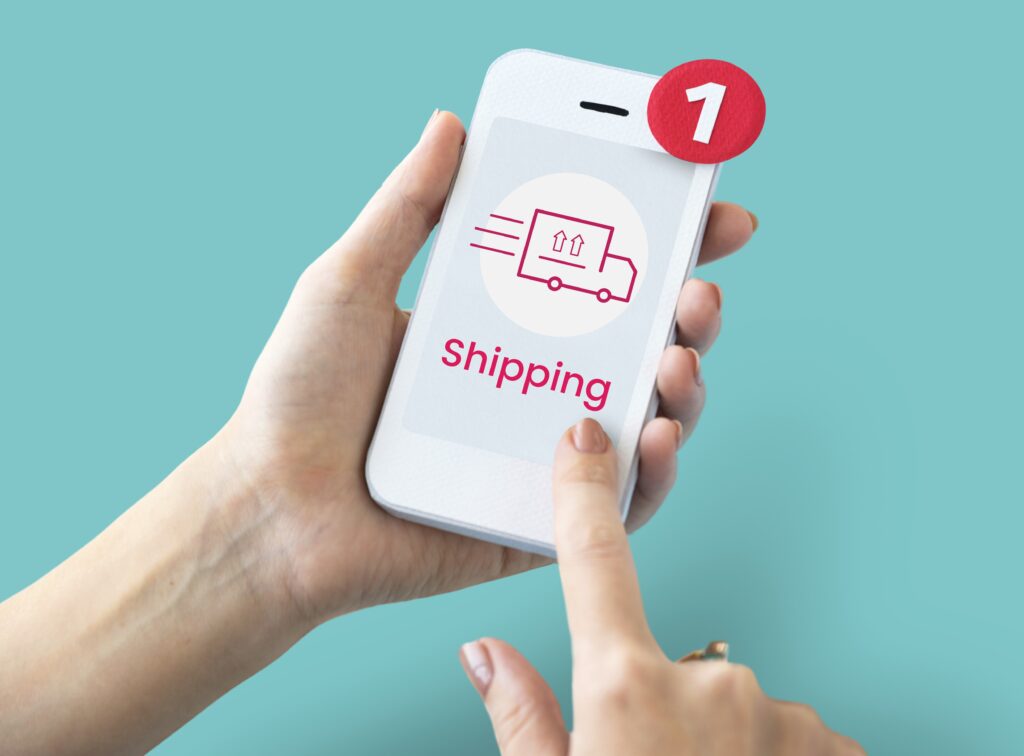
Every Shopify store owner has seen it: a customer emails “Where is my order?” three days after purchasing, even though the package is already on the way. That single question is called a WISMO ticket — “Where Is My Order?” — and it is the single biggest category of support volume for most ecommerce stores, accounting for up to 80% of all post-purchase support requests.
The fix is not hiring more support agents. The fix is making the question unnecessary in the first place — by automating shipping notifications so every customer already knows exactly where their order is before they think to ask.
This guide covers everything: how Shopify’s built-in notification system works, how to layer WhatsApp and AI for maximum reach, and how AeroChat’s AI chatbot automates order tracking on Shopify so customers get answers instantly without a single human involved.
What Are Shipping Notifications and Why Do They Matter?
Shipping notifications are automated messages sent to customers whenever their order moves through a stage of the fulfillment process — from the moment a label is created all the way to the package being delivered at their door.
They typically contain: the order number, carrier name, tracking number, a clickable tracking link, and an estimated delivery date.
Here is why they directly impact revenue, not just support costs:
-
98% of customers say delivery experience is a key factor in brand loyalty. A clean, proactive notification sequence signals reliability before a customer even receives their product.
-
70% of shoppers are less likely to purchase again after a delayed delivery without notification. The problem is not the delay itself — it is the silence.
-
Stores that implement comprehensive shipping notifications typically see a 50–80% reduction in WISMO support volume within the first 30 days.
On a store processing 500 orders per month, cutting WISMO tickets by 75% can free up 30–40 support hours every single week. That time goes back into growing the business — or it means not needing to hire a second support agent at all.
To understand the full cost of not doing this, read our breakdown of the hidden cost of slow replies on Shopify.
The 5 Types of Shipping Notifications Every Shopify Store Needs
Most guides only mention the shipping confirmation email. That is one notification out of five. Here is the complete set:
1. Order Confirmed
Triggered immediately after purchase. Reassures the customer the order was received. Sets the expectation for when the next update will arrive. This is the notification with the highest open rate — often over 70% — because customers open it immediately after buying.
2. Shipped / Label Created
Triggered when you mark the order as fulfilled and a tracking number is assigned. This is the most critical notification because it delivers the tracking link. It answers the question “Has my order actually left yet?” before it is asked.
3. Out for Delivery
Triggered when the carrier marks the package as out for delivery. This notification has the highest WISMO-prevention value of all five. Customers who know their package is arriving today will not contact you. Send this via WhatsApp or SMS — not email — because it is time-sensitive and customers need to see it immediately.
4. Delivered
Triggered when the carrier confirms delivery. This closes the loop, reduces anxiety about potential theft or missed delivery, and is your single best moment to ask for a product review or offer a repeat-purchase incentive. This is a milestone notification — email works well here.
5. Shipping Exception / Delay
Triggered when something goes wrong: a delay, a failed delivery attempt, a package stuck in transit. This is the notification most stores skip, and it is the one that generates the most angry support tickets. Proactively telling customers about a delay before they notice it converts a negative experience into a trust-building moment.
Understanding this full picture is part of building a proper Shopify support strategy that converts browsers into buyers — not just reacts to problems.
How to Set Up Shopify’s Built-In Shipping Notifications
Shopify has solid native notification tools that every merchant should configure before adding any third-party app. Here is the complete setup process.
Step 1: Go to your notification settings
In your Shopify admin, navigate to Settings → Notifications → Customer notifications. You will see a full list of every automated notification Shopify can send, organized by category: Orders, Shipping, Local delivery, and more.
Step 2: Verify shipping notifications are active
Scroll to the Shipping section. You should see these notifications listed:
-
Shipping confirmation — sent when you fulfill an order
-
Shipping update — sent when you add or update a tracking number on a fulfilled order
-
Out for delivery — sent when a tracking number from FedEx, Canada Post, DHL Express, UPS, or USPS shows the parcel is out for delivery
-
Delivered — sent when those same carriers confirm delivery
Important note: Shopify’s “Out for delivery” and “Delivered” automatic triggers only work with supported carriers: FedEx, Canada Post, DHL Express, UPS, and USPS. If you use a different carrier or a third-party fulfillment service, these will not fire automatically — you need a third-party tracking app.
Step 3: Customize your email templates
Click any notification to edit its template. Shopify uses Liquid variables, which means you can insert dynamic data like {{ order.name }}, {{ fulfillment.tracking_number }}, and {{ fulfillment.tracking_url }}. This is where you:
-
Add your logo and brand colors
-
Customize the subject line (e.g., “Your [store name] order is on the way!”)
-
Add a visible, prominent CTA button linking to the tracking page
-
Include an estimated delivery date if your carrier provides one
Step 4: Enable SMS notifications
In supported countries, Shopify can automatically send SMS order confirmations and shipping updates to customers who provide a phone number at checkout. Go to Settings → Notifications and look for the SMS section. Note that SMS availability depends on your Shopify plan and country.
Step 5: Test every notification before going live
Use the “Send test email” button on each notification template. Create a test order and fulfil it with a real tracking number to confirm the email fires correctly and the tracking link works. Check the email on mobile — the majority of your customers will read it on their phones.
What Most Guides Miss: The Channels Problem
Here is the gap that almost every article about Shopify shipping notifications skips entirely: channel selection determines whether the notification actually gets seen.
Email shipping notifications have an average open rate of 30–50%. That means up to 70% of your customers never open the email with their tracking link. They do not see it. Then they contact you asking where their order is.
Compare that to WhatsApp, which has a 98% open rate. Most customers read WhatsApp messages within minutes of receiving them — often within seconds, because they see it on their phone lock screen between messages from friends and family.
The strategic principle is this: use the right channel for the right moment.
|
Notification Type |
Best Channel |
Why |
|---|---|---|
|
Order confirmed |
|
Customers expect and look for this email immediately. High intent to open. |
|
Shipped / tracking link |
Email + WhatsApp |
Email for records, WhatsApp to ensure they actually see the tracking link. |
|
Out for delivery |
WhatsApp / SMS |
Time-sensitive. Customers need to see this today, not when they check email. |
|
Delivered |
|
Milestone moment. Also use this to request a review or offer a discount. |
|
Exception / delay |
WhatsApp / SMS |
Urgent. Customers react badly to discovering delays on their own. |
Relying on email alone for shipping notifications is one of the core reasons stores accumulate WISMO tickets. See our full guide on how to reduce WISMO tickets on Shopify for the complete picture.
How to Add WhatsApp Shipping Notifications to Shopify
Adding WhatsApp to your shipping notification stack requires the WhatsApp Business API — not the standard WhatsApp Business app, which does not support automated outbound messages at scale and is not designed for ecommerce automation.
The WhatsApp Business API vs. the WhatsApp Business App
The regular WhatsApp Business app is fine for manually messaging a few customers per day. But it cannot trigger messages automatically when an order status changes. It cannot handle 50+ orders a day. And it is not GDPR-compliant for automated marketing messages. For automation, you need API access through a Business Solution Provider (BSP).
How automated WhatsApp shipping notifications work
The flow is straightforward once it is set up:
-
Your Shopify store changes an order status to “Fulfilled”
-
This triggers a webhook to your WhatsApp automation tool
-
The tool sends a pre-approved Meta message template to the customer’s WhatsApp number
-
The customer receives a branded WhatsApp message with their tracking link within seconds
What a good WhatsApp shipping notification looks like
The message should be concise and actionable. Here is a practical template structure:
Hi [Name]! 📦 Your [Store Name] order #[Order Number] has been shipped.
Carrier: [Carrier Name]
Expected delivery: [Date]
Track your order: [Tracking Link]Reply to this message if you need any help — we’re here!
The key elements: personalisation by name, order number for reference, carrier name, estimated delivery date, and a one-click tracking link. The invitation to reply is important — it opens the door for the AI chatbot to handle any follow-up questions automatically.
For deeper guidance on using WhatsApp across your entire Shopify support operation, see our guide on how to automate Shopify support on WhatsApp.
How AeroChat Handles Shipping Questions Automatically With AI
Setting up automated outbound notifications handles the proactive side — you push updates to customers before they ask. But customers still have follow-up questions: “My tracking link says it’s in a different city — is that right?” or “I haven’t received an update in three days, is my order lost?”
This is where AeroChat’s AI chatbot for Shopify closes the loop.
What AeroChat does that notifications alone cannot
AeroChat integrates directly with your Shopify backend, giving it real-time access to every order’s status. When a customer messages your store — on your website chat, on WhatsApp, or on Instagram — the AI can:
-
Pull live order status — “Your order #1042 is currently with DHL and was last scanned in Birmingham at 9:14am. Estimated delivery is today.”
-
Provide the tracking link on demand — instantly, without a human agent looking it up
-
Handle delay questions proactively — “I can see your order is showing a 24-hour delay due to a carrier issue. It should now arrive by Thursday. Would you like me to notify you when it’s out for delivery?”
-
Escalate to a human when needed — for genuinely complex issues like lost parcels, AeroChat can tag the conversation and hand it to your team with the full order context already attached
This means customers who did not open the email notification — or who have a follow-up question after getting the WhatsApp message — still get an instant, accurate answer at any time of day, including weekends and outside business hours.
For a store processing hundreds of orders per month, this alone can eliminate the need to hire a dedicated post-purchase support person. Read more about how AeroChat reduces WISMO tickets on Shopify and how it fits into Shopify customer support automation as a whole.
How the notification + AI combination works together
Think of it as two layers working in sequence:
-
Layer 1 — Proactive notifications: Email and WhatsApp messages push the tracking update to the customer before they have to ask. This eliminates 60–70% of potential WISMO contacts.
-
Layer 2 — AeroChat AI: For the customers who still have questions — the 30–40% who need more — AeroChat answers instantly on whichever channel they reach out on. No ticket, no wait, no human needed for routine shipping questions.
Together, these two layers can reduce post-purchase support volume by over 80% compared to a store relying on email notifications alone with human-handled chat.
To see how AeroChat specifically handles order tracking, read how to automate order tracking on Shopify with AeroChat.
Third-Party Apps Worth Knowing for Shopify Shipping Notifications
Shopify’s built-in notifications cover the basics, but they have limitations — particularly around carrier support, branded tracking pages, and multi-channel delivery. Here are the tools worth knowing about:
AfterShip
The most widely used post-purchase tracking app for Shopify. AfterShip supports 900+ carriers globally, provides a branded tracking page, and can send email and SMS notifications triggered by real-time carrier tracking events. Strong choice for stores with international shipping or multiple carriers.
TrackingMore
Similar to AfterShip but with a different carrier coverage set and a slightly simpler interface. Good option if you ship primarily with carriers that are not well-supported by Shopify’s native tools.
Route
Combines package protection insurance with a tracking experience. Customers opt into Route at checkout, and Route sends its own post-purchase notifications. Less control over branding, but adds a compelling package protection offer that can improve conversion.
Klaviyo with Shopify Flow
For stores already using Klaviyo for email marketing, connecting it to Shopify Flow allows you to delay, sequence, and personalise shipping notification emails in far more sophisticated ways than Shopify’s default templates allow. Useful for stores that want to embed product upsells or review requests into post-purchase email flows.
Note that none of these tools handle inbound customer questions. For that, the combination of proactive notifications plus an AI chatbot like AeroChat is the complete solution — see how to scale customer support on Shopify without adding headcount.
5 Shipping Notification Mistakes That Actually Create More Support Tickets
Getting notifications live is only half the job. These are the mistakes that undermine the whole system:
Mistake 1: Sending a “shipped” email before the carrier has actually collected the package
Many stores trigger the shipping confirmation when the label is created — not when the carrier actually collects the package. The customer clicks the tracking link, sees “label created — not yet in carrier system,” and contacts support assuming something is wrong. Fix: delay the shipping notification trigger by 2–4 hours, or trigger it on the first carrier scan rather than label creation.
Mistake 2: Sending a vague subject line
“Order update” is not good enough. Subject lines like “Your [product name] is on the way — arriving [day]” see significantly higher open rates because they answer the customer’s primary question in the preview.
Mistake 3: Using a broken or generic tracking link
If the tracking link goes to a generic carrier page that shows no information, or if it is broken entirely, customers will contact you immediately. Always test every carrier’s tracking link format before using it in your templates.
Mistake 4: Going silent during delays
Research shows that 69.7% of shoppers are less likely to buy again from a retailer after a delayed delivery without notification. Silence during a delay is perceived as deception. If you know there is a delay, tell the customer proactively — even a brief “your order is running 1–2 days late, here’s the updated estimated delivery” message converts anger into understanding.
Mistake 5: Only sending notifications via email
As covered above, email alone misses the majority of customers who do not open transactional emails. If you are only sending email and seeing high WISMO volume, adding WhatsApp notifications is typically the single highest-impact change you can make. See our guide on WhatsApp customer service benefits for Shopify.
How to Measure Whether Your Shipping Notification Automation Is Working
If you cannot measure it, you cannot improve it. Here are the metrics to track once your notification system is live:
WISMO ticket volume
The single most important metric. Track the number of “where is my order?” contacts per week. After implementing proactive notifications, most stores see a 30–50% reduction within the first two weeks and a 50–80% reduction within the first 30 days. If you are not seeing a reduction, your notifications are either not being sent (check your fulfillment triggers), not being opened (check your channels), or not containing useful information (check your tracking links).
Notification open rate
For email notifications, target a 60%+ open rate on shipping confirmation emails — they should be significantly higher than standard marketing emails because customers are looking for them. If your open rate is below 40%, review your subject line and sender name.
WhatsApp delivery rate
WhatsApp messages either deliver or they do not — unlike email, there is no spam folder. A delivery rate below 95% usually indicates issues with phone number formatting or opt-in collection. Check that customers provided WhatsApp-enabled numbers at checkout.
First response time on post-purchase contacts
If customers still contact you despite receiving notifications, how fast are those contacts being resolved? With AeroChat handling shipping questions automatically, this should approach zero wait time for the most common queries. Track how many post-purchase contacts are being resolved by AI vs. escalated to human — aim for AI resolution on 70%+ of shipping-related contacts.
Customer satisfaction score (CSAT) on post-purchase experience
Survey customers 48 hours after delivery with a simple one-question survey. Proactive notification sequences typically lift CSAT by 10–20 percentage points compared to stores relying on reactive support. This feeds directly into repeat purchase rate — the metric that determines long-term revenue growth. For more on tracking these numbers, read our guide on customer service metrics that matter for ecommerce.
Quick-Start Checklist:
Use this checklist to implement everything covered in this guide:
Shopify built-in setup
-
Go to Settings → Notifications → Customer notifications
-
Verify Shipping confirmation, Shipping update, Out for delivery, and Delivered notifications are active
-
Customize each email template with your logo, brand colours, and dynamic tracking link
-
Write subject lines that include product name or delivery date — not just “Order update”
-
Enable SMS notifications if you are in a supported country
-
Send a test notification for each template and verify on mobile
WhatsApp layer
-
Set up WhatsApp Business API access through a Business Solution Provider
-
Create approved Meta message templates for: Shipped, Out for Delivery, and Exception
-
Connect your Shopify fulfillment triggers to your WhatsApp automation tool
-
Test with a real order — confirm the WhatsApp message fires within 2 minutes of fulfillment
-
Collect WhatsApp opt-ins at checkout
AI chatbot layer (AeroChat)
-
Install AeroChat and connect it to your Shopify backend
-
Confirm it can access real-time order and tracking data
-
Enable on website chat, WhatsApp, and any other channels you use
-
Test a shipping query to confirm AeroChat pulls accurate live order data
-
Set up escalation rules for lost parcels and unresolvable exceptions
Ongoing measurement
-
Record your baseline WISMO ticket volume before launching
-
Check ticket volume weekly for the first 30 days
-
Track email open rates and WhatsApp delivery rates
-
customers post-delivery to measure CSAT
The Bottom Line
Automating shipping notifications on Shopify is not a complex technical project. The foundation — Shopify’s built-in email notifications — takes 20 minutes to configure properly. Adding WhatsApp as a second channel takes a few hours. Adding an AI chatbot to handle all inbound shipping questions completes the system.
What you get for that investment: fewer support tickets, faster resolution for the tickets you do get, happier customers, and more repeat purchases — all without adding a single person to your support team.
The stores that win in 2026 are the ones that treat post-purchase communication as a revenue driver, not an operational afterthought. Automated shipping notifications are the clearest, most direct way to start doing that.
Ready to add the AI layer? See how AeroChat automates order tracking on Shopify — and how it handles hundreds of shipping questions per day without a human involved.