
How to Manage WhatsApp, Instagram and Website Chat in One Inbox
To manage WhatsApp, Instagram and website chat in one inbox, connect each channel to a shared conversation system and then define customer identity, ownership, routing, knowledge and handoff rules. Putting messages on one screen is only the first step. The inbox must also prevent missed or duplicate replies and preserve enough context for the next person or automation to act.
This distinction matters as a store grows. In qualitative Shopify discussions, merchants repeatedly describe email and basic inbox tools becoming difficult to organise after busy periods. Others report losing order context or seeing one conversation split into several threads when customers move between channels.
What should a unified customer service inbox actually do?
A unified inbox should give the team one working view of a conversation, not merely display several message feeds beside each other.
| Requirement | Why it matters | Warning sign |
|---|---|---|
| Channel source | Agents need to know where the customer is messaging | A reply is written in the wrong style or sent through the wrong channel |
| Customer identity | Previous context may affect the answer | The same customer appears as unrelated contacts |
| Conversation ownership | One person or workflow must be responsible | Two agents reply, or everyone assumes someone else will |
| Relevant order context | Ecommerce questions often depend on current status | Agents ask for details the business already has |
| Routing and priority | Not every message has the same urgency | A payment problem sits behind routine product questions |
| Human handoff | Automation needs a clear stopping point | The customer is trapped in repeated replies |
A platform may call itself omnichannel without handling all these operational requirements. Evaluate how the team will work, not just how many channel logos appear on the product page.
Seven steps to bring WhatsApp, Instagram and website chat together
1. Audit every source of customer conversations
List every place a customer can contact the business, including website chat, Instagram direct messages and comments, WhatsApp, email and any marketplace inbox. Record the message volume, common enquiry types, current owner and the data needed to answer.
Do not connect a channel simply because the software supports it. Decide whether it belongs in customer service, sales, community management or another workflow.
2. Choose one conversation system of record
The system of record is where the team checks ownership, status and conversation history. Other tools may still handle specialist work, but the team needs one place that shows who is responsible for the customer.
Define what “closed” means. A conversation should not be marked complete merely because an automated response was sent. The customer's question or required action must be finished, transferred or waiting with a clear reason.
3. Connect channels without losing customer identity
Channel connection and customer matching are separate tasks. The same person may use a phone number on WhatsApp, an Instagram handle and an email address at checkout.
Match records only when the available information supports it. If identity is uncertain, ask for the minimum detail required rather than attaching one customer's order information to another person's profile.
4. Define ownership, assignment and priority rules
Every active conversation should have a visible owner, even if that owner is initially an automated workflow. Assign messages by enquiry type, language, market, customer segment or agent skill only when the rule helps the team respond correctly.
Set priority separately from channel. A website-chat message is not automatically more urgent than a WhatsApp complaint about an unrecognised payment. Use the customer's problem, financial risk and time sensitivity.
5. Create shared knowledge with channel-specific reply rules
Product, delivery, returns and store information should come from a shared approved source. This reduces the risk of giving one answer on Instagram and another on WhatsApp.
The response style can still differ. Instagram conversations may begin from a product post or comment. WhatsApp can contain an ongoing thread and voice messages. Website chat may need quick navigation help while the shopper is actively browsing.
6. Automate suitable work and preserve human handoff
Automate stable questions that can be answered from reliable information. Examples include published shipping zones, standard store policies, current product availability and verified order status.
Move the conversation to a person when the customer asks, the answer is uncertain, an exception needs approval or repeated replies have failed. The AI-first support boundary should remain consistent across channels.
7. Test for duplicates, missed messages and access failures
Before switching the whole team, send test conversations through every channel. Use the same customer on two channels, two agents viewing one thread, an after-hours message and a case that moves from AI to a person.
Check whether:
- both agents can see ownership before replying;
- the channel source remains visible;
- important customer and order context survives;
- a transferred conversation reaches the intended person;
- messages sent during an outage or disconnection are recoverable;
- closing one thread does not hide an active issue elsewhere.
How do you retain context when customers switch channels?
Retain facts that help complete the current task: the verified customer identity, relevant order, products discussed, previous answer and agreed next action. Do not copy every available profile detail into every conversation.
For example, an Instagram user may ask whether a jacket is waterproof, then move to website chat after purchasing it. The website agent needs the product and question only if the identity has been matched reliably. If the new conversation concerns a different order, joining the threads may create more confusion than context.
For Shopify stores, a system that can use current product and order information can reduce repeated questions. Access should still follow the business's identity and permission rules.
How do you prevent two agents replying to the same customer?
Use visible assignment, status and collision controls. An agent should claim or receive the conversation before writing, and teammates should be able to see that activity.
Internal notes must be clearly separate from customer replies. Define a small set of statuses such as open, waiting for customer, waiting internally and resolved. Too many tags and statuses make the inbox harder to interpret.
When a specialist takes over, transfer ownership rather than merely mentioning them in a note. The customer should also know who is handling the next step.
Which channel differences should the inbox preserve?
A shared inbox should standardise knowledge and ownership without making every channel behave identically.
| Channel | Useful operating consideration |
|---|---|
| Website chat | The shopper may need immediate help with a page, product or checkout decision |
| The conversation may begin from a post, story, direct message or comment and need social context | |
| The customer may treat the thread as an ongoing conversation and expect continuity over time |
Meta Business Suite Inbox can bring Messenger, Instagram and WhatsApp messages into one Meta environment. A merchant that also needs website chat, email, ecommerce order data or wider routing should confirm whether those requirements need another shared system.
Check current Meta and WhatsApp terms before configuring outbound messages, customer-data use or retention. Platform rules change, and an inbox connection does not remove the merchant's responsibilities.
When is one inbox not enough?
Keep a specialist tool when it performs a distinct job the shared inbox cannot handle safely. Phone systems, fraud investigation, warehouse claims, returns portals and enterprise ticketing may need their own records and controls.
The goal is not to force every action into one application. It is to make ownership and the next step visible. If a return moves to a specialist portal, the customer conversation should show that transfer and its status.
Merchants comparing wider support-stack roles can review these customer service app categories before consolidating tools.
AeroChat can provide the shared conversation layer
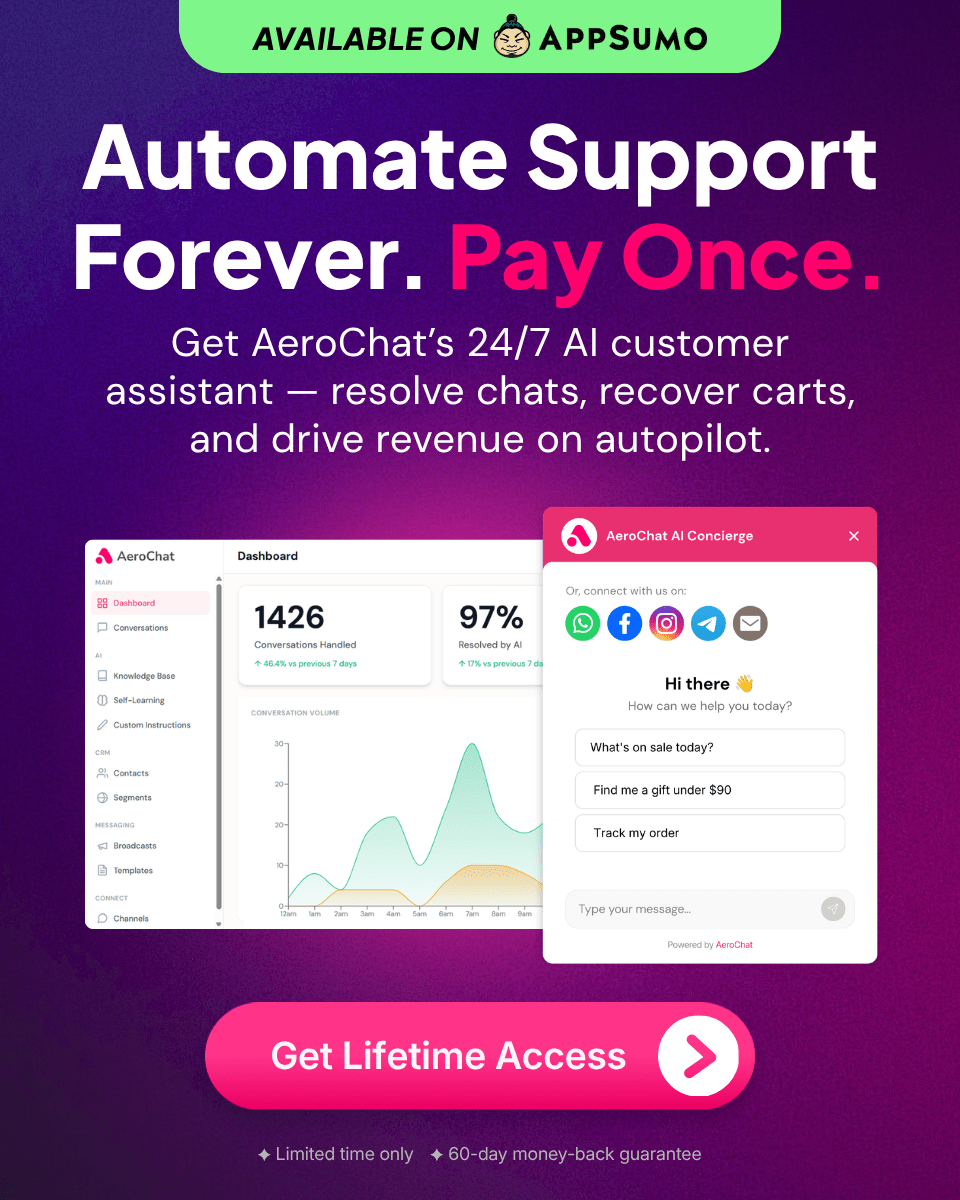
AeroChat is an AI agent platform that helps ecommerce brands run customer service on autopilot. It can bring supported WhatsApp conversations, Instagram customer messages and website chat into one inbox while AI handles suitable questions.
When a conversation needs personal attention, AeroChat can pass it to a human with the history attached. Agents can take ownership or transfer a live conversation to an appropriate teammate.
This is most relevant when enquiry volume and channel count are increasing. A newly launched store with only a few messages may not need another support platform yet. The operational benefit depends on clear ownership, accurate knowledge and a team that actually uses the shared workflow.
Use a controlled migration checklist
Before migration, document channels, owners, common enquiry types, response rules and required customer data. Clean up outdated policies and duplicate templates before importing them.
During cutover, connect one channel at a time and keep a rollback path. Test routing, notifications, identity checks, AI fallback and human handoff before moving the next channel.
For the first week, review missed messages, duplicate replies, unassigned conversations and transfers that lost context. Correct the operating rule before expanding automation or adding more tags.
One inbox succeeds when the team can see who the customer is, what has happened and who owns the next action. The number of connected channels is secondary.