

Why Contact Forms Are No Longer Enough for Modern Websites

For decades, contact forms were the default way for website visitors to reach businesses.
A visitor would fill in their details, submit a message, and wait for a response.
At the time, this process aligned with how people communicated online.
Today, customer expectations have changed dramatically.
People can message friends, order food, book appointments, and contact brands instantly from their phones. As a result, many website visitors expect the same level of convenience when interacting with businesses.
This shift is forcing companies to rethink how they engage with potential customers online.
The question is no longer whether contact forms work.
The question is whether they are enough on their own.
The Communication Gap Most Websites Still Have
Many websites were designed around information delivery rather than conversation.
Visitors arrive with questions, concerns, and purchase intentions, but the only communication option available is often a static contact form.
This creates a communication gap.
|
What Visitors Want |
What Many Websites Offer |
|---|---|
|
Immediate answers |
Contact forms |
|
Real-time interaction |
Delayed responses |
|
Ongoing conversation |
One-time submissions |
|
Fast decision-making |
Waiting periods |
The larger this gap becomes, the greater the risk of losing potential customers.
Why Website Visitors Often Avoid Contact Forms
Many businesses assume that visitors who need help will simply complete a contact form.
In reality, many people choose not to.
They Do Not Want To Wait
One of the biggest frustrations for customers is uncertainty.
After submitting a form, visitors rarely know:
-
when a reply will arrive
-
who will respond
-
whether the enquiry is a priority
This waiting period often causes engagement to drop.
Businesses focused on reducing customer waiting time are often better positioned to retain interested visitors.
They Want Information Immediately
Many visitors are actively evaluating products, services, or solutions.
A delayed response may mean losing momentum entirely.
They Prefer Conversations Over Submissions
People are increasingly comfortable with messaging platforms.
Submitting a form can feel formal and inconvenient compared to sending a simple message.
What Contact Forms Cannot Reveal About Customer Intent
A contact form captures information.
A conversation reveals intent.
This difference is important because intent often determines whether a visitor becomes a customer.
|
Contact Form Captures |
Conversations Reveal |
|---|---|
|
Name |
Buying intent |
|
Email address |
Product interest |
|
Basic enquiry |
Customer concerns |
|
Static message |
Objections |
|
One-time interaction |
Ongoing engagement |
Businesses that understand customer intent can respond more effectively and prioritize opportunities more accurately.
This is one reason conversations often generate more qualified leads than traditional form submissions.
Why Conversations Often Convert Better Than Forms
Most purchasing decisions happen while customers are actively researching.
Questions arise naturally during this process.
For example:
-
Can you deliver this week?
-
Which option should I choose?
-
Is this suitable for my requirements?
-
Do you offer support after purchase?
If answers are unavailable, customers often continue searching elsewhere.
Businesses that use conversational tools to capture social media leads frequently discover that real-time engagement creates more opportunities than delayed email exchanges.
The goal is not simply to answer questions.
The goal is to answer them while customer interest is highest.
The Shift Towards Conversational Websites
Modern websites are increasingly designed around interaction rather than static communication.
Visitors expect websites to help them move forward without unnecessary delays.
This shift has created greater demand for systems that support ongoing customer conversations rather than one-way communication.
Instead of forcing customers to complete forms and wait, businesses are creating environments where questions can be answered immediately.
This reduces friction and improves customer experience.
Why Different Teams Need Better Communication Systems
Customer communication often involves multiple departments.
Sales teams handle enquiries.
Support teams answer questions.
Marketing teams generate leads.
Without connected systems, information becomes fragmented.
This is one reason many businesses encounter the challenges discussed in sales and support platforms.
A visitor may start a conversation with one team and then repeat the same information elsewhere.
This creates frustration and delays.
Modern communication systems help businesses maintain continuity across the customer journey.
What Modern Websites Use Alongside Contact Forms
Contact forms still have value.
However, most modern businesses now combine them with additional communication channels.
|
Communication Method |
Primary Purpose |
|---|---|
|
Contact Forms |
Detailed enquiries |
|
Live Chat |
Immediate assistance |
|
AI Chatbots |
Automated engagement |
|
Direct communication |
|
|
Social interactions |
|
|
|
Formal correspondence |
The objective is not to eliminate forms.
It is to provide customers with options that match their preferred communication style.
How AeroChat Helps Businesses Capture More Opportunities
The challenge for many businesses is not generating website traffic.
The challenge is engaging visitors before they leave.
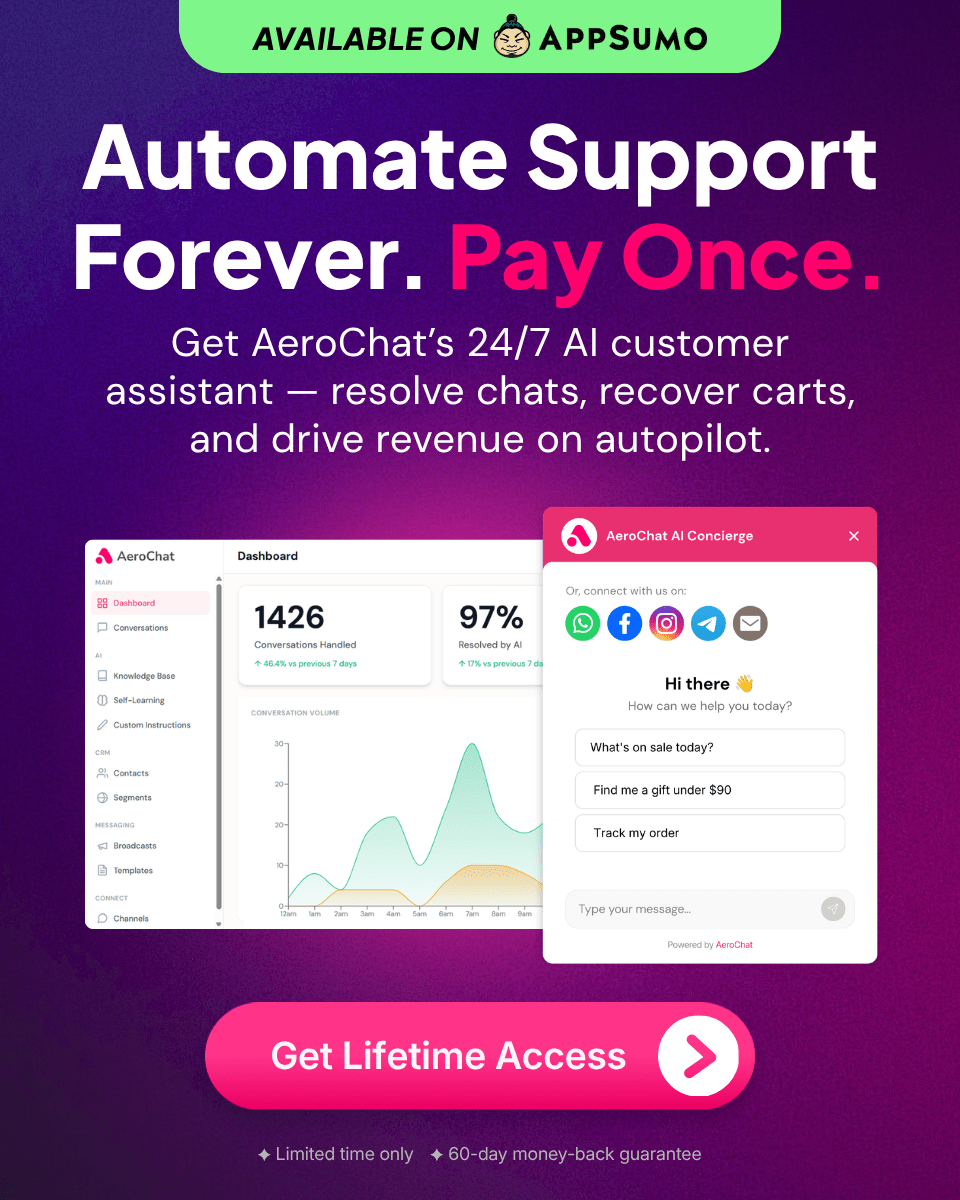
AeroChat helps businesses create conversational experiences that support customers throughout their journey.
Common Communication Challenges And How AeroChat Helps
|
Challenge |
AeroChat Approach |
|---|---|
|
Visitors need quick answers |
Immediate responses |
|
High enquiry volumes |
Automated engagement |
|
Repetitive questions |
Knowledge-based replies |
|
After-hours enquiries |
24/7 availability |
|
Multi-channel conversations |
Centralized communication |
This becomes particularly valuable during periods of high activity, such as product launches, promotions, and seasonal campaigns.
Businesses facing large volumes of customer questions during campaigns often benefit from having communication systems that can scale alongside demand.
For growing businesses that need to handle thousands of customer messages, conversational engagement becomes increasingly important.
Final Thoughts
Contact forms were built for an internet where delayed communication was acceptable.
Today’s customers operate differently.
They expect faster access to information, easier communication, and fewer barriers between questions and answers.
Modern websites are evolving from information hubs into conversation hubs.
Businesses that adapt to this shift are often better positioned to engage visitors, generate leads, and convert opportunities before interest disappears.
Because in many cases, the first conversation matters far more than the first form submission.
Frequently Asked Questions
Are contact forms outdated?
No. Contact forms remain useful for detailed enquiries, quotation requests, and structured communication. However, they are often insufficient as the only communication method on a modern website.
Why do customers prefer conversations over forms?
Conversations provide faster answers, require less effort, and create a more interactive experience.
Should businesses remove contact forms completely?
No. Most businesses benefit from combining forms with conversational communication tools.
Can chatbots replace contact forms?
Not entirely. Chatbots and contact forms serve different purposes and often work best together.
Why are conversational websites becoming more popular?
Customers increasingly expect immediate access to information and support. Conversational websites help meet these expectations.
How does AeroChat help generate leads?
AeroChat engages visitors in real time, answers questions, qualifies opportunities, and helps businesses capture more meaningful conversations.
Contact forms generate queues; chat handles real-time intent. For the transition from form-based to chat-based support, turning website visitors into customers covers what changes when live chat replaces a contact form. The guide to adding Messenger to a website and LiveChat alternatives cover the practical tools for making that switch.