
10 Best Shopping Bot Software in 2026 – Bots for Purchasing Online That Actually Work
Shopping bot software is an AI-powered tool that helps ecommerce stores guide customers through product discovery, product questions, purchase decisions, checkout support, abandoned cart recovery, and post-purchase support.
For ecommerce businesses, a shopping bot is different from a consumer buying bot. A business shopping bot does not automatically buy limited products for users. Instead, it helps real customers choose products, ask questions, receive purchase links, and get support through channels such as website chat, WhatsApp, Instagram, Messenger, Shopify, and WooCommerce.
The best AI shopping bot software in 2026 includes AeroChat, Tidio, Chatfuel, ManyChat, Intercom, Gorgias, Freshchat, Chatbase, Rep AI, and HubSpot Service Hub. AeroChat is best for ecommerce stores that want AI-powered shopping support across website chat, WhatsApp, Instagram, Messenger, and other customer channels from one place. Tidio is a good starting option for small stores, ManyChat and Chatfuel are strong for social commerce, and Gorgias is useful for high-volume Shopify order support.
This guide compares the best shopping bot software for ecommerce stores based on AI quality, Shopify and WooCommerce support, WhatsApp and Instagram coverage, purchase journey automation, pricing model, and best use case.
What are the Best Shopping Bot Software for Ecommerce to Consider
The best shopping bot software for ecommerce stores is AeroChat if you want AI-powered customer support across website chat, WhatsApp, Instagram, Messenger, Shopify, and WooCommerce. It is built for online stores that need to answer product questions, delivery questions, return questions, and order-related conversations without relying on manual replies every time.
For smaller ecommerce stores, Tidio is a good starting option because it combines live chat, automation, and AI support. Chatfuel and ManyChat are better for brands that sell through Instagram, Facebook, and WhatsApp campaigns. Gorgias is a strong choice for Shopify stores that need deeper order management and post-purchase support.
If your customers mainly ask questions before buying, choose a shopping bot with strong product recommendation and purchase guidance features. If your customers often ask after buying, choose a tool with strong order tracking, return, and post-purchase support features. For Shopify-specific options, see this guide to the best Shopify AI chatbot.
What Is Shopping Bot Software?
Shopping bot software is an AI-powered tool that helps ecommerce stores guide customers through product discovery, product questions, checkout decisions, abandoned cart recovery, and post-purchase support.
For businesses, a shopping bot is not the same as a sneaker bot or auto-checkout bot. Business shopping bots help customers buy from your store by answering questions, recommending products, sharing purchase links, and supporting order-related conversations.
A shopping bot can help customers with questions such as:
- Which product is right for me?
- Is this item available in my size?
- How long does delivery take?
- Can I get a purchase link?
- What is your return policy?
- Where is my order?
- Can I speak to someone?
The goal is not to bypass checkout systems or automate unfair buying. The goal is to make the customer’s buying journey easier, faster, and more helpful.
Shopping Bot vs Buying Bot: What Is the Difference?
A shopping bot for ecommerce helps customers buy from a store by answering questions, recommending products, and guiding them through the purchase journey.
A buying bot usually refers to software that automatically buys products for an individual user, often during limited product drops. These tools are commonly associated with sneaker bots, ticket bots, reseller bots, or auto-checkout automation.
This guide is about shopping bot software for businesses, not consumer auto-buying bots.
For ecommerce brands, the goal is not to bypass checkout systems. The goal is to help real customers get faster answers, reduce purchase hesitation, and complete orders with better support.
What Can a Shopping Bot Do?
A shopping bot can support different parts of the ecommerce customer journey.
| Shopping Bot Use Case | What It Does | Example |
|---|---|---|
| Product discovery | Helps shoppers find the right item | “Show me gifts under $50” |
| Product recommendations | Suggests relevant products | “This option is better for oily skin” |
| Product questions | Answers questions before purchase | “Is this available in medium?” |
| Purchase guidance | Helps customers decide | “This size is best based on your height” |
| Purchase links | Sends direct checkout or product links | “Here is the link to buy” |
| Abandoned cart recovery | Re-engages shoppers who leave | “Need help completing your order?” |
| Order support | Answers order-related questions | “Where is my order?” |
| Return and refund support | Explains policies and next steps | “You can return within 14 days” |
| Post-purchase support | Supports customers after buying | “Here is how to use the product” |
| Human handover | Passes complex issues to a person | “I’ll connect you with our team” |
The best shopping bots do more than answer FAQs. They understand purchase intent, use store information, and help customers move from interest to action.
Quick Comparison: Best AI Shopping Bot Software
| Tool | Best For | Ecommerce Fit | WhatsApp and Instagram | AI Strength | Starting Price |
|---|---|---|---|---|---|
| AeroChat | Omnichannel ecommerce shopping support | Shopify and WooCommerce | WhatsApp, Instagram, Messenger, website chat | High | From $49/month, with trial/free options depending on channel |
| Tidio | Small ecommerce stores starting with chat automation | Shopify and WooCommerce | Available on selected plans | Medium to high | Free plan available, paid plans vary |
| Chatfuel | Meta social commerce automation | Shopify support available | Instagram, Facebook, WhatsApp | Medium | Free tools/trial available, paid plans vary |
| ManyChat | Instagram comment-to-DM automation | Basic ecommerce support | Instagram, Messenger, WhatsApp on selected plans | Medium | Free plan available, paid plans vary |
| Intercom | Mid-market customer support and sales journeys | Good for larger teams | Available on selected plans | High | Premium pricing |
| Gorgias | High-volume Shopify order management | Excellent Shopify fit | Supported | High | Paid plans based on usage |
| Freshchat | Teams already using Freshworks | Good | Supported on selected plans | Medium | Free and paid plans available |
| Chatbase | Knowledge-base shopping guidance | Basic ecommerce fit | Not native | Medium to high | Free and paid plans available |
| Rep AI | Shopify conversion optimisation | Excellent Shopify fit | Website-focused | High | Custom pricing |
| HubSpot Service Hub | CRM-connected shopping journeys | Basic ecommerce fit | Limited native social commerce | Medium | Free and paid plans available |
Pricing and plan limits can change, so always check the latest pricing before choosing a platform.
10 Best Shopping Bot Software for Ecommerce Stores
1. AeroChat — Best Shopping Bot for Ecommerce Stores Across Website Chat, WhatsApp, and Instagram
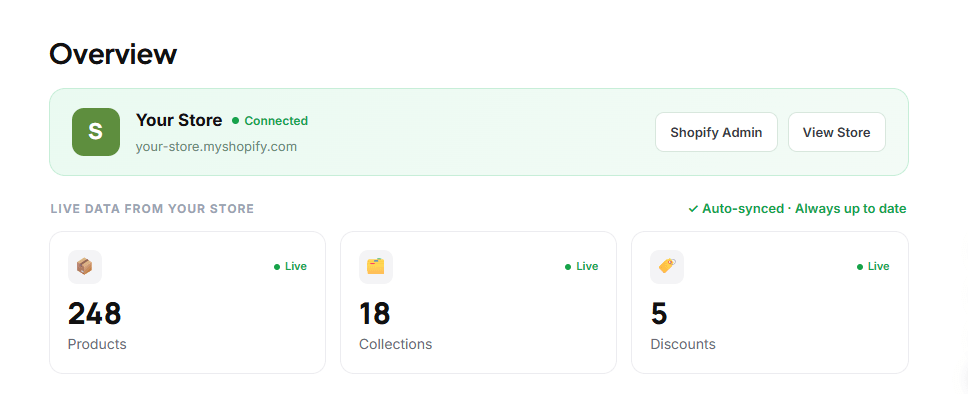
AeroChat is an AI agent platform that helps ecommerce stores run customer service on autopilot.
It is best for online stores that want to answer product, delivery, return, and order-related questions across website chat, WhatsApp, Instagram, Messenger, Shopify, WooCommerce, and other customer channels from one place.
Most shopping bots focus only on website chat. AeroChat is designed for ecommerce businesses where purchase conversations happen across multiple channels. A customer may first discover a product on Instagram, ask a question through WhatsApp, and later return to the website before buying. AeroChat helps manage these conversations with one trained AI system instead of separate disconnected tools.
For Shopify merchants, this matters because shopping support is no longer limited to a website chat box. Customers ask about sizing, delivery, stock, order tracking, returns, refunds, and product recommendations across different channels. AeroChat helps stores manage these conversations more consistently, which makes it a strong option for brands comparing the best Shopify AI chatbot tools.
AeroChat can be trained on store content, product information, FAQs, shipping policies, return policies, and support documents. This helps the bot answer common shopping questions automatically and pass more complex conversations to a human when needed.
It is also useful for stores that receive questions after checkout. Many ecommerce teams use automation for tracking updates, delivery questions, return requests, and repeat purchase support. For more on this part of the journey, see this guide to post-purchase ecommerce strategy.
Key features:
- AI-powered ecommerce customer support
- Website chat, WhatsApp, Instagram, and Messenger support
- Shopify and WooCommerce support
- Product, delivery, return, and FAQ-based answers
- Lead capture from customer conversations
- Human handover for complex questions
- Useful for pre-purchase and post-purchase support
- Suitable for growing ecommerce teams
Pros:
- Strong fit for ecommerce stores that receive repeated product and support questions
- Works across multiple customer channels, not only website chat
- Helps reduce manual replies for common questions
- Useful for both pre-sale and post-purchase conversations
- Better fit than a basic chatbot when customers contact the brand through WhatsApp, Instagram, and web chat
Cons:
- More suitable for ecommerce and online businesses than non-retail websites
- Not the best fit if you only need a simple FAQ bot
- Requires proper training content for best results
Pricing:
AeroChat pricing starts from $49/month, with trial or free options depending on the selected channel and plan. Check the latest pricing before publishing or updating comparison tables.
Best for:
Ecommerce stores, Shopify merchants, WooCommerce brands, DTC businesses, and social commerce teams that want to automate shopping support across website chat, WhatsApp, Instagram, and Messenger.
2. Tidio — Best Entry-Level Shopping Bot for Small Ecommerce Stores
Tidio combines live chat, AI chatbot features, and automation flows in one platform. It is a practical option for small ecommerce stores that want to start with website chat, simple automation, and AI-assisted customer support.
Tidio’s AI assistant, Lyro, can answer customer questions based on business content. Its automation flows can also support tasks such as abandoned cart recovery, lead capture, and basic product guidance.
As a shopping bot, Tidio works best for stores that want a simple starting point rather than a complex ecommerce automation system. It is especially useful for smaller teams that want to combine live chat and chatbot support without building everything from scratch.
Key features:
- Live chat and AI support
- Lyro AI assistant
- Shopify and WooCommerce support
- Visual automation builder
- Abandoned cart and lead capture flows
- Multilingual support
- Helpdesk features
Pros:
- Easy to set up for small stores
- Good entry point for chat automation
- Combines live chat, AI, and flows
- Free plan or free AI conversation allowance may be available
- Simple interface for non-technical teams
Cons:
- AI limits and add-ons can affect total monthly cost
- WhatsApp and Instagram support may require paid plans or add-ons
- Less focused on full omnichannel ecommerce than AeroChat
- More suitable for small to mid-sized stores than complex support teams
Best for:
Small ecommerce stores that want to start with AI chat, live chat, and basic shopping automation.
3. Chatfuel — Best Shopping Bot for Meta Social Commerce
Chatfuel is designed for businesses that sell and communicate through social media channels such as Instagram, Facebook, WhatsApp, and Messenger.
For ecommerce brands with a strong Meta presence, Chatfuel can automate conversations that start from comments, DMs, and social engagement. This makes it useful for social commerce campaigns where customers interact with product posts before buying.
For example, a customer may comment on an Instagram post asking for the price. Chatfuel can trigger an automated DM, share product information, and continue the shopping journey inside the messaging experience.
Key features:
- Instagram DM automation
- Facebook Messenger automation
- WhatsApp automation
- Comment-to-DM flows
- No-code automation builder
- Lead capture
- Product and campaign automation
Pros:
- Strong fit for Instagram and Facebook commerce
- Useful for comment-to-DM campaigns
- No-code builder makes setup easier
- Good for social-first brands
- Helps turn engagement into private shopping conversations
Cons:
- Website chat may not be the main focus
- Ecommerce depth depends on setup and integrations
- AI quality and automation limits vary by plan
- Less focused on post-purchase order support than ecommerce helpdesk tools
Best for:
Brands that sell through Instagram, Facebook, WhatsApp, and social media campaigns.
4. ManyChat — Best Shopping Bot for Instagram Automation
ManyChat is one of the most popular tools for Instagram automation. It is especially useful for businesses that want to turn comments, story replies, and DMs into customer conversations.
For ecommerce stores, ManyChat can support product link delivery, keyword triggers, comment-to-DM flows, and audience segmentation. This makes it a strong option for social-first brands that rely heavily on Instagram engagement.
A typical use case is an Instagram post where the brand asks users to comment a keyword such as “SHOP” or “LINK.” ManyChat can then send an automated DM with product details, a discount, or a checkout link.
Key features:
- Instagram comment-to-DM automation
- Story reply automation
- Keyword triggers
- Audience segmentation
- Messenger and WhatsApp support on selected plans
- Templates for social campaigns
- Broadcast messaging
Pros:
- Strong Instagram automation features
- Useful for creators and social commerce brands
- Good for turning engagement into DMs
- Easy to use for non-technical teams
- Free plan available for basic automation
Cons:
- Website shopping bot capability is limited
- Ecommerce integrations are not as deep as dedicated ecommerce tools
- WhatsApp and advanced features may require paid plans
- Best used as a social automation tool rather than a full shopping bot platform
Best for:
Instagram-first ecommerce brands, creators, and social commerce teams that want to automate comments, DMs, and campaign responses.
5. Intercom — Best Shopping Bot for Mid-Market Support and Sales Journeys
Intercom is a customer service and engagement platform used by mid-market and larger businesses. Its AI agent can handle support conversations, answer questions, and help route customers based on intent.
As shopping bot software, Intercom is most useful for businesses with complex customer journeys. It can support pre-sale questions, product guidance, customer routing, and support handover. It is also useful when ecommerce, SaaS, and support teams need a more advanced customer messaging system.
Intercom may be more than a small ecommerce store needs, but it can be strong for businesses that already use Intercom or need advanced support workflows.
Keep the current internal link on the phrase Intercom vs AeroChat guide here if that comparison page is live.
Key features:
- AI customer service agent
- Omnichannel customer messaging
- Helpdesk and inbox features
- Customer routing
- CRM-style customer context
- Analytics and reporting
- Sales and support workflows
Pros:
- Strong AI conversation quality
- Good for complex customer journeys
- Useful for support and sales teams
- Strong routing and customer context features
- Suitable for larger businesses
Cons:
- More expensive than many small-store options
- Can be too complex for simple ecommerce needs
- Some channels and AI features may increase cost
- Not built only for shopping bot use cases
Best for:
Mid-market ecommerce brands, SaaS businesses, and support teams with more complex customer journeys.
6. Gorgias — Best Shopping Bot for High-Volume Shopify Order Management
Gorgias is a customer support platform built strongly around ecommerce and Shopify. While it is not only a shopping bot, its automation and Shopify integration make it useful for stores that receive high volumes of customer questions.
Gorgias is especially strong for post-purchase support. It can help teams manage questions about order status, returns, refunds, shipping, and customer issues from one place.
For Shopify stores where order management is the main support challenge, Gorgias is one of the strongest options. It is less focused on social commerce shopping journeys than tools like AeroChat, Chatfuel, or ManyChat, but it is strong for operational support.
Keep the current internal link on the phrase Gorgias vs AeroChat guide here if that comparison page is live.
Key features:
- Deep Shopify support
- Order management from the support view
- AI-assisted responses
- Ticketing and inbox tools
- WhatsApp and Instagram support
- Automation rules
- Customer support workflows
Pros:
- Strong ecommerce and Shopify focus
- Good for high-volume support teams
- Useful for WISMO and return-related questions
- Helps agents manage customer context
- Strong post-purchase support features
Cons:
- Can become expensive as volume grows
- More support-focused than shopping guidance-focused
- Setup may be more complex than simpler chatbot tools
- Not always necessary for smaller stores
Best for:
High-volume Shopify stores that need stronger order management and ecommerce support automation.
7. Freshchat — Best Shopping Bot for Teams Already Using Freshworks
Freshchat is the customer messaging product in the Freshworks ecosystem. It works best for businesses already using Freshdesk, Freshsales, or other Freshworks products.
As shopping bot software, Freshchat can help answer product questions, support customer conversations, and connect messaging with broader support workflows. Its AI features can support FAQ-level questions and routing, while its inbox helps teams manage conversations across channels.
It is not the most ecommerce-specific tool in this list, but it can be a practical option for teams already invested in Freshworks.
Key features:
- Customer messaging
- AI support features
- WhatsApp and Instagram support on selected plans
- Freshdesk and Freshsales integration
- Multilingual support
- Team inbox
- Campaign messaging
Pros:
- Good fit for Freshworks users
- Supports broader customer service workflows
- Useful for multilingual teams
- Combines messaging and support
- Free and paid plans may be available
Cons:
- Less ecommerce-specific than AeroChat or Gorgias
- Shopify support may be less deep than ecommerce-first tools
- Best value comes when used with the Freshworks ecosystem
- Not the strongest standalone shopping bot for ecommerce
Best for:
Businesses already using Freshdesk, Freshsales, or other Freshworks products.
8. Chatbase — Best Shopping Bot for Knowledge-Base Product Guidance
Chatbase lets businesses create AI chatbots trained on their own content, such as website pages, FAQs, PDFs, help docs, and product information.
As a shopping bot, Chatbase is strongest for product guidance and pre-sale questions. It can answer questions using the content it has been trained on, which makes it useful for stores with detailed product information, technical specifications, or complex buying decisions.
However, it is not a full ecommerce shopping bot by itself. It is better for website-based product guidance than for order tracking, WhatsApp support, Instagram automation, or deep Shopify workflows.
Key features:
- AI chatbot trained on business content
- Website chat widget
- Lead capture
- Conversation history
- API access
- Multiple chatbot support
- Document and URL-based training
Pros:
- Good for detailed product information
- Easy to train on FAQs and documentation
- Useful for website-based pre-sale support
- Simple deployment
- Reasonable entry point for content-based AI answers
Cons:
- No native WhatsApp or Instagram shopping support
- Limited ecommerce workflow depth
- Not ideal for live order or return support
- Free plans may have very low AI message limits
Best for:
Stores with complex products where customers need detailed pre-sale answers from product documentation.
9. Rep AI — Best Shopping Bot for Shopify Conversion Optimisation
Rep AI is built for Shopify stores that want to convert more website visitors into buyers. Its main focus is identifying purchase hesitation and helping shoppers before they leave the site.
Unlike tools that only wait for customers to ask questions, Rep AI focuses on proactive conversion support. It can engage shoppers based on behaviour, recommend products, and help reduce abandonment during the buying journey.
This makes it useful for stores with meaningful website traffic and a clear need to improve conversion rates. It is less useful if most customer conversations happen through WhatsApp, Instagram, or Messenger.
Key features:
- Shopify-focused AI shopping assistant
- Behaviour-based engagement
- Product recommendations
- Proactive conversion support
- Website chat experience
- Support for pre-sale and post-sale questions
- Ecommerce-focused automation
Pros:
- Built specifically for Shopify conversion
- Useful for reducing purchase hesitation
- Strong website shopping experience
- Good for stores with high traffic
- Focused on revenue and conversion outcomes
Cons:
- Website-focused rather than social-channel-focused
- No native WhatsApp or Instagram shopping journey
- Custom pricing may make comparison harder
- Best suited for stores with enough traffic to justify conversion optimisation
Best for:
Shopify stores that want to increase website conversion rates through proactive AI shopping assistance.
10. HubSpot Service Hub — Best Shopping Bot for CRM-Integrated Purchase Journeys
HubSpot Service Hub includes chatbot and customer service features that connect with HubSpot CRM. This makes it useful for businesses where customer conversations are part of a longer sales or marketing journey.
For ecommerce and service businesses, HubSpot can capture leads, route conversations, and trigger follow-up workflows. It is especially useful when the shopping or buying journey does not happen in one session.
For example, a customer may ask a product question on the website, receive an email follow-up, and later convert after a personalised offer. HubSpot is strong when the chatbot needs to connect with CRM, email marketing, and sales workflows.
Key features:
- Chatbot builder
- CRM integration
- Lead capture
- Meeting booking
- Email workflow triggers
- Customer support tools
- Knowledge base integration
Pros:
- Strong CRM connection
- Useful for sales and marketing teams
- Good for lead capture and follow-up
- Free tools available
- Works well for longer buying journeys
Cons:
- Free chatbot features may be rule-based rather than fully AI-powered
- WhatsApp and Instagram shopping support is limited
- Ecommerce integrations are not as deep as ecommerce-first tools
- Better for CRM workflows than direct shopping automation
Best for:
Businesses already using HubSpot CRM that want shopping conversations connected to marketing, sales, and customer follow-up.
How Shopping Bots Increase Purchases Online
Shopping bots can help ecommerce stores increase purchases by reducing friction at different points in the customer journey.
Product Discovery
Many shoppers leave because they cannot quickly find the right product.
A shopping bot can ask questions, understand preferences, and recommend relevant products. This is useful for stores with many SKUs, similar product options, or products that require explanation.
Pre-Purchase Questions
Customers often hesitate before buying because they have unanswered questions.
They may want to know about sizing, compatibility, shipping, delivery time, ingredients, warranty, or returns. A shopping bot can answer these questions instantly instead of making the customer wait.
Checkout Support
Some customers abandon checkout because they are unsure about payment, delivery, discounts, or policies.
A shopping bot can answer these last-minute questions and help customers complete their purchase with more confidence.
Abandoned Cart Recovery
Shopping bots can re-engage customers who added products to cart but did not complete checkout.
For example, a bot may ask whether the customer needs help, share delivery information, or answer a product question that blocked the purchase. WhatsApp and Messenger can be useful for this when customers have opted in to receive messages.
Post-Purchase Support
Shopping bots also support customers after purchase.
They can answer questions about tracking, returns, refunds, product use, and delivery delays. This helps improve the customer experience and can support repeat purchases.
For ecommerce stores, this is where shopping bots connect closely with retention. A strong post-purchase ecommerce strategy helps brands turn completed orders into repeat purchases by improving delivery communication, support, returns, and follow-up.
How to Use Shopping Bots on WhatsApp and Instagram
One of the biggest shifts in ecommerce is that customers no longer ask every question on the website.
Many shoppers discover products on Instagram, ask questions through WhatsApp, and expect quick replies before buying. This is why shopping bot software should support more than only website chat.
WhatsApp Shopping Bots
A WhatsApp shopping bot helps customers ask product questions, receive purchase links, check order details, and get support inside WhatsApp.
This is useful for markets where customers prefer messaging businesses directly before buying. It can also help stores reduce manual replies for repeated questions about delivery, stock, returns, and payment.
If customers often ask questions through WhatsApp, a shopping bot should support those conversations naturally instead of forcing shoppers back to the website. For Shopify stores, this guide on WhatsApp automation for Shopify explains how WhatsApp can support purchase conversations, customer questions, and ecommerce support workflows.
Instagram Shopping Bots
An Instagram shopping bot helps turn comments, story replies, and DMs into shopping conversations.
For example, a brand can post a product and ask users to comment “link.” The bot can then send a DM with the product link, answer questions, and guide the user toward purchase.
This is useful for social commerce brands, creators, fashion stores, beauty brands, and DTC ecommerce businesses that generate demand through Instagram content.
What Makes a Good AI Shopping Bot?
A good AI shopping bot should not only reply quickly. It should understand the buying journey and give customers useful answers.
Look for these capabilities:
Ecommerce Platform Support
The bot should work with your store platform, such as Shopify or WooCommerce.
For ecommerce, generic chatbot answers are not enough. The bot should understand product information, policies, and common purchase questions.
Product Knowledge
The bot should be able to answer questions about products, variants, pricing, delivery, returns, and product fit.
This is especially important for stores with many products or products that need explanation.
Multi-Channel Support
Customers may contact you through website chat, WhatsApp, Instagram, Messenger, or other channels.
A good shopping bot should support the channels your customers actually use.
Human Handover
Not every question should be handled by AI.
The bot should know when to pass the conversation to a human, especially for complaints, complex returns, payment issues, or sensitive questions.
Accurate Answers
A shopping bot should answer from your actual business content, not make up information.
Train it on product details, FAQs, shipping policies, return policies, support documents, and store-specific information.
Clear Pricing
Some tools charge by seat, conversation, ticket, resolution, AI message, or usage volume.
Before choosing a platform, calculate the likely monthly cost based on your real customer conversation volume. This matters because a tool that looks affordable at the start can become expensive when customer conversations increase. For a deeper breakdown, read this guide on AI chatbot cost.
For smaller teams, the best shopping bot is usually the one that reduces repetitive questions without adding complicated workflows. This is why many online stores compare shopping bots alongside broader AI chatbot benefits for small businesses.
How to Choose the Right Shopping Bot Software
Choosing the right shopping bot depends on your store, channels, and support volume.
1. Identify Where Customers Ask Questions
Start by looking at your real customer behaviour.
Do customers ask questions on your website, WhatsApp, Instagram, Messenger, email, or all of these channels?
If most purchase conversations happen through WhatsApp or Instagram, a website-only bot will not solve the full problem.
2. Check Ecommerce Integration Depth
A shopping bot should understand your store.
Check whether it can work with your product catalogue, order information, policies, and support content. For Shopify or WooCommerce stores, ecommerce integration matters more than generic chatbot features.
3. Compare AI Quality
Some bots only follow scripts. Others can answer open-ended questions from your knowledge base and product information.
For shopping support, AI quality matters because customers often ask questions in different ways.
4. Review Human Handover
A shopping bot should not trap customers in automation.
Check whether the tool can hand over the full conversation context to a human agent when needed.
5. Calculate the Real Monthly Cost
Do not compare only the starting price.
Check whether the tool charges by seat, conversation, ticket, contact, AI response, or resolution. A tool that looks cheap at low volume can become expensive as your store grows.
Keep the current internal link on the phrase AI chatbot cost guide here.
6. Decide Whether You Need Social Commerce Support
If Instagram, WhatsApp, or Messenger drive sales for your business, choose a tool that supports those channels natively.
If most support happens on your website, a website-first shopping bot may be enough.
When Should an Ecommerce Store Use a Shopping Bot?
An ecommerce store should use a shopping bot when customers repeatedly ask product, delivery, return, sizing, or order-related questions before or after purchase.
A shopping bot is especially useful when:
- Your team answers the same questions every day
- Customers ask questions outside business hours
- Shoppers abandon checkout because they are unsure
- Customers contact you through WhatsApp or Instagram
- You sell products that need explanation
- Your support team is small but order volume is growing
- You want to reduce manual replies without reducing service quality
If your store only receives a few messages per week, a simple live chat or WhatsApp button may be enough. But once repeated questions start slowing the team down, shopping bot software can help.
Frequently Asked Questions
What is shopping bot software?
Shopping bot software is an AI-powered tool that helps ecommerce stores guide customers through product discovery, product questions, checkout decisions, abandoned cart recovery, and post-purchase support.
What is the best shopping bot software for ecommerce?
The best shopping bot software depends on your store. AeroChat is a strong option for ecommerce stores that need shopping support across website chat, WhatsApp, Instagram, Messenger, and other channels. Gorgias is strong for Shopify order management, ManyChat is strong for Instagram automation, and Tidio is useful for small stores starting with chat automation.
Is a shopping bot the same as a buying bot?
No. A shopping bot for ecommerce helps customers buy from a store by answering questions, recommending products, and supporting the purchase journey. A buying bot usually refers to software that automatically buys products for an individual user, often during limited drops.
Can shopping bots work on WhatsApp?
Yes. Some shopping bots support WhatsApp conversations, allowing customers to ask product questions, receive purchase links, check order information, and get support through WhatsApp.
Can shopping bots work on Instagram?
Yes. Instagram shopping bots can automate DMs, reply to comments, send product links, and guide customers from social engagement to purchase conversations.
Can shopping bots increase ecommerce sales?
Yes, shopping bots can help increase ecommerce sales by answering pre-purchase questions, reducing hesitation, recommending products, recovering abandoned carts, and supporting customers after purchase.
What is the difference between a shopping bot and a regular chatbot?
A regular chatbot usually answers general questions. A shopping bot is built for ecommerce and can support product discovery, product recommendations, purchase questions, order support, returns, and post-purchase conversations.
Do shopping bots replace customer support teams?
Shopping bots can reduce repetitive manual work, but they should not handle every situation. The best setup uses AI for common questions and human handover for complex, sensitive, or high-value conversations.
Which shopping bot is best for Shopify?
For Shopify stores, AeroChat is a strong fit for omnichannel ecommerce support across website chat, WhatsApp, Instagram, and Messenger. Gorgias is strong for high-volume Shopify order management, while Rep AI is useful for Shopify conversion optimisation.
How much does shopping bot software cost?
Shopping bot software can range from free or trial-based plans to premium enterprise pricing. Costs may depend on seats, conversations, AI responses, tickets, or resolutions. Always calculate the expected monthly cost based on your store’s real conversation volume.
Final Thoughts
Shopping bot software can help ecommerce stores answer customer questions faster, reduce purchase hesitation, and support shoppers before and after they buy.
The right tool depends on how your customers shop. If most questions happen on your website, a website-focused bot may be enough. If customers contact you through WhatsApp, Instagram, Messenger, and web chat, an omnichannel shopping bot is a better fit.
For ecommerce stores that want AI-powered shopping support across multiple customer channels, AeroChat is one of the strongest options because it is built around customer service automation for online stores.
For social commerce, Chatfuel and ManyChat are useful options. For Shopify order management, Gorgias is strong. For smaller stores starting with chat automation, Tidio is a practical entry point. For website conversion optimisation, Rep AI is worth considering.
The best shopping bot is not simply the one with the most features. It is the one that matches your store platform, customer channels, support volume, and buying journey.
Shopping bot software ranges from price-alert tools to full automated purchase agents. The how to use a bot to buy online guide covers the buyer-side perspective. For the merchant side, ecommerce chatbot tools covers how shopping assistance bots fit alongside support and sales automation. The sales chatbot software guide covers the seller-side tools that respond to bot and human shoppers alike.