

Why the Business That Replies First Usually Wins the Lead

This week the same question kept coming up in small business and automation communities, asked by a property agent, owners of service businesses, and people building their first automation for clients: how do we follow up new leads before someone else gets to them? Owners described enquiries arriving on WhatsApp and Instagram while they were on a job, replies going out hours later, and customers who had already booked with another business by then. At AeroChat we run these first conversations for businesses every day, on WhatsApp, Instagram, Messenger and website chat. This is what we see work.
What owners asked this week
- A property agent wanted to automate lead follow-up and asked how to set it up without losing the personal touch (r/AiAutomations).
- A service business chasing growth asked for marketing advice. The most useful replies said to answer enquiries faster before spending more on ads (r/smallbusiness).
- Someone building a lead management system for small businesses asked whether it would sell. It routed form leads by email, while most of the target customers get their enquiries on WhatsApp (r/AiAutomations).
- A thread on WhatsApp automation for warm leads warned about bans and asked where the line is between follow-up and spam (r/AiAutomations).
What the evidence says about reply speed
The best-known study is old, but its finding still matches what owners describe. Harvard Business Review looked at how quickly US companies responded to web leads.
| Finding | Figure |
|---|---|
| Firms that tried to contact a lead within an hour, compared with firms that waited an hour longer | Nearly 7 times as likely to qualify the lead |
| Within an hour, compared with waiting 24 hours or more | More than 60 times as likely |
| Companies in the audit that replied within an hour | 37% |
| Companies that never replied | 23% |
| Average time to first reply | 42 hours |
Source: Harvard Business Review, “The Short Life of Online Sales Leads”, March 2011. Audit of 2,241 US companies and 1.25 million leads. The study covers web forms and phone follow-up, before WhatsApp was a sales channel.
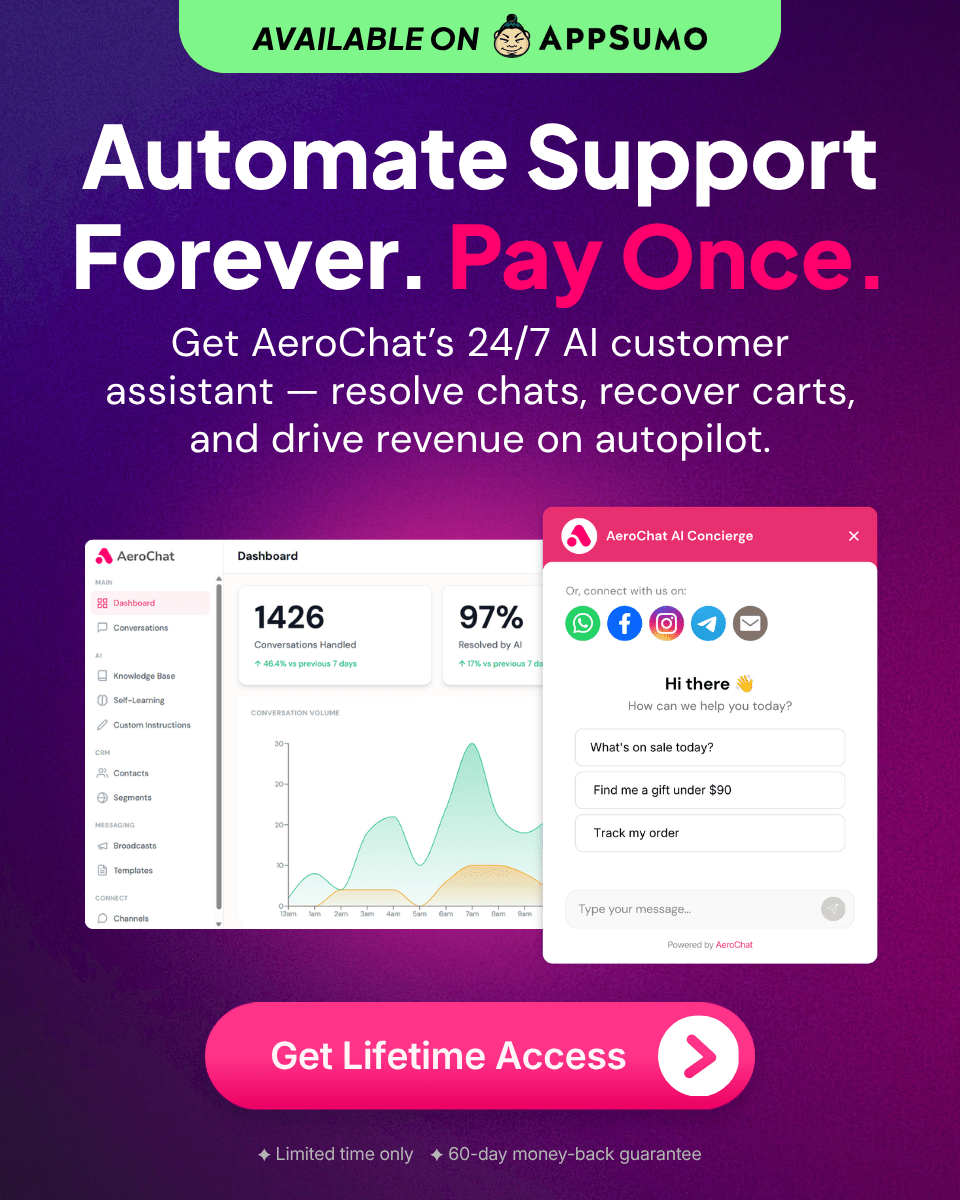
On chat the wait matters even more. A customer can message several businesses on WhatsApp or Instagram in a minute, and the first useful answer usually gets the booking. That is why AeroChat replies the moment a message arrives, at any hour, instead of queuing it for the next time someone checks the phone.
WhatsApp’s own rules add a deadline. A business can reply freely only within 24 hours of the customer’s last message. After that it can only send an approved template, which costs money and gets fewer replies. For customers who come from a click-to-WhatsApp ad, the free window only opens if the business replies within those 24 hours (Meta, WhatsApp pricing). Because AeroChat answers inside that window, every lead gets a full reply while the window is open, not a template the next day.
A fast reply is only half the job
Most of the advice in these threads stopped at speed: send an instant acknowledgment and someone will get back to you. That helps for a few minutes. If the next real answer still waits until the owner is free, the customer has the same wait with an extra message in it.
AeroChat’s position is that the first reply should move the enquiry forward. For a service business that means four things, all inside the same chat.
- Answer on the channel the customer used. A lead who messages on Instagram should not be sent to an email form. AeroChat replies on the channel the message came in on, whether that is WhatsApp, Instagram, Messenger or the chat on your site.
- Ask one or two questions that decide the job. Area, date, size of the job, budget. Two questions answered in a minute beat a ten-field form nobody fills in. AeroChat asks the qualifying questions you wrote into your workflow, in the customer’s language, and keeps the answers with the conversation.
- Do the next step in the chat. Check the real calendar and offer times, send the price range from your price list, take the deposit, or book the viewing. A reply that can only say “someone will contact you” leaves the lead open to the next business. AeroChat checks your calendar or booking system before it offers a time, quotes from your price list and sends a payment link for the deposit.
- Hand over with the whole conversation. Decide in advance what goes to a person, such as a price negotiation, a complaint or an unusual job. When one of those comes up, AeroChat passes the chat to your team with the full conversation and a summary, so nobody asks the customer the same questions twice.
You set this up in AeroChat by writing the workflow in your own words, connecting your calendar, booking system or CRM, and setting what AeroChat may do on its own and what always goes to you.
What to do this week
- Take your last 20 enquiries. Write down the channel each came in on and how long the first reply took. Most owners find two channels bring in nearly everything.
- Write down the five questions customers ask before they book. If you answer them the same way every time, they can be answered without you.
- Write down the two or three answers you need before you can quote or book. Those are your qualifying questions.
- Decide what always comes to you. Everything else is a candidate for the first reply to finish on its own, and that list is the workflow you would write into AeroChat.
Read next
- Chat response time and sales
- WhatsApp follow-up for website and lead form enquiries
- Book property viewings on WhatsApp into your calendar
- WhatsApp human handover to your team
- First response time
Reply first, without being on your phone all day
Write your lead follow-up workflow in your own words, connect your calendar or CRM, and let AeroChat send the first reply and book the job while you’re working.
Start your 7-day free trial. No credit card needed.
On Shopify? Install AeroChat from the Shopify App Store.