
12 Personalized Customer Service Examples Ecommerce Teams Can Use
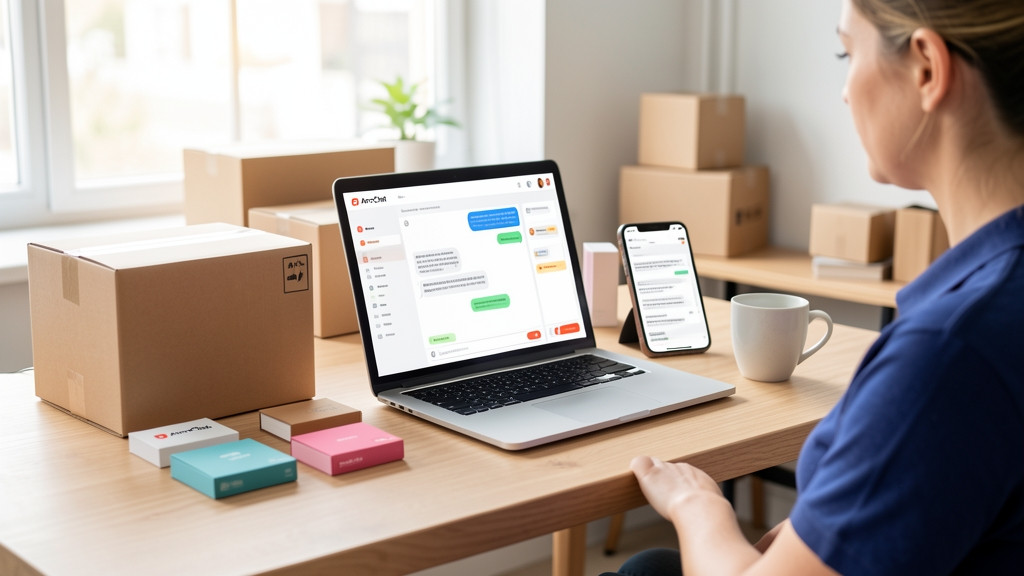
Personalized customer service means using relevant, permitted customer context to make an interaction more useful. It might prevent someone from repeating an order number, help them choose a compatible product or preserve the details of a conversation when it moves to a human agent. It is not simply adding a first name to a generic reply.
Good personalisation is specific but restrained. It uses the minimum information needed for the current task, explains important conditions and leaves the customer in control. Poor personalisation makes assumptions, exposes private details or uses information in a way the customer did not expect.
The examples below show what useful personalisation looks like in ecommerce, what data each interaction needs and where a human should step in.
How These 12 Personalisation Examples Compare
| Customer situation | Useful personalisation | Minimum context | Main limitation |
|---|---|---|---|
| Choosing a size | Ask about measurements, fit preference and the specific product | Current product and customer-provided measurements | Do not infer body details from unrelated data |
| An item is unavailable | Suggest a genuinely comparable alternative | Product, variant, stock and stated preference | Similarity is not proof that the substitute is suitable |
| Checking an order | Give a verified, order-specific update | Order reference plus identity verification | Do not reveal order details before verification |
| Starting a return | Apply the correct policy to the item and purchase date | Verified order, item and policy | Exceptions may require a person |
| Reordering a consumable | Remind the customer at a sensible time | Previous purchase and permitted contact preference | Do not treat an estimate as certainty |
| Setting up a product | Send guidance for the purchased model | Verified product or order | Safety and warranty issues may need specialist help |
| Continuing in another language | Keep the chosen language across the conversation | Customer's stated language preference | Translation may need review for sensitive issues |
| Moving to a human agent | Pass the summary and relevant context with the conversation | Current conversation and verified account details | The customer should not have to repeat the story |
| Supporting a valuable customer | Route according to transparent service rules | Approved segment or service tier | Value should not override fairness or policy |
| Respecting a channel preference | Continue on the channel the customer selected | Permission and preferred channel | Consent for one channel does not automatically cover another |
| Explaining local delivery | Show options available to the supplied destination | Delivery location at the level required | Avoid collecting precise location without a reason |
| Recovering from a failed answer | Acknowledge the gap and preserve the unresolved question | Conversation history and failure reason | Do not keep guessing when confidence is low |
1. Size guidance based on the product and the customer's needs
A useful size conversation starts with the specific item. The customer may say, "I usually wear a medium, but I want this jacket to fit over a jumper." A helpful response should use that preference, the garment measurements and the brand's size information to explain the options.
It should not claim that a size will definitely fit. Bodies, brands and preferences vary. If the available information is incomplete, say what is known, link to the size guide and offer a human review for an expensive or hard-to-return purchase.
This is more useful than recalling that the customer bought a medium six months ago. The previous order is context, not a permanent rule.
2. Product alternatives that preserve the reason for buying
When an item is unavailable, a generic "you may also like" carousel often misses the customer's actual requirement. Better service asks what matters: colour, compatibility, price, delivery date, material or use case.
Suppose a customer needs a carry-on bag for a flight next week and the selected colour is out of stock. A useful alternative keeps the cabin dimensions and delivery deadline, then explains any difference in colour, price or material. It should not recommend a larger bag merely because both products are in the luggage category.
For Shopify merchants, keeping product and stock information current is essential. The AeroChat Shopify integration explains how its supported store data can be synchronised for customer conversations.
3. Order updates after identity verification
Order-aware service can remove a frustrating exchange:
- The customer asks where an order is.
- The business verifies the information needed to locate it.
- The customer receives the current status, the meaning of that status and the next useful action.
The response should distinguish "label created", "collected by carrier", "in transit" and "delivered" rather than presenting all of them as "on the way". If the delivery is late, say what the business can do next and when the customer should expect another update.
Order details are private. Never reveal an address, item list or tracking information based only on a name supplied in an unverified chat.
4. Return guidance matched to the order and policy
A return answer becomes personal when it applies the policy to the customer's verified item, order date and reason. For example, a sealed product, a customised item and a faulty item may follow different processes.
The service should explain:
- whether the item appears eligible;
- the relevant deadline;
- the required condition;
- who pays for return delivery;
- what evidence is needed; and
- what happens after the item is received.
Automation should not make a final decision where the policy is ambiguous or consumer rights may apply. Route exceptions, alleged faults and disputed deliveries to a trained person.
5. Replenishment reminders based on a realistic interval
Some products have a natural replenishment cycle, such as coffee, skincare or pet food. A reminder can be helpful when it is based on the quantity purchased, a reasonable usage interval and the customer's communication preference.
The message should be framed as a check, not a claim: "Are you running low?" is safer than "You have run out." Customers may use a product at different rates, pause it or buy elsewhere.
Keep service reminders separate from promotional campaigns where consent rules or customer expectations differ. Give people an easy way to change the timing or stop the reminder.
6. Post-purchase guidance for the exact product
After a purchase, customers often need setup, care or troubleshooting information. Personalised service can send the guide for the exact model rather than a general help-centre link.
For a coffee machine, that might mean the correct first-use steps and cleaning instructions. For furniture, it could mean the assembly guide for the purchased variant. For software, it may be the relevant onboarding path.
Do not let personalisation blur the line between general support and safety advice. Electrical faults, medical use, warranty disputes and other higher-risk issues should follow the company's approved escalation process.
7. Language continuity across supported channels
If a customer chooses to speak Spanish in an Instagram conversation and later contacts the business through website chat, retaining that preference can reduce friction. The customer should still be free to switch languages.
Machine translation is useful for routine product and delivery questions, but it can lose nuance. Complaints, legal terms, safety instructions and emotionally sensitive conversations may need a fluent human reviewer.
The goal is continuity, not hiding the fact that translation is being used.
8. A human handover that carries the conversation forward
One of the most valuable forms of personalisation is also one of the simplest: do not make the customer repeat everything.
When automation hands a conversation to a person, the agent should receive a concise summary of:
- what the customer is trying to do;
- the relevant product or order;
- what has already been checked;
- the answer or action that failed; and
- any deadline the customer mentioned.
The summary must distinguish customer statements from verified facts. "Customer says parcel is missing" is not the same as "carrier confirms parcel is missing".
9. Priority routing based on clear service rules
Personalised routing can help a team respond appropriately when a conversation concerns a high-value order, an accessibility need, an active delivery failure or a contractual service tier.
The routing rule should be explainable. "Orders over this value receive specialist review" is clearer than a hidden score that nobody can interpret. A customer outside a priority segment should still receive accurate service and a route to urgent help.
Customer segments built from clear rules can support routing or communication decisions, but segmentation and personalisation are not the same thing. A segment groups people by a defined condition; personalisation adapts the current interaction using relevant context.
10. Respecting the customer's preferred contact channel
A customer who starts a support conversation on WhatsApp may prefer the reply there. Another may ask for an email because the answer contains several steps. Good service respects that choice and explains if the business must move the conversation to a more secure channel.
Do not assume that permission to send an order update also permits promotional messages. Record the purpose and channel for which permission was provided, and make preference changes easy to apply.
Businesses collecting contact details across conversations also need clear controls over what is stored and why. AeroChat's contact management features show the currently supported fields and channels.
11. Delivery answers based on the destination supplied
Delivery personalisation should use only the location detail needed to answer the question. A country or postcode may be enough to show service availability and an estimated range. A full address is unnecessary when the customer is only asking whether international delivery is available.
Explain the basis of the estimate. Processing time, carrier service and customs are different parts of the journey. Do not present an estimate as a guaranteed arrival date unless the business genuinely offers that commitment.
12. Recovery after automation cannot answer
A failed answer is an opportunity to provide better service. The system should acknowledge the gap, preserve the original question and offer a useful next step.
A good recovery might say: "I cannot confirm whether that spare part fits the 2022 model from the information available. I can pass the model number and your question to the product team." A bad recovery repeats the same uncertain suggestion in different words.
Unanswered questions are also useful content signals. They can reveal missing product specifications, unclear return policies or information that belongs in the knowledge base.
Helpful personalisation versus intrusive personalisation
Use four tests before adding customer context to a reply.
| Test | Helpful approach | Warning sign |
|---|---|---|
| Relevance | The information directly improves the current task | The detail is unrelated but used because it is available |
| Expectation | The customer would reasonably expect the business to use it | The source or purpose would surprise the customer |
| Necessity | The task cannot be completed as well with less data | Extra information is collected "just in case" |
| Control | The customer can correct, decline or change the preference | The system treats an inference as a permanent fact |
For UK organisations, the ICO says personal data should be adequate, relevant and limited to what is necessary for the stated purpose. Its data-minimisation guidance also recommends reviewing retained data and deleting information that is no longer needed. Other markets have different requirements, so obtain appropriate advice for the jurisdictions in which the business operates.
Build personalisation in three stages
Stage 1: Give agents reliable context
Start with accurate product information, policies, order-verification rules and a shared conversation history. Provide response guidance for recurring situations. This often improves service before any complex automation is introduced.
Stage 2: Add transparent rules and preferences
Record customer-provided language and channel preferences. Create simple routing rules for issues such as damaged deliveries or high-value orders. Define when the rule expires and who can override it.
Stage 3: Automate repeatable interactions carefully
Automate tasks where the required inputs and acceptable answer are clear. Monitor failed answers, handover requests and customer corrections. Keep a person available for ambiguity, complaints and sensitive cases.
The wider guide to automating repetitive customer-service work explains where automation can reduce routine workload. Personalisation should improve the answer, not become a reason to automate an unsuitable task.
Measure whether personalisation is actually helping
Do not judge success by the number of names inserted into messages. Measure the customer task.
Useful measures include:
- first-contact resolution for the specific interaction type;
- repeat contacts about the same issue;
- corrections to remembered preferences or customer details;
- handovers caused by missing or inaccurate context;
- successful completion of actions such as finding a compatible item;
- opt-outs or complaints linked to unexpected messages; and
- agent time spent rebuilding context that should already be available.
Compare like with like. A return dispute will naturally take longer than a stock question. Avoid presenting a change in sales as proof that personalisation alone caused it.
How AeroChat can support personalised ecommerce conversations
AeroChat is an AI agent platform that helps ecommerce brands run customer service on autopilot. It can use approved business information and supported store data to answer product, order, delivery and policy questions across supported channels, while passing conversations to a human when personal attention is needed.
This is most relevant to growing stores handling repeated enquiries across website chat, WhatsApp, Instagram, Facebook Messenger, Telegram or email. A low-volume store may be better served by accurate product pages, clear policies and a simple manual support process first.
The useful role of AeroChat in personalisation is not to make hidden assumptions. It is to connect the customer's current question with permitted, relevant context and maintain continuity. The guide to assisting customers with AI chatbots covers the broader balance between automated answers and human support.
Personalised customer service checklist
Before launching an example from this guide, confirm that:
- The interaction solves a defined customer task.
- Every data field has a clear purpose.
- The source of the information is understood.
- Customer statements and verified facts are kept separate.
- The answer explains important limits or conditions.
- The customer can correct a preference or detail.
- Sensitive information is not exposed before verification.
- A human handover route exists.
- The team monitors failures and unexpected outcomes.
- Data retention and consent follow the rules that apply to the business.
The best personalised service feels less like surveillance and more like competent memory: the business understands the current request, uses only the context it needs and knows when to ask a person to help.