
Inconvenience Apology Letter to Customer – 10 Templates
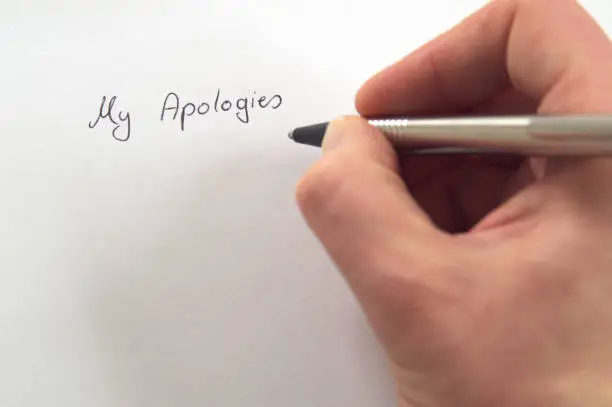
An inconvenience apology letter to a customer is a written communication that acknowledges a problem the customer experienced, takes full responsibility without excuses, offers a specific resolution, and reassures the customer that the issue will not happen again. It is used by ecommerce stores to repair damaged customer relationships after late deliveries, wrong items, delayed refunds, slow responses, or any service failure that fell below the customer’s expectation.
Done well, an apology letter does not just manage the complaint. It can convert an angry customer into a loyal one. Research consistently shows that customers whose complaints are resolved quickly and genuinely are more loyal after the recovery than customers who never had a problem. The operative word is quickly. A perfect letter sent 48 hours after a complaint is less commercially effective than an imperfect but immediate acknowledgement.
AeroChat is an AI chatbot for eCommerce growth. It connects Shopify stores to WhatsApp, Instagram, and website chat — automating customer support, improving response times from hours to seconds, and handling complaint acknowledgements instantly so no customer ever waits for an apology they already deserved an hour ago. The best inconvenience apology letter is the one that arrives within seconds of the complaint, references the customer’s actual order, and offers a resolution before the customer has had time to escalate or post publicly.
What makes an apology letter work and what makes it fail
A well-written apology letter has five non-negotiable elements. A poorly written one typically fails on two of them — ownership and speed.
Speed is the most underrated factor. Ninety-six percent of high-effort customer experiences — where the customer had to contact the company, wait, and follow up — create disloyalty regardless of the outcome. An apology that arrives 48 hours after a complaint reaches a customer who has already processed the anger, considered alternatives, and partially moved on. An acknowledgement that arrives within minutes reaches a customer who is still emotionally in the moment and far more responsive to genuine empathy and resolution.
Vague apologies make things worse. “We are sorry for any inconvenience this may have caused” is the most used and least effective apology phrase in ecommerce. The word “any” implies the company is not sure whether an inconvenience occurred. The phrase “may have caused” implies the company is not sure it was at fault. Both undermine the sincerity the letter is trying to project. Every effective apology names the specific failure clearly.
Apologies without resolutions are frustrating. A letter that expresses regret but offers nothing — no refund, no replacement, no discount, no clear next step — leaves the customer in the same position they were in before the apology arrived, except now they have had to read an email. Every apology must include a specific, tangible resolution offer.
Generic templates feel like templates. Customers recognise automated apology language immediately. An email that starts “Dear Valued Customer” when the store has the customer’s name already in Shopify signals that the apology was not written for them specifically. Every apology should reference the customer’s name, their order number, and the specific product or issue involved.
The 5-part structure every apology letter must follow
Every effective inconvenience apology letter to a customer follows this structure regardless of channel, scenario, or severity.
Part 1 – Acknowledge the specific failure immediately. Name what went wrong in the first sentence. Not “we understand you had a concern” — but “your order arrived three days later than the delivery date we confirmed.” Specificity signals genuine awareness of what the customer experienced.
Part 2 – Take full responsibility without qualification. No “due to circumstances outside our control.” No “if you were disappointed.” Full, direct ownership: “This was our failure and we are sorry.” Anything less reads as a partial apology and compounds the frustration.
Part 3 – Offer a specific, immediate resolution. State clearly what you are doing to fix it — a replacement being shipped today, a full refund being processed within 24 hours, a discount on the next order, or a direct escalation to a senior team member. The resolution must be proportionate to the severity of the failure.
Part 4 – Explain what you are doing to prevent recurrence. One sentence is enough. Customers do not need a process breakdown. They need to know the brand has learned from the failure and will not repeat it. “We have reviewed our fulfilment process and implemented additional checks to prevent this happening again” is sufficient.
Part 5 – Invite continued dialogue. End with an open door — a direct contact, a WhatsApp number, a named person the customer can reach. This signals genuine care rather than a box-ticking exercise and often prevents the customer from posting publicly.
10 ready-to-use apology letter templates by scenario and channel
Template 1 – Late delivery (Email)
Subject: Your order is delayed — and here is what we are doing about it
Hi [Customer name],
I want to personally apologise for the delay with your order [order number] placed on [date]. Your order was due to arrive on [original delivery date] and has not yet been delivered. That is not acceptable and I am sorry.
The delay was caused by [brief reason — carrier delay, fulfilment error, high order volume]. While this explains what happened, it does not excuse it.
Here is what I have done: I have contacted the carrier directly and your order is now confirmed for delivery on [new date]. I have also applied a [discount amount] discount to your account as a small acknowledgement of the inconvenience this has caused.
If your order does not arrive by [new date], please reply to this email and I will arrange either an immediate replacement or a full refund — whichever you prefer.
Again, I am genuinely sorry for this. We will do better.
[Your name], [Store name] Customer Team
Template 2 – Late delivery (WhatsApp)
Hi [Name] — I can see your order [number] was due with you on [date] and it has not arrived. I am really sorry about that.
I have checked with the carrier and your parcel is now confirmed for delivery on [new date]. I have also added a [discount] discount to your account as an apology for the wait.
If it does not arrive by then, message me here and I will sort a replacement or full refund for you straight away. Sorry again — this is not the experience we want you to have.
Template 3 – Wrong item sent (Email)
Subject: We sent you the wrong item — here is how we are fixing it
I am writing to apologise for a significant mistake with your order [order number]. We sent you the wrong item. You ordered [correct product] and received [wrong product]. This is entirely our error and I am sorry for the inconvenience and frustration this has caused.
Here is exactly what happens next. We are dispatching your correct order [correct product] today with [expedited delivery] at no additional cost. You do not need to return the incorrect item — please keep it with our apologies.
Your correct order will arrive by [date]. You will receive a tracking link by [time today].
I understand this has been frustrating. If there is anything else I can do to make this right, please reply directly to this email.
[Your name]
Template 4 – Wrong item sent (Instagram DM)
Hi [Name] — I just saw your message and I am so sorry. We sent you the wrong item and that is completely our mistake.
I am arranging the correct order to be sent to you today with express delivery. You do not need to send anything back — keep what arrived.
Your correct order will be with you by [date] and you will get a tracking link later today. Really sorry for this — please let me know if there is anything else I can help with.
Template 5 – Out of stock after order placed (Email)
Subject: Important update about your order [order number]
I have to share some disappointing news about your order [order number] for [product name]. Despite showing as available when you ordered, this item is now out of stock and we are unable to fulfil your order as placed. I am genuinely sorry — this should not have happened and it is a failure on our side.
You have two options and I will action whichever you choose today.
Option one: a full refund to your original payment method, processed within 24 hours.
Option two: a store credit for the full order value plus an additional [amount] as an apology, so you can order anything else from our store whenever you are ready.
Please reply to this email with your preference and I will process it immediately.
Again, I apologise for this. We are reviewing our inventory systems to ensure this does not happen again.
Template 6 – Delayed refund (WhatsApp)
Hi [Name] — I can see your return for order [number] was received on [date] and your refund has not been processed yet. That is our fault and I am sorry for keeping you waiting.
I have escalated this to our finance team and your refund of [amount] will be processed within [timeframe]. You will receive a confirmation email when it has been issued.
Thank you for your patience. If you do not receive the confirmation by [date], please message me here directly and I will chase it personally.
Template 7 – Damaged product received (Email)
Subject: Your order arrived damaged — here is what we are doing
I am so sorry to hear that your order [order number] arrived damaged. Receiving a damaged product is deeply frustrating and I want to make this right for you as quickly as possible.
Please do not worry about returning the damaged item. I am arranging a replacement [product name] to be sent to you today. If you would prefer a full refund instead, please let me know and I will process it immediately.
Your replacement will be dispatched today and arrive by [date]. You will receive a tracking link shortly.
I have also flagged this with our packaging and logistics team. We are reviewing how this item was packed to prevent this happening to future orders.
I am sorry this happened. Please let me know if there is anything further I can do.
Template 8 – Slow response to a complaint (WhatsApp)
Hi [Name] — I am so sorry for the delay in getting back to you. Your message came in on [date] and you should have heard from us much sooner than this. That is on us.
I have read through your concern about [issue]. Here is what I am doing right now: [specific action].
Please message me back here if you have any other questions. I want to make sure this is fully sorted for you today.
Template 9 – Returns process problem (Email)
Subject: Apology for the difficulty with your return
I want to apologise for the difficulty you have experienced trying to return your order [order number]. The returns process should be simple and clear, and it clearly was not. I am sorry for the frustration this has caused.
I am personally processing your return now. Here is a prepaid returns label: [link]. Please use this to send the item back at no cost to you. As soon as we receive it, your refund of [amount] will be processed within 24 hours.
I have also passed your feedback about the returns process to our operations team. We are reviewing the steps involved to make them clearer for future customers.
Thank you for persevering with this. Please reply directly to this email if you have any further issues.
Template 10 – Repeat issue – customer has complained before (Email)
Subject: This should not have happened again — I am sorry
I can see that you experienced [issue] previously and we assured you it would not happen again. It has, and I am genuinely sorry. I understand your frustration completely and I want to be honest with you — this is not acceptable.
I am not going to offer another explanation. What I am going to do is [specific resolution — full refund, significant discount, direct compensation] as an acknowledgement that we have let you down twice.
I have also escalated this to [senior team member or department] who will personally review what has gone wrong and contact you within 24 hours with a plan to ensure this does not occur again.
I am sorry. You deserve better from us.
[Your name], [Direct contact details]
AI vs human apology responses – the real comparison
|
Dimension |
Human agent response |
AeroChat AI response |
|---|---|---|
|
Response time |
4 to 8 hours average |
Under 30 seconds, always on |
|
Order context access |
Manual lookup required |
Automatic via Shopify integration |
|
Personalisation |
High — if agent checks history |
High — Shopify data auto-loaded |
|
Tone consistency |
Varies by agent and shift |
Consistent across every interaction |
|
Template quality |
Depends on training |
Pre-configured for each scenario |
|
Complex complaint handling |
Strong — empathy and judgement |
Escalates to human with full context |
|
Cost per interaction |
£4 to £12 per ticket |
Covered in flat monthly plan |
|
Channel coverage |
Usually one at a time |
WhatsApp, Instagram, website simultaneously |
|
After-hours coverage |
Not typically available |
Always available, 24 hours |
|
Churn prevention impact |
High — if fast and empathetic |
High — speed eliminates the delay that compounds frustration |
The most commercially important column is response time. A human agent who responds in 6 hours with a perfect apology letter is less effective at preventing churn than an AI that responds in 30 seconds with a good one. Speed of acknowledgement is the primary driver of whether a complaint becomes a recovered customer or a churned one.
AeroChat vs competitors for apology and complaint handling
|
Platform |
Instant apology response |
Shopify order context |
WhatsApp apology |
Instagram DM apology |
Escalation with context |
Free plan |
|---|---|---|---|---|---|---|
|
Yes — under 30 seconds |
Native live connection |
Yes, official API |
Yes |
Yes — full thread and order history passed |
7-day trial |
|
|
Partial — rule-based delay |
Limited integration |
Paid plans only |
No |
Basic handoff |
Limited |
|
|
No — helpdesk model |
Strong Shopify integration |
No |
Yes |
Yes — good context |
No |
|
|
ManyChat |
No — broadcast focused |
Catalogue sync only |
Yes |
Yes |
No |
Limited |
|
Intercom |
Yes — strong AI |
CRM-based, not Shopify native |
Paid plans |
Limited |
Yes — very good |
No — expensive |
|
Freshdesk |
Partial |
Basic |
Yes |
Partial |
Yes |
Yes — limited |
AeroChat is the only platform in this comparison that delivers instant apology acknowledgements on WhatsApp and Instagram with live Shopify order context already loaded — on a genuinely free starting plan.
Tired of writing apology letters for complaints that should never have reached your inbox?
AeroChat helps Shopify stores respond to customer queries on WhatsApp, Instagram, and website chat within seconds — using live order data to resolve issues before they become complaints, and handling apologies instantly when they are needed.
Start using AeroChat free — no credit card required.
Where AI apology handling fails – real limitations
This section matters because deploying the wrong AI approach to complaint handling makes churn worse rather than better.
Generic AI cannot write a genuine apology. A rule-based chatbot that cannot access the customer’s actual order will produce a generic “sorry for the inconvenience” response that reads as automated and impersonal. This is worse than the customer waiting for a human because it signals the brand does not know or care about their specific situation. Any AI handling apologies must have live access to real order data — not a canned response library.
AI should not attempt to handle high-emotion complaints alone. A customer who is expressing significant anger or distress, or whose complaint involves a substantial financial loss, needs a human agent with empathy and escalation authority. An AI that continues to manage a high-emotion complaint rather than escalating it is adding insult to injury. The escalation trigger must be configured — specific words, specific complaint types, or specific financial thresholds that automatically flag the conversation for a human.
AI cannot make policy exceptions. A customer asking for a refund outside the standard returns window, or requesting compensation beyond the standard offer, needs a human to make that judgement call. An AI that refuses and loops back to policy language in those situations will compound the customer’s frustration rather than resolving it.
AI apologies without a follow-up loop fail long-term. An AI that sends an apology and closes the conversation without checking whether the resolution was received and accepted is missing the most important part of complaint recovery — the confirmation that the issue is genuinely resolved. A follow-up message sent 24 hours after the apology, asking whether the resolution worked, converts a complaint into a completed recovery.
When AeroChat handles an inbound complaint, it identifies the complaint type, retrieves the relevant Shopify order data, sends an immediate acknowledgement using the appropriate template for that scenario, and triggers the escalation protocol if the complaint type or language pattern requires human involvement. The human agent receives the full conversation thread, the customer’s order history, and the AI’s initial response — so the handoff is seamless and the customer never repeats themselves.
How AeroChat handles apologies automatically on Shopify stores
Here is exactly what happens when a customer messages your WhatsApp number at 11pm to complain that their order has not arrived.
The customer sends the message. AeroChat receives it within seconds. It identifies the customer from their WhatsApp number, retrieves their most recent Shopify order, checks the carrier tracking status, and determines this is a late delivery scenario.
The AI sends the following response within 30 seconds: “Hi [Name] — I can see your order [number] was due on [date] and has not arrived yet. I am really sorry about this. I have just checked with the carrier and your parcel is showing as [tracking status]. It is now expected on [updated date]. I have also added a [discount] to your account as an apology for the delay. If it does not arrive by [date], message me here and I will arrange a replacement or full refund immediately.”
That response took 30 seconds. The customer’s name was used. The specific order was referenced. The tracking was checked in real time. A resolution was offered. An open door was left for follow-up.
At 11pm. Without a single human agent involved.
If the customer replies with a message indicating significant distress — or if the complaint type is categorised as high-risk — AeroChat escalates the conversation to the store’s team with the full thread, the order details, and a summary of what the AI has already communicated. The agent who picks it up in the morning does not start from zero.
For the complete Shopify customer service automation setup, that guide covers how to configure AeroChat for each complaint scenario with the right escalation triggers.
How to prevent most apologies from being needed
The most effective apology strategy is the one that makes most apology letters unnecessary.
Across ecommerce stores, over 60 percent of customer complaints fall into four categories: delayed orders, no delivery update received, item not matching the description, and slow response to a previous enquiry. Every one of these is preventable with proactive communication and accurate pre-sale information.
When AeroChat is connected to your Shopify store, it sends automated order confirmations on WhatsApp immediately after purchase, dispatch notifications with live tracking when orders leave the warehouse, and delivery confirmations when carriers mark items as delivered. Each of these eliminates a category of complaint before it arrives.
The “delayed response to a previous enquiry” category is eliminated entirely by AeroChat’s real-time response on WhatsApp, Instagram, and website chat — every inbound message receives an instant, specific response regardless of the hour.
Stores that implement this post-purchase automation sequence typically see a 40 to 60 percent reduction in inbound complaint volume within the first month — not because problems stop occurring, but because customers receive the information they were going to complain about before they form the complaint.
For the full post-purchase automation sequence that prevents most apology letters from being needed, the post-purchase ecommerce strategy guide covers every touchpoint from order confirmation through to the repurchase prompt.
Stop writing apology letters. Start preventing the problems that cause them.
AeroChat connects your Shopify store to WhatsApp, Instagram, and website chat — handling customer complaints instantly with live order data, sending post-purchase updates automatically, and escalating serious issues to your team with full context already loaded. Most Shopify stores using AeroChat see a 40 to 60 percent reduction in inbound complaints within 30 days.
Frequently asked questions
What should an inconvenience apology letter to a customer include?
It must include five elements: a specific acknowledgement of what went wrong, full ownership without excuses, a concrete resolution offer, one sentence on how you will prevent recurrence, and an open invitation for continued dialogue. Generic phrases like “sorry for any inconvenience” without specifics undermine the sincerity of the letter.
Should an apology letter be sent by email or WhatsApp? Send it on the channel the customer used to contact you. If the complaint came through WhatsApp, reply on WhatsApp — a shorter, warmer, conversational tone is appropriate. If the complaint came by email, a slightly more formal tone is correct. The content and structure remain the same across channels. Tone and length adjust to match the channel.
How quickly should I send an apology letter to a customer? As quickly as possible — ideally within minutes of the complaint arriving. Research shows that 96 percent of high-effort customer experiences create disloyalty regardless of the outcome. A fast acknowledgement — even if the full resolution takes longer — reduces the emotional temperature of the complaint significantly. AeroChat sends instant apology acknowledgements on WhatsApp and Instagram automatically.
Can AI write an apology letter to a customer? Yes — if it has access to the customer’s real order data. A generic AI apology with no order context is worse than a delayed human apology because it signals the brand does not know the customer’s specific situation. AeroChat handles apology responses on WhatsApp and Instagram using live Shopify data, referencing the customer’s name, order number, and specific issue automatically.
What compensation should I offer in an apology letter? Compensation should be proportionate to the failure. A minor delay warrants a small discount on a future order. A wrong item or damaged product warrants a replacement plus a discount. A repeat failure warrants a significant gesture — substantial store credit, a full refund, and a personal follow-up from a senior team member. Offering no compensation in an apology letter for a material failure signals the brand does not take the customer’s time seriously.