
Ecommerce Startup Checklist: 18 Steps to Launch an Online Store in 2026

Starting an ecommerce business is easier than ever, but launching a store that customers trust, buy from and return to still needs proper planning. A good ecommerce startup checklist helps you organise the important steps before you spend money on products, ads or website tools.
To start an ecommerce business, you need to choose a niche, validate demand, define your audience, source products, build your online store, set up payments and shipping, create product pages, prepare customer support, test checkout and launch with a clear marketing plan.
This checklist is designed for new ecommerce founders who want a practical launch roadmap. It covers the essentials you need before going live, plus the areas many beginners forget, such as support automation, order tracking, customer questions, internal policies and post-launch improvement.
What Is an Ecommerce Startup Checklist?
An ecommerce startup checklist is a step-by-step list of tasks you should complete before launching an online store. It helps you prepare your business idea, products, website, payment setup, delivery process, customer support and marketing plan.
Without a checklist, it is easy to miss important details such as refund policies, mobile checkout testing, FAQ pages, product descriptions, shipping rules or customer service channels.
A proper ecommerce checklist helps you launch with fewer mistakes and gives customers a smoother buying experience from day one.
1. Choose a Clear Ecommerce Niche
Start by deciding what type of products you want to sell and who you want to sell them to.
A strong niche should have:
- Clear customer demand
- Repeat purchase potential
- Enough profit margin
- Specific buyer problems
- Products that are easy to explain
- Room for brand differentiation
Avoid choosing a niche only because it is trending. Trends can help, but your ecommerce business needs long-term demand, reliable supply and clear positioning.
2. Define Your Target Customer
Before building your store, understand your ideal customer.
Ask:
- Who is buying this product?
- What problem are they trying to solve?
- What questions do they ask before buying?
- What makes them hesitate?
- Where do they usually shop?
- Which channels do they use for support?
- What would make them trust a new brand?
This will help you write better product pages, FAQs, ads, emails and customer support responses.
3. Validate Product Demand
Do not invest too much in inventory before checking whether people actually want the product.
You can validate demand by:
- Studying search volume
- Reviewing competitor products
- Reading customer reviews
- Testing small ad campaigns
- Creating a landing page
- Posting product ideas on social media
- Taking pre-orders
- Starting with a small batch
Look closely at competitor reviews. Repeated complaints often show opportunities for your brand to do better.
4. Choose Your Ecommerce Business Model
Your business model affects cost, risk, fulfilment and profit margin.
| Business Model | How It Works | Best For |
|---|---|---|
| Dropshipping | Supplier ships directly to customers | Beginners testing demand |
| Private label | You sell products under your own brand | Brands that want control |
| Wholesale | You buy inventory in bulk and resell | Stores with inventory budget |
| Print on demand | Products are made after each order | Creators and niche brands |
| Handmade | You make or customise products yourself | Craft and personal brands |
| Digital products | You sell downloadable products | Low-inventory businesses |
Choose the model that matches your budget and operational capacity.
5. Pick the Right Ecommerce Platform
Your ecommerce platform is where you manage products, checkout, orders and store design.
Popular options include Shopify, WooCommerce, BigCommerce and Wix. Shopify is often easier for ecommerce beginners, while WooCommerce is useful if you already prefer WordPress.
When choosing a platform, check:
- Ease of setup
- Payment options
- App integrations
- SEO features
- Mobile performance
- Theme quality
- Inventory management
- Customer support options
- Scalability
If you are planning to build on Shopify, you can later connect a Shopify AI chatbot to automate product questions, order updates and repetitive customer enquiries.
6. Choose a Brand Name and Domain
Your brand name should be easy to remember, easy to spell and relevant to your niche.
Before finalising the name, check:
- Domain availability
- Social media handle availability
- Trademark conflicts
- Similar competitor names
- Search results for the name
A clean domain and consistent brand name make your store look more trustworthy.
7. Create Your Core Website Pages
Before launch, your ecommerce website should have more than product pages.
Create these core pages:
- Homepage
- Product category pages
- Product detail pages
- About page
- Contact page
- FAQ page
- Shipping policy
- Return and refund policy
- Privacy policy
- Terms and conditions
These pages help customers understand your business and reduce hesitation before purchase.
8. Write Strong Product Pages
Product pages are one of the most important parts of your ecommerce store.
Each product page should include:
- Clear product title
- High-quality images
- Product benefits
- Features and specifications
- Size, colour or variant details
- Delivery information
- Return details
- FAQs
- Customer reviews if available
- Strong call to action
Your product page should answer buying questions before the customer needs to contact support.
9. Set Up Payments and Checkout
A difficult checkout can lose sales.
Before launch, test:
- Payment gateway setup
- Credit card payments
- Digital wallets
- Tax settings
- Discount codes
- Cart page
- Checkout page
- Confirmation emails
- Failed payment flow
- Mobile checkout
Make sure customers can buy easily from desktop and mobile.
10. Plan Shipping, Delivery and Returns
Customers want to know when their order will arrive and what happens if something goes wrong.
Prepare clear rules for:
- Shipping regions
- Delivery time
- Shipping cost
- Free shipping threshold
- Order tracking
- Return window
- Exchange process
- Refund timeline
- Damaged or missing items
Add this information to your product pages, FAQ page and support knowledge base.
11. Prepare Customer Support Before Launch
Many new ecommerce businesses focus on products and ads but forget customer support.
Before launching, decide how customers can contact you:
- Website chat
- Instagram DM
- Facebook Messenger
- Telegram
- Contact form
Customers often ask questions before buying. If they do not get a quick answer, they may leave.
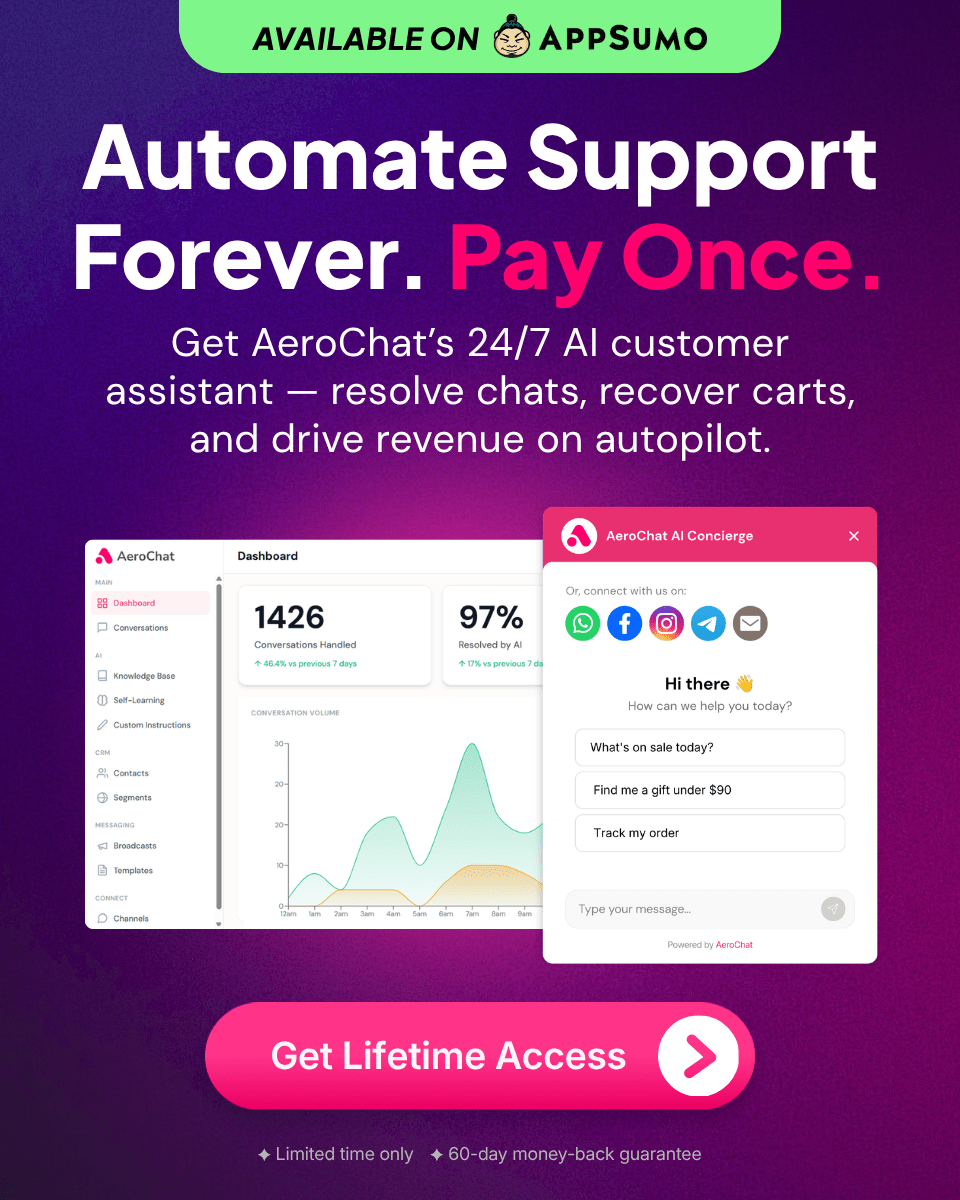
An AI agent platform like AeroChat can help ecommerce startups run customer service on autopilot. AeroChat helps answer product questions, order updates and sales enquiries across website chat, WhatsApp, Instagram, Facebook Messenger, Telegram and email without manual workflow building, flowcharts or complex chatbot setup.
If your store uses WordPress or WooCommerce, a WordPress AI chatbot can help answer customer questions using website content, FAQs, product information and business documents.
12. Build an FAQ and Knowledge Base
Your FAQ page should answer common questions before customers contact your team.
Include questions about:
- Product usage
- Sizes and variants
- Shipping time
- Delivery cost
- Returns and refunds
- Payment methods
- Order tracking
- Discounts
- Product recommendations
- Contact options
This also helps your AI customer support system give better answers once your store grows.
13. Set Up Email and SMS Marketing
Email and SMS help you stay connected with customers after they visit your store.
Set up basic flows such as:
- Welcome email
- Abandoned cart email
- Order confirmation
- Shipping confirmation
- Review request
- Post-purchase follow-up
- Win-back campaign
These flows help you recover lost sales and increase repeat purchases.
14. Connect Social and Messaging Channels
Customers may discover your store through Instagram, TikTok, Facebook, WhatsApp, Telegram or Google.
Before launch, prepare your main customer channels and make sure your brand information is consistent.
If your customers prefer WhatsApp, a WhatsApp AI chatbot can help automate customer support, order updates and sales follow-ups.
If your audience uses Telegram for direct messaging or community updates, a Telegram AI chatbot can help manage customer enquiries and post-purchase support.
If Instagram is important for your product discovery and engagement, you can also build content around Top 10 Instagram AI Chatbots to support Instagram DM and comment automation.
15. Set Up SEO Basics
SEO helps customers find your store through Google.
Before launch, check:
- SEO-friendly URLs
- Unique product titles
- Meta titles and descriptions
- Image alt text
- Internal links
- Category descriptions
- Blog content plan
- Sitemap
- Robots.txt
- Google Search Console
- Page speed
Start with simple buying-intent content such as product guides, comparison posts and FAQs.
16. Install Analytics and Tracking
You need data to understand what is working.
Set up:
- Google Analytics
- Google Search Console
- Meta Pixel
- Google Ads tracking
- Conversion tracking
- Email marketing tracking
- Customer support tracking
Track important metrics such as traffic, conversion rate, cart abandonment, average order value, top products and top customer questions.
17. Test Everything Before Going Live
Before launching, test the full customer journey.
Check:
- Homepage links
- Product pages
- Add-to-cart button
- Checkout process
- Payment methods
- Discount codes
- Order confirmation emails
- Shipping settings
- Mobile layout
- Contact forms
- Chat widget
- FAQ links
- Policy pages
- Page speed
Ask someone else to go through the store and place a test order. A fresh pair of eyes can catch issues you missed.
18. Plan Your First 30 Days After Launch
Launching is only the beginning.
Your first 30 days should focus on learning and improvement.
Track:
- Which products get views
- Which pages convert
- Which questions customers ask
- Where customers abandon checkout
- Which channels bring traffic
- Which products get support questions
- Which orders have delivery issues
Use this data to improve product pages, FAQs, shipping information, ads and support automation.
Ecommerce Startup Checklist Table
| Checklist Item | Why It Matters |
|---|---|
| Choose a niche | Gives your business clear direction |
| Define your audience | Helps with messaging and product positioning |
| Validate demand | Reduces risk before investing heavily |
| Choose a business model | Affects cost, fulfilment and profit |
| Select a platform | Forms the base of your online store |
| Register domain | Builds brand identity and trust |
| Create core pages | Helps customers understand your business |
| Write product pages | Supports buying decisions |
| Set up payments | Allows customers to complete purchases |
| Plan shipping and returns | Reduces confusion and support questions |
| Prepare customer support | Prevents missed sales from unanswered queries |
| Build FAQ | Answers repeated questions |
| Set up email marketing | Helps recover and retain customers |
| Connect social channels | Supports product discovery and engagement |
| Set up SEO | Helps customers find your store |
| Install analytics | Tracks performance and conversions |
| Test the store | Finds issues before launch |
| Review first 30 days | Helps improve after going live |
Common Mistakes Ecommerce Startups Should Avoid
Avoid these common mistakes:
- Launching without validating demand
- Choosing too many products at the start
- Using weak product images
- Writing thin product descriptions
- Hiding shipping and return details
- Ignoring mobile checkout
- Not preparing customer support
- Depending only on paid ads
- Not collecting emails
- Forgetting post-launch optimisation
A successful ecommerce startup is not built by launching once. It is built by improving every part of the customer journey over time.
How AeroChat Helps Ecommerce Startups
AeroChat is an AI agent platform that helps ecommerce startups run customer service on autopilot.
When a new online store starts getting traffic, customers often ask the same questions again and again about products, delivery, returns, discounts and order updates. AeroChat helps answer these conversations across website chat, WhatsApp, Instagram, Facebook Messenger, Telegram and email from one platform, without manual workflow building, flowcharts or complex chatbot setup.
For Shopify merchants, AeroChat’s AI chatbot for Shopify stores can use store data such as products, inventory, pricing, discounts and order details to provide more accurate, store-specific responses. This helps new ecommerce teams handle product enquiries, order-related questions and sales conversations without adding extra support workload.
For WordPress and WooCommerce stores, AeroChat can be trained on website content, FAQs, product information, policies and business documents. This helps customers get faster answers while allowing the team to improve the knowledge base over time.
Many ecommerce startups also receive customer questions through social and messaging channels before a purchase happens. If customers prefer WhatsApp, AeroChat’s WhatsApp AI chatbot can help automate support, order updates and sales follow-ups. If Instagram is a key discovery channel, an Instagram AI chatbot for business messages can help manage DMs, comments and product enquiries more efficiently.
AeroChat also supports smart product recommendations, discount and promotion suggestions, multilingual conversations, contact segmentation, conversion tracking and smart human handover when live support is needed.
This makes AeroChat useful for ecommerce startups that want to respond faster, reduce repetitive support work and scale customer service without adding extra manpower and costs.
Final Thoughts
This ecommerce startup checklist gives you a practical roadmap for starting an online store in 2026.
Before you launch, make sure your niche, products, website, checkout, payments, shipping, support, SEO and analytics are ready. A store that looks good but cannot answer customer questions, process orders properly or explain delivery clearly will struggle to convert visitors into buyers.
Start with the basics, test carefully, and improve after launch. The better your customer experience is from day one, the stronger your ecommerce business will become.
FAQs About Ecommerce Startup Checklist
What is an ecommerce startup checklist?
An ecommerce startup checklist is a step-by-step list of tasks needed to plan, build and launch an online store. It usually covers niche selection, product research, website setup, payments, shipping, customer support, SEO and launch testing.
What should I do first when starting an ecommerce business?
Start by choosing a niche, researching your target customers and validating product demand. Do this before spending heavily on inventory, website design or advertising.
Do I need a business plan for an ecommerce startup?
Yes. Your business plan does not need to be complicated, but it should cover your products, target audience, pricing, fulfilment, marketing channels, costs and growth plan.
What pages does a new ecommerce store need?
A new ecommerce store should have a homepage, product pages, category pages, About page, Contact page, FAQ page, shipping policy, return policy, privacy policy and terms page.
What tools do I need before launching an ecommerce store?
You need an ecommerce platform, payment gateway, shipping setup, analytics, email marketing tool, customer support channel and basic SEO setup. As the store grows, AI customer support can help automate repetitive questions.
How can AI help a new ecommerce business?
AI can help new ecommerce businesses answer customer questions, recommend products, support order tracking, write content, translate messages and reduce repetitive customer support work.
Is Shopify or WooCommerce better for ecommerce startups?
Shopify is often easier for beginners who want a hosted ecommerce platform. WooCommerce is a good option for businesses that prefer WordPress and want more control over their website setup.
How can AeroChat support ecommerce startups?
AeroChat helps ecommerce startups automate customer service across website chat, WhatsApp, Instagram, Facebook Messenger, Telegram and email. It can answer product questions, support order updates and transfer complex enquiries to live agents when needed.