
Welcome Message for Customers: 50 Examples for Business & Online Stores

Updated: August 2026
A welcome message for customers is the first greeting a business sends when someone visits a website, starts a chat, messages on WhatsApp or Instagram, subscribes to an email list, or contacts support for the first time.
A good welcome message should be short, friendly, clear, and helpful. It should welcome the customer, explain how the business can help, and guide the customer toward the next step, such as asking a question, browsing products, checking delivery, booking a service, or speaking with support.
Examples of welcome messages for customers include “Welcome, how can we help you today?”, “Thanks for reaching out. Our team will be with you shortly,” and “Hi, need help choosing the right product?” The best message depends on the channel, customer intent, and type of business.
This guide shares 50 welcome message examples for websites, online stores, Shopify stores, WhatsApp Business, Instagram, Messenger, returning customers, lead capture, post-purchase support, and AI-powered chatbots.
The best welcome message for customers is short, warm, and action-focused. It should greet the customer, make the next step clear, and avoid sounding too robotic or pushy.
A simple example is:
Welcome. How can we help you today?
For ecommerce stores, a better example is:
Welcome. Need help choosing the right product or checking your order?
For WhatsApp Business, keep it short and direct:
Thanks for messaging us. Please share your question and we’ll help you shortly.
For website chat, make the message more useful:
Hi, welcome. I can help with product questions, pricing, delivery, or support.
The goal is not only to say hello. A strong welcome message helps customers feel noticed and makes it easier for them to take action.
What Is a Welcome Message for Customers?
A welcome message for customers is an automated or manual greeting sent at the start of a customer interaction. It can appear on:
- Website chat widgets
- WhatsApp Business
- Instagram DMs
- Facebook Messenger
- Email sign-up flows
- Shopify stores
- Contact forms
- Customer support chats
- AI chatbot conversations
For example, when someone lands on an online store, a welcome message may say:
Hi, welcome. Need help finding the right product?
When someone messages a business on WhatsApp, the welcome message may say:
Thanks for contacting us. Please share your question and we’ll help you shortly.
A welcome message sets the tone for the conversation and shapes the customer’s first impression. It helps the customer understand that support is available, reduces confusion about where to go next, and can make the customer feel comfortable enough to ask before leaving the site. For ecommerce websites, this also reduces hesitation: a shopper may be interested in a product but unsure about size, delivery, returns, or availability, and a helpful greeting can encourage them to ask instead of abandoning the page.
This is closely connected to proactive customer support, where businesses help customers before problems become bigger, giving them an easy starting point instead of waiting for them to search for a contact form.
Good welcome messages can help businesses:
- Improve customer engagement
- Reduce confusion
- Increase chat starts
- Support product discovery
- Capture leads
- Improve customer service response flow
- Reduce repetitive support questions
- Guide customers to the right team or answer
The message does not need to be long. In most cases, a short and useful message works better than a long greeting.
Quick Welcome Message Templates
If you just need a message to copy and use right away rather than reading the full list below, here are short templates for the most common situations. Each one follows the same idea: keep the greeting brief, then give the customer a clear reason to reply. Swap in your own product, service, or channel details as needed.
| Situation | Example |
|---|---|
| Short welcome message | Welcome. How can we help you today? |
| Website welcome message | Hi, welcome. Need help finding the right information? |
| Online store welcome message | Welcome. Need help choosing the right product or checking delivery? |
| New customer welcome message | Welcome, and thanks for stopping by. Let us know if you have any questions. |
| Shop introduction message | Welcome to our store. Ask us anything before you buy. |
| Client welcome message | Welcome. Tell us what you need and we’ll guide you. |
| WhatsApp welcome message | Thanks for messaging us. How can we help? |
| Ecommerce welcome message | Welcome. Need help with products, delivery, or your order? |
These cover the situations people search for most, and each one works as-is or as a starting point you adapt to your own tone. For more options by channel or business type, the full example library below has 50 examples organised by exactly that.
What Makes a Good Welcome Message?
A good welcome message should be simple, relevant, and easy to respond to.
It should include three basic elements:
| Element | Purpose | Example |
|---|---|---|
| Greeting | Makes the message feel friendly | “Hi, welcome” |
| Help offer | Shows what the customer can do next | “How can we help you today?” |
| Direction | Guides the next action | “Ask about products, delivery, or support” |
A weak welcome message says:
Welcome to our website.
A stronger message says:
Welcome. Need help choosing the right product or checking delivery options?
The second version works better because it gives the customer a reason to reply.
Short Welcome Messages for Customers
Short welcome messages work well when you want a simple greeting without overwhelming the customer.
- Welcome. How can we help you today?
- Hi, thanks for visiting. Need any help?
- Welcome. Let us know if you have any questions.
- Hi there. How can we assist you?
- Thanks for stopping by. We’re here to help.
- Welcome. Ask us anything.
- Hi, need help finding something?
- Welcome. Our team is ready to help.
- Hello, how can we support you today?
- Hi, tell us what you’re looking for.
These messages are best for general websites, service businesses, and support chats where the customer may have different types of questions.
Website Welcome Message Examples
Website welcome messages should help visitors understand what they can do next.
- Welcome to our website. Need help finding the right information?
- Hi, welcome. I can help with pricing, services, or support questions.
- Welcome. Looking for something specific? Ask us here.
- Hi, thanks for visiting. We can help you choose the right option.
- Welcome. Have a question before getting started?
For service businesses, the message can also guide visitors toward booking or enquiry forms:
- Welcome. Need help choosing the right service?
- Hi, tell us what you need and we’ll guide you.
- Welcome. Ask a question or request a callback.
- Hi, looking for pricing or service details?
- Welcome. We’re here to help you take the next step.
Welcome Messages for Online Stores
Online store welcome messages should focus on product discovery, delivery, returns, and purchase support.
- Welcome. Need help choosing the right product?
- Hi, looking for size, stock, or delivery details?
- Welcome to our store. Ask us anything before you buy.
- Hi, need help comparing products?
- Welcome. We can help with products, delivery, and returns.
- Hi, looking for the best option for your needs?
- Welcome. Ask about availability, shipping, or payment.
- Hi, need help completing your order?
- Welcome. We’re here if you have any product questions.
- Hi, tell us what you’re looking for and we’ll help.
For ecommerce stores, welcome messages work best when they connect with the customer’s buying journey. If your store receives many product, delivery, and order-related questions, it may be worth comparing the best Shopify AI chatbot options to automate some of these conversations.
Shopify Store Welcome Message Examples
Shopify welcome messages should be clear, practical, and useful for shoppers.
- Welcome to our store. Need help finding the right product?
- Hi, have a question about sizing, delivery, or returns?
- Welcome. I can help you check product details or order support.
- Hi, need help before checkout?
- Welcome. Ask about stock, shipping, or product recommendations.
For Shopify merchants, a welcome message can do more than greet visitors. It can guide shoppers to products, answer common questions, and reduce hesitation before checkout. This is why many growing stores now use AI chatbots to support customer conversations directly on the store.
WhatsApp Business Welcome Message Examples
WhatsApp welcome messages should be short because customers expect fast, direct replies.
- Thanks for messaging us. How can we help?
- Hi, welcome. Please share your question.
- Thanks for contacting us. Our team will reply shortly.
- Hi, need help with a product, order, or return?
- Welcome. Please send your question and we’ll assist you.
For ecommerce stores using WhatsApp, a welcome message can also guide customers with quick options:
Hi, welcome. Please reply with Product, Order, Delivery, or Return so we can help you faster.
This makes the conversation easier to manage, especially when customers ask the same questions every day.
Instagram and Messenger Welcome Message Examples
Instagram and Messenger welcome messages should feel conversational and natural.
- Hi, thanks for messaging us. How can we help?
- Welcome. Are you looking for product details or order support?
- Hi, thanks for reaching out. Tell us what you need.
- Welcome. Need help with anything you saw on our page?
- Hi, we’re happy to help. Send us your question.
For brands that receive product questions through Instagram DMs, the welcome message should connect naturally with social commerce. If Instagram is an important customer channel, a dedicated Instagram AI chatbot can help manage comments, DMs, product questions, and customer replies more consistently.
Returning Customer Welcome Messages
Returning customers should feel recognised, but the message should still be simple.
- Welcome back. How can we help you today?
- Hi again. Need help with another order?
- Welcome back. Looking for something new?
- Hi, good to see you again. How can we assist?
- Welcome back. Ask us anything about your order or products.
Returning customer messages are useful because they create a more personal experience. They can also support repeat purchases when the customer has already bought from the business before.
Welcome Message Examples by Business Type
Some business types benefit from a welcome message that reflects what customers are usually looking for.
- Jewellery store: Welcome. Looking for something special, or need help with sizing or gifting?
- Boutique: Hi, welcome. Ask us about fit, fabric, or our latest arrivals.
- Bakery: Welcome. Ask about today’s fresh bakes, custom orders, or delivery.
- Restaurant: Hi, welcome. Need help with the menu, a reservation, or delivery hours?
- Clothing store: Welcome. Need help with sizing, availability, or styling advice?
These work the same way as the examples above: keep the greeting short, then point directly at the questions that business type actually gets.
Bonus Welcome Message Examples
Beyond the 50 core examples above, these additional categories cover a few more common scenarios.
Lead Capture Welcome Messages
Lead capture welcome messages are useful when you want to collect customer details without being too aggressive.
Here are some examples:
- Welcome. Share your email and we’ll send you the best options.
- Hi, want help choosing the right service? Leave your contact details and we’ll guide you.
- Welcome. Tell us what you need and our team will follow up.
- Hi, looking for a quote? Share your details and we’ll get back to you.
- Welcome. Leave your contact information and we’ll send you more details.
The key is to offer value before asking for details. Customers are more likely to share information when they understand why it helps them.
Post-Purchase Welcome Messages
Post-purchase welcome messages are used after a customer has bought something.
They can help customers understand what happens next and reduce support questions.
Examples:
- Thanks for your order. We’ll update you once it ships.
- Welcome, and thank you for buying from us. Need help with your order?
- Your order is confirmed. You can ask us here if you need support.
- Thanks for shopping with us. We’re here if you have any questions.
- Your purchase is complete. We’ll keep you updated on delivery.
Post-purchase messages are important because customer experience does not end at checkout. Clear communication after purchase can reduce “Where is my order?” questions and improve customer trust.
This is also where AI chatbots for ecommerce can support common conversations such as tracking, delivery updates, returns, refunds, and product use.
AI Chatbot Welcome Message Examples
AI chatbot welcome messages should tell customers what the bot can help with.
A generic greeting such as “Hello” is not enough. Customers should immediately understand what they can ask.
Examples:
- Hi, I’m here to help with product questions, delivery, returns, and support.
- Welcome. I can help you find products, check policies, or answer common questions.
- Hi, need help? Ask me about products, pricing, delivery, or support.
- Welcome. I can answer common questions or connect you with our team.
- Hi, I can help you choose a product or guide you to the right support option.
For businesses using automation, the welcome message should stay helpful and honest. Do not pretend the chatbot can solve everything. A better experience is to answer common questions quickly and hand over complex issues to a human when needed.
How to Structure a High-Converting Welcome Message
A high-converting welcome message should be short enough to read quickly but specific enough to guide action.
Use this simple structure:
- Start with a friendly greeting.
- Mention what the customer can ask.
- Give a clear next step.
Example:
Hi, welcome. Need help with products, delivery, or returns? Send us your question here.
This works because it is friendly, useful, and easy to respond to.
For ecommerce stores, you can make the welcome message more specific:
Welcome. Need help choosing the right product or checking your order? Ask us here.
For service businesses, use:
Welcome. Tell us what service you need and we’ll guide you.
For support teams, use:
Hi, we’re here to help. Please share your question and we’ll assist you shortly.
Platform-Specific Welcome Message Tips
Different channels need different types of welcome messages.
Website Chat
Website chat messages can be slightly more detailed because visitors are already browsing your site.
Good example:
Hi, welcome. I can help with product questions, pricing, delivery, or support.
WhatsApp messages should be shorter and more direct.
Good example:
Thanks for messaging us. How can we help?
Instagram messages should feel casual and conversational.
Good example:
Hi, thanks for reaching out. Need help with something you saw on our page?
Shopify
Shopify welcome messages should focus on purchase support.
Good example:
Welcome. Need help choosing a product, checking delivery, or completing your order?
Email welcome messages can be longer because they often introduce the brand.
Good example:
Welcome to our community. We’ll send you useful updates, product tips, and special offers.
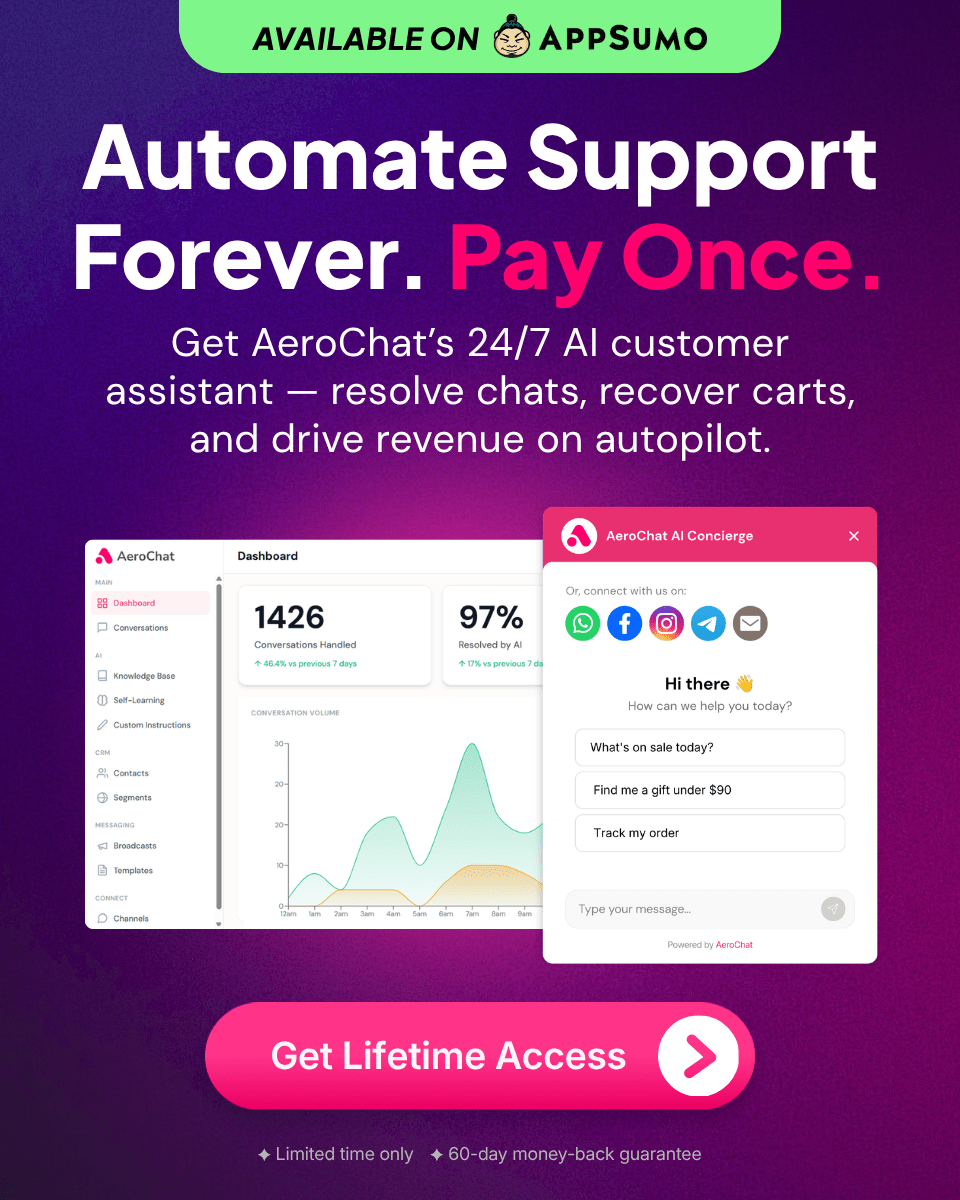
How AeroChat Automates Welcome Messages
AeroChat is an AI agent platform that helps online businesses run customer service on autopilot.
For ecommerce brands, AeroChat can help automate welcome messages across website chat, WhatsApp, Instagram, Messenger, and other customer channels. Instead of sending the same generic greeting to every customer, businesses can use AeroChat to guide visitors based on the type of question they are likely to ask.
For example, an online store can use a welcome message that helps customers choose a product, ask about delivery, check return policies, or speak with support. The AI can then answer common questions using the store’s content, FAQs, product information, and policies.
This is useful for businesses that receive repeated questions such as:
- What is your delivery time?
- Do you have this in stock?
- What is your return policy?
- Can I track my order?
- Which product should I choose?
- Can I speak to someone?
AeroChat can help reduce repetitive support work while keeping the customer experience fast and helpful.
Metrics to Track
After adding a welcome message, track how customers respond to it.
Useful metrics include:
- Chat start rate
- Response rate
- Lead capture rate
- Conversion rate
- Support resolution rate
- Human handover rate
- Most asked questions
- Customer satisfaction
- Revenue from assisted conversations
These metrics help you understand whether your welcome message is actually helping customers or just sitting on the page.
If many customers ignore the message, it may be too generic. If many customers ask the same question, you can make the welcome message more specific.
Common Mistakes to Avoid
Making the Message Too Long
Customers do not want to read a long introduction before asking a question.
Keep the message short and useful.
Sounding Too Robotic
Avoid messages like:
Dear valued customer, welcome to our esteemed platform.
Use natural language instead:
Hi, welcome. How can we help?
Asking for Details Too Early
Do not ask for email, phone number, and full details before offering help.
First show the customer what they can do.
Making False Promises
Do not say “instant support” if your team cannot reply instantly.
Use honest wording such as:
We’ll reply as soon as possible.
Using the Same Message Everywhere
A website chat message, WhatsApp greeting, and email welcome message should not all be identical. Match the message to the channel.
FAQs
What is a welcome message for customers?
A welcome message for customers is the first greeting a business sends when someone visits a website, starts a chat, messages on WhatsApp, contacts support, or begins a new conversation with the brand.
What is the best welcome message for customers?
The best welcome message is short, friendly, and helpful. A simple example is: “Welcome. How can we help you today?”
How do you write a professional welcome message?
To write a professional welcome message, greet the customer, explain how you can help, and guide them to the next step. Keep the message short, clear, and natural.
What is a good welcome message for a website?
A good website welcome message is: “Hi, welcome. Need help finding anything today?” For ecommerce websites, you can make it more specific: “Welcome. Need help choosing the right product or checking delivery options?”
What is a good WhatsApp welcome message for business?
A good WhatsApp welcome message is: “Thanks for messaging us. Please share your question and we’ll help you shortly.” For stores, you can add quick options such as product info, order tracking, delivery, or returns.
What is a good welcome message for an online store?
A good online store welcome message is: “Welcome. Need help choosing the right product or checking your order?” This works because it focuses on common ecommerce customer needs.
Should welcome messages be automated?
Yes, welcome messages can be automated if they are helpful, short, and relevant. Automation works best when the message guides customers to useful next steps instead of sending a generic greeting.
How long should a welcome message be?
A welcome message should usually be one to two short sentences. The best messages are easy to read and quick to respond to.
Final Thoughts
A welcome message for customers should do more than say hello.
It should make the customer feel supported, explain what they can ask, and guide them to the next step. For simple websites, a short greeting may be enough. For ecommerce stores, the message should help with product questions, delivery, order support, and returns.
The best welcome messages are clear, natural, and specific to the channel. A WhatsApp greeting should be short. A website chat greeting can be more helpful. A Shopify welcome message should focus on purchase support. An AI chatbot welcome message should explain what the bot can actually do.
When written well, a welcome message can improve engagement, reduce hesitation, and help customers get answers faster.