
When Should an Ecommerce Store Add AI Customer Support?

An ecommerce store should add AI customer support when repetitive, verifiable enquiries create a persistent workload or service gap, the underlying information is reliable, a person owns exceptions and the merchant can measure a limited pilot. There is no universal order, revenue or ticket threshold.
The useful timing decision has three stages: wait, pilot or expand. Buying software is only the middle stage, not the starting point.
Build a 30-day support evidence pack
Record actual customer work for 30 days before deciding. A quiet week and a launch spike can both distort the picture.
| Evidence to record | Why it matters |
|---|---|
| Question or intent | Shows which work repeats |
| Channel and time received | Reveals coverage gaps |
| Minutes of human work | Measures the interruption or queue burden |
| Source needed for the answer | Tests whether the information is dependable |
| Final action | Separates an answer from a completed task |
| Repeat contact | Shows whether the first response held |
| Human authority required | Identifies cases that should not be automated end to end |
Do not begin with a target automation percentage. Begin with the work customers need completed.
Choose the store's current decision stage
Wait when the problem is still unstable
Wait if support volume is low, products and policies change constantly or most questions require founder judgement. AI may add setup and review work without removing a meaningful queue.
Use the waiting stage to prevent avoidable enquiries. Improve product information, order notifications, delivery wording and return instructions. Create saved replies for the few questions that remain.
A basic inbox may also be enough when one person can see and answer every message without losing ownership. Stores specifically considering a FAQ assistant can use the existing guide to decide when a FAQ chatbot becomes useful, but a longer FAQ alone is not evidence that autonomous support is necessary.
Pilot when one support job is repetitive and dependable
Move to a pilot when the evidence pack shows one frequent intent with a stable answer or data source. The case also needs a safe fallback and a person who can receive exceptions.
A suitable pilot is narrow. It might cover verified order status, product care or a clear delivery-policy question. It should not begin with disputed refunds, missing high-value parcels and unusual multi-order problems simply because those cases consume time.
The pilot stage is also appropriate when customers regularly contact the store outside staffed hours or routine questions interrupt fulfilment and product work. The issue should be persistent enough to evaluate, not a single busy weekend.
Expand when the pilot removes durable work
Expand only after the first intent produces genuine completed conversations. Check repeat contacts, corrections, customer requests for a person, handover completion and maintenance time.
An AI answer that sends the customer to email has touched the case but may not have removed work. A handover can still be valuable if it arrives with verified details and a useful summary.
Add one new intent at a time. Product recommendations, returns explanations or another channel may require different sources and risk controls from the first pilot.
Do not use order volume as the only trigger
Two stores processing the same number of orders can need different support models.
One sells a simple repeat-purchase product with reliable tracking and a stable return policy. The other sells customised products, manages preorder dates and receives fit questions before purchase. Their support work differs even if order volume is identical.
Channel mix also matters. A team answering email once a day has a different coverage problem from a brand receiving website chat, WhatsApp and Instagram messages around the clock. The warning signs in a store that has outgrown its chatbot can help identify capability pressure, but they should still be tested against the merchant's real conversation data.
Timing should reflect workload, answer stability, consequence and ownership together.
Pick a first intent by consequence, not popularity
Plot candidate intents by repeatability and the consequence of a wrong answer.
| Intent type | Repeatability | Consequence if wrong | Starting decision |
|---|---|---|---|
| Product care from approved instructions | High | Usually limited | Good pilot candidate |
| Verified order status | High | Moderate privacy and accuracy requirements | Pilot after identity and data testing |
| Standard delivery policy | High | Moderate if wording is current | Pilot with a defined fallback |
| Product suitability | Variable | Depends on the product | Start narrow or assist a person |
| Refund exception | Lower | Financial and relationship risk | Human decision |
| Disputed or missing parcel | Variable | High | Collect context, then transfer |
The most common question is not automatically the safest. A high-volume workflow with unreliable data can spread errors faster.
Define the pilot's exit before launch
Write three outcomes before customers use the workflow.
Continue when supported conversations are completed accurately, repeat contact stays acceptable and the human route works.
Narrow when one source, product group or wording pattern causes most failures. Remove that area, correct it and retest.
Stop when customers become trapped, incorrect answers recur, nobody owns escalations or maintenance consumes more effort than the automation removes.
Use a consistent test set before launch and sample real conversations afterwards. The voluntary NIST AI Risk Management Framework describes governing, mapping, measuring and managing AI risk as continuing work. An ecommerce pilot can apply that principle without turning it into a large compliance programme.
How AeroChat fits at the pilot and expansion stages
AeroChat is an AI agent platform that helps ecommerce brands run customer service on autopilot. It is generally a growth-stage support investment, becoming more relevant when enquiries or channels create a persistent workload.
For a narrow pilot, merchants can build responses from approved pages, files and FAQs through knowledge-base training. A Shopify merchant testing order questions can use documented order-status tracking, which retrieves current payment, fulfilment and delivery information after customer verification.
Cases outside the pilot boundary can move through human handover. The merchant remains responsible for staffing that route and deciding which exceptions need approval.
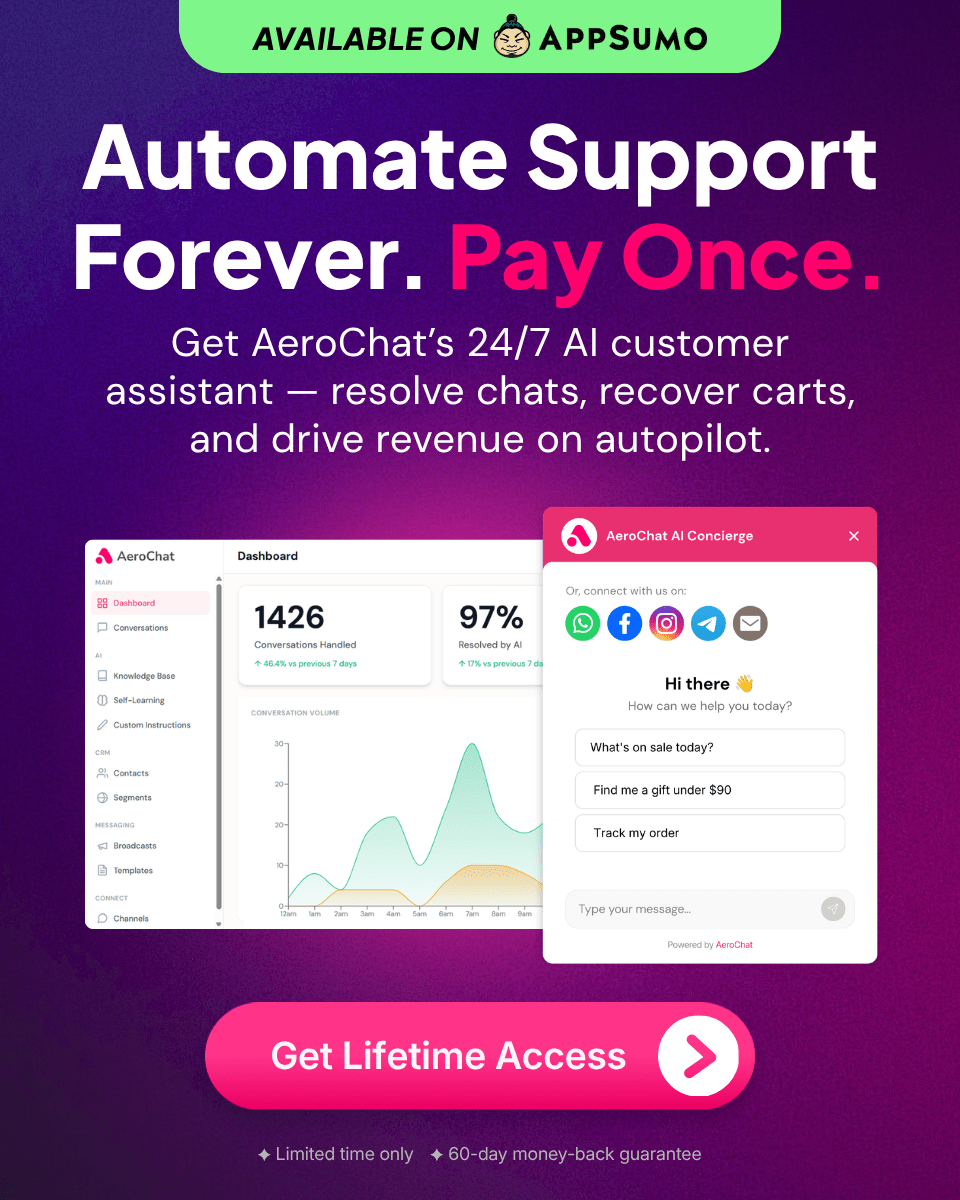
At the expansion stage, AI-powered chat insights can help the team review conversations handled, AI resolution, escalated topics and other operating signals. Those measures inform the decision; they do not replace the merchant's assessment of repeat contact, customer outcomes and total support cost.
Timing questions without universal answers
Is there a minimum ticket volume for AI customer support?
No. A useful threshold depends on handling time, repeatability, staffed coverage, consequence and tool cost. Thirty complex cases may need people, while a larger set of dependable order-status questions may suit automation.
Should a store add AI before hiring its first support agent?
Sometimes. AI can remove a narrow repetitive workload and delay hiring when a founder can still own exceptions. If most work needs judgement, customer recovery or operational authority, the first human hire may create more value.
Should a seasonal spike trigger a permanent AI subscription?
Not by itself. Use the spike to test a time-limited pilot, then compare normal and peak periods. A permanent tool should solve a continuing problem or provide enough seasonal value across the year to justify its full cost and maintenance.
Add the next intent only when the first one earns it
Spend 30 days documenting support before buying broadly. If one frequent, low-risk job has a reliable source and clear owner, run a bounded pilot with an exit rule.
Expansion should be earned by completed work and a dependable customer journey. The right time to add AI is when the evidence supports a specific support job, not when the store feels it ought to have a chatbot.