

Ecommerce Margins vs Volume: How to Scale Profitably in 2026
Scaling ecommerce through volume alone often reduces profitability if margins are not protected. The most sustainable growth model balances healthy margins with controlled volume expansion supported by automation and operational efficiency.
Many online stores chase revenue.
Few protect profit.
Let’s break this down properly.
What Does “Margins vs Volume” Mean in Ecommerce?
In simple terms:
Margin = Profit per order
Volume = Number of orders
You can grow your business in two ways:
-
Increase volume (more sales)
-
Increase margin (more profit per sale)
The problem?
Increasing volume without improving operational efficiency can destroy margins.
Especially in Shopify stores running paid traffic.
The Volume Trap in Ecommerce
Many brands think:
More ads → more traffic → more sales → more revenue.
But here’s what actually happens:
• Ad costs increase
• Support tickets increase
• Refunds increase
• Fulfillment pressure increases
• Customer service costs increase
If your support system is manual, scaling volume multiplies operational stress.
The hidden cost of slow replies on Shopify becomes more severe at higher order volumes.
More customers + slow responses = more churn.
Volume without structure creates chaos.
The Margin-Focused Model
Margin-focused ecommerce means:
• Protecting profit per order
• Reducing operational waste
• Lowering support cost per customer
• Improving retention
Instead of chasing pure traffic growth, you optimise backend efficiency.
For example:
If repetitive “Where is my order?” tickets are automated through automated order tracking on Shopify, your cost per order decreases.
That protects margin.
Why Support Efficiency Impacts Margins
Many founders underestimate support as a cost driver.
As volume increases:
• More tickets
• More agents
• More payroll
• More burnout
If your system relies only on manual replies instead of an AI customer service chatbot, support costs grow linearly with volume.
Automation breaks that pattern.
Same traffic.
Lower cost.
Higher margin.
Volume Growth Without Automation Is Risky
Let’s say:
You double your ad spend.
Orders double.
But:
• Support team struggles
• Response time increases
• Refund rate increases
• Customer complaints increase
Learning how to deal with customer complaints examples becomes reactive damage control instead of strategic improvement.
Scaling volume without infrastructure erodes brand trust.
The Smart Scaling Model: Margin + Volume Together
The strongest ecommerce brands do both:
-
Increase volume strategically
-
Improve margins structurally
How?
By reducing operational cost per order.
Automation, structured self-service, and messaging systems help here.
Instead of static FAQ pages, advanced web self service systems combined with AI reduce ticket load.
Less manual work.
Higher profitability.
Customer Support as a Margin Lever
Customer support is not just cost.
It is a margin lever.
If your average support cost per order is $3 and you reduce it to $1 through automation, your margin improves instantly.
Understanding live chat vs chatbot dynamics helps here.
Manual live chat scales poorly.
AI scales efficiently.
When integrated properly with a Shopify AI chatbot, repetitive questions are resolved automatically.
That protects profit.
Refunds and Margins
Refunds destroy margins.
Many refunds happen because:
• Delivery updates were unclear
• Customers were confused about sizing
• Expectations were misaligned
Using WhatsApp Business API for automated shipping updates reduces uncertainty.
Clear communication lowers refund requests.
Better communication = stronger margins.
The Retention Advantage
Volume-focused brands constantly acquire new customers.
Margin-focused brands increase repeat purchases.
Post-purchase experience matters here.
A structured post-purchase ecommerce strategy improves retention and increases customer lifetime value.
Higher lifetime value improves margins without increasing acquisition cost.
Retention is margin multiplication.
Paid Traffic and Margin Pressure
Paid ads are expensive.
If your margin is thin:
• CAC increases
• Profit per order decreases
• Scaling becomes dangerous
AI-powered support reduces operational cost and increases conversion rate.
Better conversion means:
Lower cost per acquisition.
Stronger margin buffer.
WhatsApp & Messaging: Revenue Multiplier
Volume-driven brands often ignore communication efficiency.
When connected to WhatsApp marketing automation, stores can:
• Recover abandoned carts
• Send payment reminders
• Increase upsells
• Reduce drop-offs
Better engagement improves revenue per visitor.
Higher revenue per visitor improves margins.
When Volume Makes Sense
Volume strategy works if:
• Your operations are automated
• Support is structured
• Fulfillment is efficient
• Refund rate is low
Without those, scaling traffic only increases stress.
When Margin Strategy Is Critical
Focus on margin first if:
• Your ad costs are rising
• Support tickets are increasing
• Refund rate is growing
• Response time is slow
Improving backend efficiency creates stable foundations for scaling.
Case Example: Shopify Brand Scaling Smartly
Before automation:
• 1,000 orders per month
• 400 support tickets
• 3 agents
• Thin margins
After implementing AI-powered support:
• 1,000 orders
• 150 tickets
• 1–2 agents
• Improved margin
Now scaling to 2,000 orders does not double costs.
That is smart scaling.
The Real Question: Revenue or Profit?
Revenue growth looks impressive.
Profit growth builds sustainable business.
Margins vs volume is not either/or.
It is about sequencing.
-
Build efficient systems.
-
Protect margins.
-
Scale volume.
Automation is infrastructure, not expense.
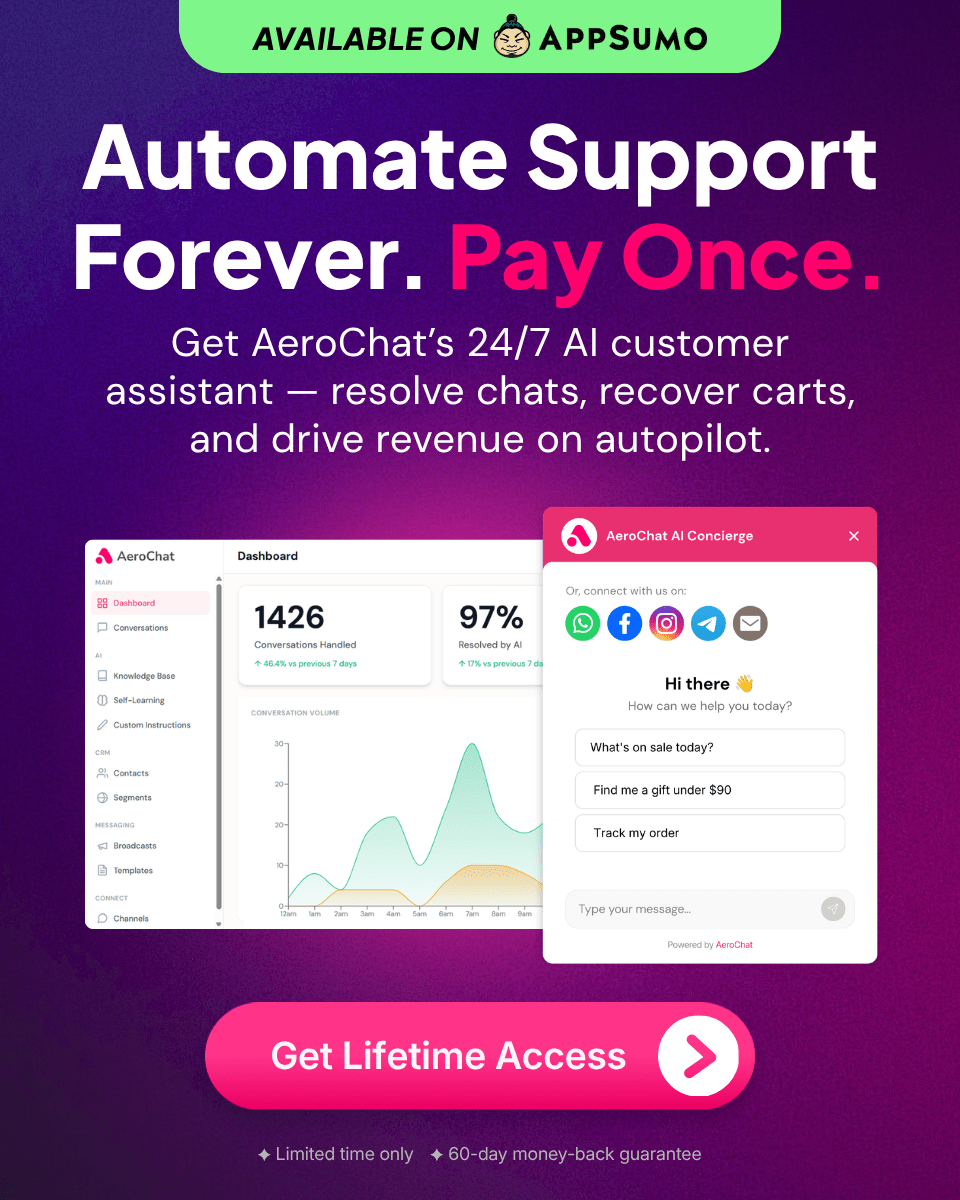
How AeroChat Supports Profitable Scaling
AeroChat reduces operational pressure by:
• Automating repetitive support
• Handling order tracking instantly
• Integrating WhatsApp messaging
• Reducing response time
• Improving conversion
Instead of hiring more agents when volume increases, automation absorbs demand.
Margins stay protected.
Growth becomes sustainable.
Final Thoughts
Scaling ecommerce profitably requires:
• Protecting margins
• Automating operations
• Reducing ticket load
• Improving communication
• Increasing retention
Volume without efficiency kills profit.
Efficiency before volume builds sustainable growth.
In 2026 ecommerce, the winning brands are not just those with high revenue.
They are the ones with structured systems behind that revenue.