

How to Scale Customer Support: 15 Practical Strategies

Customer support often breaks before leadership fully sees the problem. Ticket volume rises, replies slow down, agents get overloaded, and the same questions keep coming in from every channel.
That is why learning how to scale customer support matters. If you only react by hiring more agents, costs rise faster than efficiency. If you build the right systems, your team can handle more volume without losing quality.
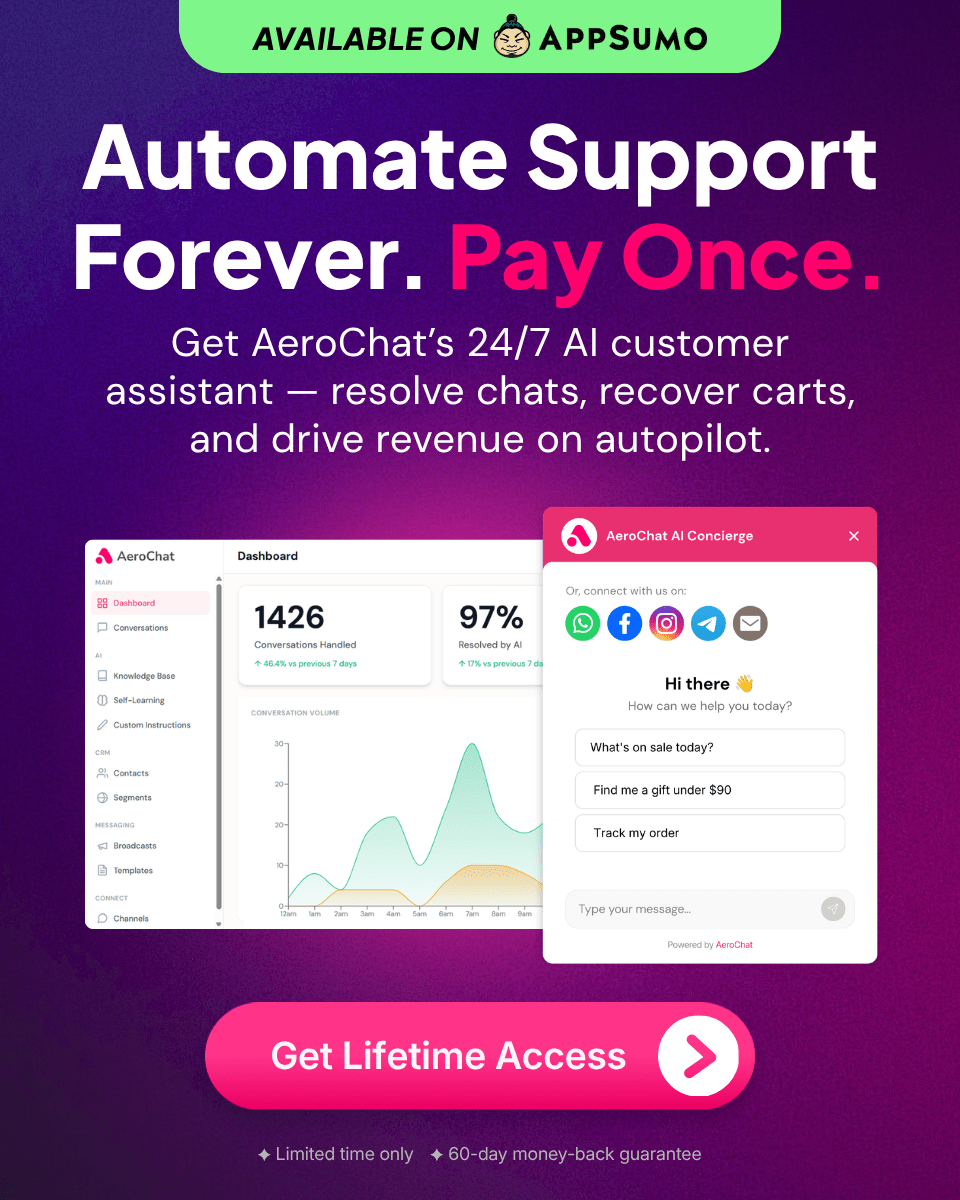
Growing teams often use platforms like AeroChat to scale customer support more efficiently. By combining AI chat, live chat, and ticketing in one omnichannel workspace, AeroChat helps businesses reduce repetitive support work, improve response speed, and manage customer conversations more consistently across channels.
How Do You Scale Customer Support?
To scale customer support, you need to improve systems before simply adding headcount. The best support teams centralize conversations, automate repetitive work, build self-service resources, use AI intelligently, and create better routing and escalation processes.
In simple terms, scalable customer support depends on:
-
one clear support workspace,
-
better automation,
-
stronger documentation,
-
smarter routing,
-
repeatable team processes,
-
useful metrics,
-
human support where it matters most.
Why Scaling Customer Support Matters
Customer support is no longer a side function. For many businesses, it directly affects retention, reviews, conversions, and long-term growth.
When support does not scale, the damage spreads quickly. Customers wait longer, agents become inconsistent, and simple issues take too much time to resolve.
A scalable support operation helps your business:
-
maintain faster response times,
-
reduce repetitive support work,
-
improve customer satisfaction,
-
protect agent productivity,
-
support growth without chaos.
The cost of reactive support growth
Many teams scale support too late. They wait until inboxes are overflowing, customers are frustrated, and agents are already burned out.
At that stage, the company often reacts by hiring quickly. That may reduce short-term pressure, but it does not fix the real issue if workflows are still broken.
Reactive support growth often creates:
-
inconsistent responses,
-
higher support costs,
-
slower onboarding,
-
tool sprawl,
-
lower customer trust.
Why adding more agents is not enough
Hiring matters, but headcount alone is not a scaling strategy. If every new support agent enters a messy system, the same inefficiencies simply spread across a larger team.
A support team scales well when it becomes easier to resolve issues, not just easier to assign more people to them.
That means the real goal is not just more capacity. The goal is better capacity.
What scalable customer support looks like
Scalable customer support is not just fast. It is structured, consistent, and resilient as volume grows.
A scalable support operation usually has:
-
centralized customer conversations,
-
clear workflows and ownership,
-
automation for repetitive questions,
-
strong internal knowledge,
-
smart routing and escalation,
-
metrics tied to real outcomes,
-
a better balance between AI and human support.
15 Practical Strategies to Scale Customer Support
Scaling support works best when you focus on practical systems. The strategies below are designed to reduce pressure, improve quality, and make your support team more efficient over time.
1. Centralize Customer Conversations in One Support Workspace
One of the biggest barriers to support scale is fragmentation. Customers contact businesses through email, website chat, WhatsApp, Messenger, Instagram, and support forms, but teams often manage those conversations in separate tools.
That creates delays, duplicated replies, and poor visibility.
To scale customer support, bring all customer conversations into one place. A unified support workspace gives agents context, reduces missed messages, and makes it easier to manage service quality across channels.
For example, AeroChat helps businesses centralize customer conversations from website chat, WhatsApp, Messenger, Instagram, Telegram, email, and other channels into one shared workspace. This makes it easier for support teams to keep context, avoid duplicate replies, and scale without losing visibility across communication channels.
Centralization helps because it:
-
reduces channel confusion,
-
improves response consistency,
-
gives teams one support history,
-
makes reporting cleaner,
-
improves handoff between agents.
If support is spread across multiple inboxes, scaling will always feel harder than it should.
2. Automate Repetitive Support Questions
A large share of support volume usually comes from the same small set of questions. Customers ask about shipping, returns, account access, refunds, billing, setup, or product details again and again.
If agents answer these manually every time, growth creates a workload problem very quickly.
Start by identifying your most repetitive support questions. Then automate those where possible using help center content, chat automation, AI replies, or structured workflows.
This is where AeroChat AI support can play an important role. AeroChat helps automate repetitive customer questions, such as FAQs, order-related queries, and routine support requests, so agents can spend more time on higher-value conversations that need human attention.
Good candidates for automation include:
-
order status questions,
-
delivery and shipping updates,
-
return policy questions,
-
password reset help,
-
account access steps,
-
pricing FAQs,
-
basic product guidance.
Automation does not remove the need for human support. It protects human time for the issues that actually require judgment.
3. Build a Strong Self-Service Knowledge Base
A scalable support team should not depend entirely on live interactions. Customers should be able to solve simple issues on their own when they want to.
That is where self-service becomes essential.
A strong knowledge base reduces inbound volume and improves the customer experience at the same time. It gives users instant access to answers without waiting in a queue.
A useful self-service library should include:
-
FAQs,
-
step-by-step guides,
-
setup tutorials,
-
return and refund policies,
-
billing explanations,
-
troubleshooting articles,
-
account management instructions.
To make your knowledge base more effective:
-
write in clear language,
-
organize by user intent,
-
keep articles short and scannable,
-
update content regularly,
-
link help articles inside support flows.
The best support teams use self-service as part of scale, not as an afterthought.
4. Use AI to Handle First-Line Support
AI can help support teams scale by taking on first-line interactions. That includes greeting users, understanding intent, answering common questions, and routing conversations more intelligently.
This is especially valuable when support volume is growing faster than team capacity.
AI works best when used for:
-
first-response automation,
-
FAQ resolution,
-
intent detection,
-
conversation routing,
-
support suggestions for agents,
-
multilingual support,
-
after-hours coverage.
The goal is not to automate everything. The goal is to reduce repetitive work and speed up the path to resolution.
AeroChat is a good example of how AI can support first-line service at scale. Its intention-aware AI helps businesses handle common customer questions, deliver faster first responses, and route conversations to the right human team member when escalation is needed. This helps teams increase coverage without relying entirely on manual responses.
To use AI well:
-
start with clear use cases,
-
connect it to real support knowledge,
-
create human fallback paths,
-
review performance regularly,
-
refine weak response areas.
AI should make support smoother, not more frustrating.
5. Create Clear Escalation Workflows
Support teams struggle to scale when every issue is handled the same way. Some requests are simple and repetitive. Others are urgent, sensitive, or complex.
Without clear escalation rules, agents waste time deciding what to do next, and customers get inconsistent experiences.
A strong escalation system helps teams move faster and protect quality.
Your escalation process should define:
-
which issues stay with frontline support,
-
which issues go to specialists,
-
which issues require management review,
-
which issues need cross-functional help,
-
when AI should hand off to a human.
A good escalation workflow improves:
-
resolution speed,
-
team confidence,
-
ownership clarity,
-
customer trust,
-
internal efficiency.
Scale becomes much easier when complex cases follow a clear path.
6. Segment Support by Issue Type and Priority
As volume grows, not every support request should be treated the same way. A billing issue, a VIP customer complaint, and a simple FAQ should not sit in the same queue without distinction.
Segmentation helps support teams prioritize better and operate with more control.
You can segment support by:
-
issue type,
-
urgency,
-
customer tier,
-
product line,
-
channel,
-
language,
-
post-purchase stage.
This makes it easier to route conversations correctly and give agents the right workload.
Priority-based support also improves customer experience. High-impact issues get faster attention, while simple requests can be automated or queued appropriately.
7. Standardize Macros, Templates, and Playbooks
A growing support team cannot rely on every agent writing everything from scratch. That creates inconsistency, slows replies, and makes training harder.
Standardization is one of the simplest ways to scale customer support.
Start by creating:
-
reply macros for common questions,
-
support templates for recurring situations,
-
escalation scripts,
-
refund and policy response formats,
-
internal playbooks for handling issue categories.
This helps in two major ways. It improves speed, and it improves consistency.
Good support playbooks also make onboarding easier. New agents do not need to guess how to respond. They start with a proven framework and learn where judgment should be added.
8. Improve Internal Collaboration Between Support and Other Teams
Support does not operate in isolation. Many customer problems depend on product, operations, billing, logistics, engineering, or sales.
If support teams have weak collaboration with those departments, scaling becomes painful. Agents spend too much time chasing answers internally, and customers wait longer than necessary.
To fix this, create clearer support collaboration systems with:
-
named escalation owners,
-
internal response expectations,
-
shared documentation,
-
issue tagging by department,
-
feedback loops between teams.
This is especially important when support uncovers recurring problems. If the same customer issue appears every week, the solution may not be a better reply. It may be an operational fix elsewhere in the business.
Support scales better when the whole company helps reduce friction.
9. Invest in Agent Training That Scales
Training is often treated as a one-time onboarding step. That is a mistake.
If your support operation is growing, training needs to grow with it. Otherwise, team quality drops as volume and complexity increase.
Scalable training should include:
-
onboarding modules,
-
issue-based playbooks,
-
knowledge base usage,
-
product education,
-
escalation training,
-
tone and empathy guidance,
-
tool and workflow training.
Strong support teams also document real examples. That helps agents learn from actual customer situations instead of only theory.
When agent training is structured well:
-
onboarding becomes faster,
-
response quality becomes more consistent,
-
escalation decisions improve,
-
agent confidence increases,
-
scaling feels less chaotic.
10. Track the Right Customer Support Metrics
You cannot scale support well if you only measure ticket count and response time. Those metrics matter, but they do not tell the whole story.
To scale support intelligently, track a mix of efficiency, quality, and outcome metrics.
Key support metrics include:
-
first response time,
-
resolution time,
-
first contact resolution,
-
ticket volume by category,
-
automation rate,
-
escalation rate,
-
customer satisfaction,
-
agent workload,
-
backlog trend,
-
contact rate per customer.
These metrics help you answer better questions:
-
Which issues drive the most volume?
-
Where does support slow down?
-
Which workflows need automation?
-
Which channels are creating friction?
-
Where is agent effort being wasted?
Good metrics help you scale with insight instead of guesswork.
11. Reduce Channel Fragmentation with Omnichannel Support
Customers do not think in channels. They think in problems they want solved.
If someone messages on Instagram, follows up by email, and then opens website chat, they still expect one connected support experience.
That is why omnichannel support matters when scaling.
AeroChat are especially useful here because they are built for omnichannel customer support. Instead of managing chat, messaging apps, and tickets in separate systems, support teams can use one workspace to handle conversations across channels more consistently and efficiently.
A fragmented setup creates:
-
repeated explanations from customers,
-
duplicated responses from agents,
-
poor internal visibility,
-
slower handoff,
-
inconsistent service quality.
Omnichannel support helps by bringing interactions together and preserving context across touchpoints.
To improve omnichannel support:
-
unify channels in one inbox,
-
maintain customer history across touchpoints,
-
use shared tags and notes,
-
standardize routing across channels,
-
align support policies everywhere.
As volume grows, channel consistency becomes a major competitive advantage.
12. Add Proactive Support to Reduce Inbound Volume
Not all support should be reactive. Some of the best scaling opportunities come from preventing support requests before they happen.
Proactive support reduces ticket volume by answering known questions early.
You can do this through:
-
order status notifications,
-
delivery updates,
-
onboarding checklists,
-
setup emails,
-
in-app guidance,
-
policy reminders,
-
issue alerts before customers report them.
For example, if customers often ask where their order is, proactive tracking updates can reduce a large amount of unnecessary inbound demand.
The same applies in SaaS. If customers repeatedly ask setup questions, proactive onboarding content can reduce support load.
Scaling support is not just about handling more tickets. It is also about creating fewer unnecessary tickets.
13. Use Customer Intent to Route Conversations Smarter
Intent-based routing is one of the most practical ways to improve support efficiency.
Instead of routing by channel alone, route conversations based on what the customer is actually trying to do.
AeroChat also supports smarter support routing through intent-aware AI. By understanding what the customer is trying to do, the platform can help direct the conversation toward the right workflow, whether that means answering instantly, assigning the request to the right team, or escalating it for human review.
For example, support requests can be routed by intent such as:
-
refund request,
-
shipping problem,
-
account access,
-
product question,
-
billing issue,
-
cancellation request,
-
technical support.
This improves efficiency because the right issue reaches the right workflow faster.
Intent-based routing helps teams:
-
reduce transfer rates,
-
improve first-contact resolution,
-
lower handling time,
-
improve agent specialization,
-
create better customer experiences.
When scaling support, smarter routing matters almost as much as faster replies.
14. Review Support Data to Find Repeat Friction Points
One of the best ways to scale customer support is to reduce the causes of support volume in the first place.
That means support data should not only be used to measure performance. It should also be used to find customer friction.
Look for patterns such as:
-
repeated refund requests,
-
delivery confusion,
-
common onboarding failures,
-
recurring product questions,
-
billing misunderstandings,
-
feature confusion,
-
policy-related complaints.
Once you identify the repeat friction, fix it at the source.
That may mean:
-
changing website copy,
-
improving product pages,
-
updating FAQs,
-
improving shipping communication,
-
fixing onboarding flows,
-
clarifying billing policies,
-
adjusting product design.
This is one of the highest-leverage support scaling strategies. When root causes improve, support demand becomes easier to manage.
15. Scale with Systems, Not Just Headcount
The most important principle in support scaling is this: build systems before you build dependence on headcount.
Hiring is important, but it should sit on top of strong workflows, not compensate for missing ones.
A system-driven support team has:
-
centralized tools,
-
repeatable workflows,
-
automation for repetitive tasks,
-
clear escalation rules,
-
better internal documentation,
-
measurable performance,
-
proactive support processes.
If you only scale through headcount, support costs rise quickly and consistency becomes harder to maintain.
If you scale through systems, each additional hire becomes more productive.
That is the difference between growth and sustainable growth.
Common Mistakes to Avoid When Scaling Customer Support
Support teams often know they need to scale, but they make avoidable mistakes that slow progress and increase costs.
Here are the most common ones.
Hiring too fast without fixing processes
Adding more people into a broken workflow rarely solves the underlying problem.
It often creates:
-
inconsistent training,
-
duplicated work,
-
poor coordination,
-
higher costs,
-
weak service quality.
Fix process gaps first, then scale headcount more confidently.
Adding tools without improving workflows
More tools do not automatically create better support. In many cases, they create more complexity.
Before adding another platform, ask:
-
What problem does this solve?
-
What workflow improves because of it?
-
Does it reduce effort or just move work around?
-
Will it simplify the agent experience?
-
Can the team adopt it effectively?
Tool sprawl often looks like progress, but it can slow support down.
Measuring speed without measuring resolution quality
Fast replies are helpful, but they do not mean much if issues remain unresolved.
A support team can answer quickly and still perform poorly if:
-
transfer rates are high,
-
customers need multiple follow-ups,
-
responses are inconsistent,
-
resolution quality is weak,
-
root causes are ignored.
Balance speed metrics with resolution and satisfaction metrics.
Over-automating without human fallback
Automation helps support scale, but bad automation creates frustration.
Customers still need a clear path to human help when:
-
the issue is sensitive,
-
the request is unusual,
-
the customer is upset,
-
context matters heavily,
-
automation cannot resolve the problem.
The best support systems use automation to reduce friction, not create dead ends.
Ignoring agent experience
Scaling support is not only about the customer journey. It is also about the agent experience.
If agents work inside confusing tools, weak workflows, and poor documentation, scale will always be expensive and stressful.
A better agent experience improves:
-
productivity,
-
consistency,
-
retention,
-
training speed,
-
support quality.
Support scale becomes much more sustainable when the team itself is well supported.
How to Know If Your Customer Support Team Is Ready to Scale
Many companies wait too long to improve support systems. They only act once service quality is already declining.
It is better to identify the signals earlier.
Signs your current support setup is breaking
Your support team may be ready for scaling changes if you are seeing:
-
rising backlog,
-
slower first response times,
-
agents answering too many repetitive questions,
-
support spread across too many tools,
-
inconsistent replies,
-
more escalations than before,
-
customer satisfaction slipping.
These are usually system signals, not just staffing signals.
Questions to ask before expanding
Before adding more people or tools, ask:
-
Which support issues drive the most volume?
-
Which tasks should be automated first?
-
Which channels are hardest to manage?
-
Where do agents lose the most time?
-
Which issues should be self-service?
-
Where are customers getting confused most often?
-
What does the current data say?
Good scaling starts with clarity, not urgency.
What to fix first
If your support function is under pressure, start with the highest-impact improvements first.
Usually that means:
-
centralizing channels,
-
automating repetitive questions,
-
improving self-service,
-
creating escalation workflows,
-
standardizing agent responses,
-
improving routing,
-
reviewing root-cause issues.
These changes often create more immediate benefit than hiring alone.
Frequently Asked Questions
How do you scale customer support?
You scale customer support by improving systems before simply expanding headcount. That includes centralizing conversations, automating repetitive work, building self-service content, improving routing, and using clear support workflows.
What is the best way to scale a support team?
The best way to scale a support team is to combine process improvement with smart automation and strong documentation. This makes every agent more effective and helps the team manage higher volume with less friction.
How can AI help scale customer support?
AI helps scale customer support by handling first-line questions, detecting customer intent, routing issues, assisting agents, and supporting always-on service. It reduces repetitive workload and helps teams respond faster.
When should a company invest in customer support automation?
A company should invest in customer support automation when repetitive requests are consuming too much team time, response times are slipping, or ticket volume is growing faster than support capacity.
What metrics matter most when scaling support?
The most important support scaling metrics include first response time, resolution time, first contact resolution, ticket volume by category, escalation rate, automation rate, customer satisfaction, and backlog trend.
Final Recommendation
If you want to know how to scale customer support, start by identifying where your team is losing the most time today. Look for repeated questions, fragmented channels, weak workflows, and avoidable support volume. Then improve the system step by step with better automation, documentation, and routing.
For growing teams, platforms like AeroChat can help accelerate that process by combining AI chat, live chat, and ticketing in one omnichannel support workspace. The best customer support teams do not scale by working harder forever. They scale by building smarter systems that stay fast, consistent, and efficient as the business grows.