

Most Shopify AI chatbots look impressive during demos.
They answer simple FAQ questions quickly, generate polished responses, and promise “fully automated customer support” within minutes of installation.
But real ecommerce support is rarely simple.
The true test of a Shopify AI chatbot is not whether it can answer:
“What are your shipping fees?”
The real test is whether it can handle:
“My tracking says delivered but nothing arrived.”
“I only received one item from my order.”
“Can I return one item from a bundle?”
“I messaged on Instagram yesterday — can you continue here?”
“The discount code worked but I was still charged full price.”
These are the conversations that overwhelm support teams, frustrate customers, and expose the difference between a basic FAQ bot and a real ecommerce AI support system.
In 2026, Shopify merchants are no longer looking for chat widgets that simply reduce tickets. They want AI systems that can:
understand context
retrieve live Shopify data
maintain conversation continuity
support multiple channels
escalate intelligently when needed
The challenge is that many chatbot platforms still operate like upgraded FAQ systems rather than true ecommerce support automation tools.
This guide breaks down what actually matters when evaluating a Shopify AI chatbot today, including:
the operational problems most bots fail to solve
the different layers of ecommerce automation
the edge-case scenarios that separate strong systems from weak ones
and which tools are better suited for different types of Shopify stores
Rather than focusing purely on feature lists, this article focuses on the realities of ecommerce support automation in live customer environments.
What a Real Shopify AI Chatbot Must Handle
A modern Shopify AI chatbot should do far more than answer pre-written FAQs.
At minimum, it should be capable of handling:
Return and refund requests
Product availability questions
Discount code and pricing confusion
Product recommendation flows
Omnichannel conversations across web chat, WhatsApp, and Instagram
After-hours customer support
Human escalation when automation confidence is low
Many tools can answer simple policy questions.
Far fewer can:
retrieve live order data
understand partial fulfillment issues
preserve conversation context across channels
or resolve emotionally sensitive support situations properly
That distinction matters more than ever as customer expectations continue rising.
The 5 Layers of Shopify AI Automation
Not all Shopify chatbots operate at the same level.
Some are essentially FAQ retrieval systems, while others function more like operational support assistants connected directly to ecommerce workflows.
Here is a simple framework for understanding the maturity of Shopify AI automation.
Layer | Capability |
|---|---|
Layer 1 | Answers static FAQ questions |
Layer 2 | Understands policies and store knowledge |
Layer 3 | Retrieves live Shopify order and product data |
Layer 4 | Maintains context across web chat, WhatsApp, and Instagram |
Layer 5 | Handles autonomous resolution and intelligent escalation |
Most entry-level Shopify chatbots remain in Layer 1 or Layer 2.
The largest operational jump happens at Layer 3, when the chatbot can:
check real order statuses
verify inventory
retrieve tracking data
or identify customer-specific information dynamically
This is where ecommerce automation becomes meaningfully useful.
The Ecommerce Scenarios That Break Most AI Chatbots
The biggest weakness of many AI chatbots is not FAQ handling.
It is operational edge cases.
These are the situations that require:
context understanding
emotional awareness
workflow logic
and accurate retrieval of live store data
Below are some of the most common ecommerce scenarios where weak automation systems fail.
1. Delivered But Not Received
Customer:
“Tracking says delivered but I didn’t receive anything.”
Weak automation:
“Your package has been delivered.”
Stronger automation:
“I’m sorry about that. Sometimes carriers mark parcels as delivered slightly early. Could you check your mailbox, front desk, neighbours, or safe drop area first? If it’s still missing, I can help escalate this.”
The difference is not speed.
It is understanding customer intent and emotional context.
2. Partial Shipment Confusion
Customer:
“I ordered two items but only received one.”
Many chatbots fail here because they treat the order as either fully delivered or not delivered at all.
A stronger system should:
recognize split fulfillment
identify partially shipped orders
explain remaining shipment status
and avoid unnecessary escalation
3. Bundle Return Complexity
Customer:
“Can I return one item from a bundle?”
This requires:
order-level logic
bundle eligibility checking
discount dependency understanding
return policy interpretation
Many chatbots simply repeat the generic return policy without understanding the actual request.
4. Omnichannel Continuity
Customer:
asks on Instagram
follows up later on WhatsApp
Weak systems lose context completely.
Stronger systems maintain:
customer history
order reference continuity
and previous conversation awareness across channels
This is increasingly important for modern ecommerce brands.
5. Discount and Payment Disputes
Customer:
“The discount code worked but I was charged full price.”
This is not a simple FAQ.
The chatbot needs to:
identify checkout state
verify order pricing
understand promotion conditions
and escalate properly when needed
Many systems fail because they only retrieve generic coupon information.
Quick Comparison of Popular Shopify AI Chatbots
Different tools are optimized for different ecommerce workflows.
Some focus on omnichannel automation, while others are stronger for enterprise support operations or social commerce.
Tool | Best For | Shopify Data Depth | Omnichannel Support | Human Handoff |
|---|---|---|---|---|
AeroChat | Shopify automation + omnichannel support | Strong | Web, WhatsApp, Instagram | Built-in |
Intercom Fin | Enterprise AI support workflows | Moderate | Strong | Strong |
Zendesk AI Agents | Large support teams | Via integration | Strong | Advanced |
Tidio Lyro | Small to medium stores | Basic | Limited | Good |
Certainly | Product recommendation flows | Moderate | Moderate | Good |
Reamaze | Shopify-focused customer support | Strong | Moderate | Good |
Richpanel | Self-service support flows | Strong | Moderate | Strong |
ManyChat | Social commerce automation | Limited | Instagram + WhatsApp | Basic |
Gobot | Product discovery and quizzes | Moderate | Limited | Basic |
Gorgias | Agent-assisted support teams | Moderate | Moderate | Strong |
The best chatbot depends less on marketing claims and more on:
support volume
channel mix
operational complexity
and how much post-purchase support your store receives.
13 Best AI Chatbots for Shopify That Run Without a Support Team 2026
1. AeroChat
Best suited for:
Shopify merchants handling high post-purchase support volume
stores using WhatsApp and Instagram heavily
businesses looking for centralized omnichannel support
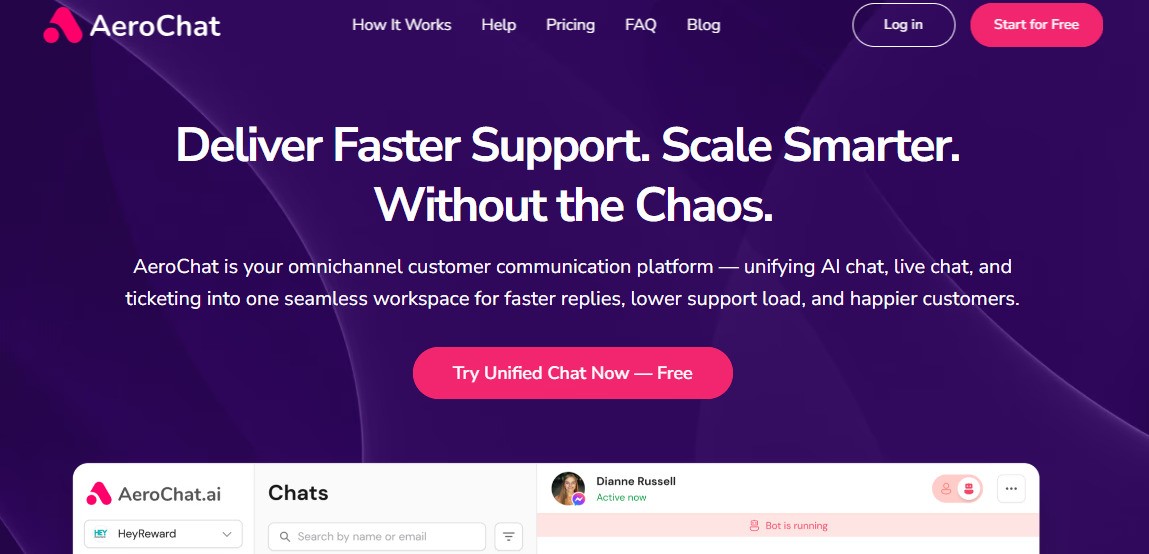
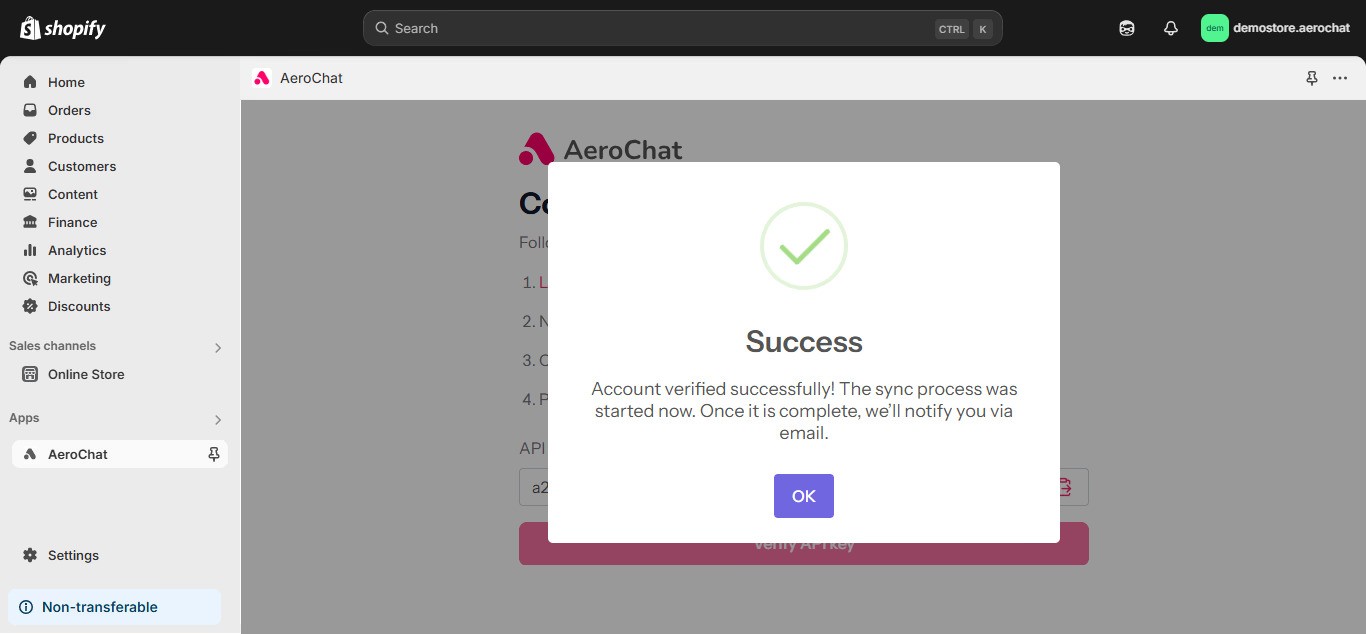
AeroChat focuses heavily on ecommerce operational automation rather than only FAQ handling.
The platform is particularly strong for:
WISMO flows
omnichannel continuity
Shopify order lookup
and multi-channel support management
One of its strongest differentiators is the ability to centralize:
website chat
Instagram messages
and WhatsApp conversations
inside a single support workflow.
This becomes especially valuable for stores where customer conversations move between channels frequently.
AeroChat is generally a stronger fit for:
operational automation
post-purchase support
and omnichannel customer service
rather than purely sales-focused chatbot experiences.
For smaller stores that only need lightweight FAQ automation, simpler tools may still be sufficient.
2. Intercom Fin
Intercom's Best suited for:
enterprise support environments
large support teams
advanced conversational AI workflows
Intercom Fin is one of the strongest AI-first support systems for handling nuanced customer conversations.
It performs well in:
intent understanding
long conversational flows
and customer support operations requiring deeper conversational flexibility
However, Shopify-specific operational automation may require additional setup depending on the store’s workflow requirements.
Intercom is typically a better fit for:
larger support organizations
SaaS-style support environments
and brands with more complex service structures
rather than smaller Shopify stores looking for lightweight automation.
3. Zendesk AI Agents
Best suited for:
enterprise support operations
large ticket volumes
structured customer service workflows
Zendesk AI capabilities are strongest when combined with an established support infrastructure.
The platform performs well for:
ticket routing
agent assistance
intent classification
and escalation workflows
Zendesk is often better suited for larger support teams already operating within the Zendesk ecosystem.
For smaller Shopify merchants, the implementation overhead may feel excessive compared to lighter ecommerce-focused alternatives.
4. Tidio with Lyro AI
Best suited for:
small Shopify stores
lightweight automation
beginner-friendly setup
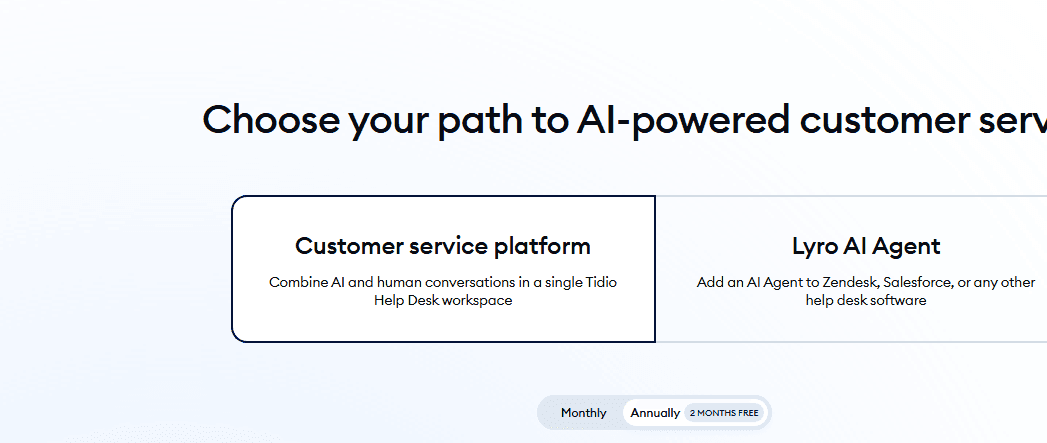
Tidio remains one of the easiest entry points into Shopify chatbot automation.
Its strengths are:
fast deployment
ease of use
and straightforward FAQ handling
For stores primarily handling:
product questions
basic policy inquiries
and low support volume
Tidio can be a practical solution.
However, stores with heavy post-purchase support or omnichannel requirements may eventually outgrow its automation depth.
5. Certainly
ecommerce product recommendation flows
guided shopping experiences
pre-purchase customer conversations
Certainly focuses heavily on conversational commerce rather than purely support-ticket automation.
The platform performs well when customers ask:
“Which product is best for me?”
“I need something waterproof under $50.”
“What fits my use case?”
One of Certainly’s strongest capabilities is structured product recommendation logic. Instead of simply returning search results, it guides customers through conversational filtering and recommendation flows.
This makes it especially useful for:
fashion
beauty
electronics
and catalog-heavy ecommerce stores
where product discovery is a large part of customer interaction.
Certainly is generally stronger for:
pre-purchase automation
guided selling
conversational product discovery
than complex post-purchase support workflows.
For stores where order tracking and returns dominate support volume, deeper operational integrations may still be required.
6. Reamaze
Shopify-centric customer support
post-purchase support workflows
stores with high WISMO volume
Reamaze has long been closely connected to the Shopify ecosystem, particularly for customer support operations.
Its strengths include:
Shopify order visibility
customer history access
and post-purchase support handling
The platform is often favored by merchants who want support agents and automation workflows operating inside a Shopify-oriented environment.
Reamaze is particularly useful for:
order tracking
shipping updates
return inquiries
and customer account assistance
Compared to more AI-native platforms, Reamaze is less focused on advanced conversational intelligence and more focused on practical support operations.
For stores prioritizing operational efficiency over highly dynamic conversational AI, it remains a strong option.
7. Richpanel
Best suited for:
self-service support experiences
order management portals
reducing repetitive support tickets
Richpanel approaches ecommerce automation differently from many chatbot platforms.
Instead of relying entirely on conversational AI, it emphasizes structured self-service workflows where customers can:
track orders
request returns
manage subscriptions
and solve common issues themselves
This approach works particularly well for stores with large support volume centered around:
WISMO
exchanges
refunds
and account management
Richpanel is often strongest when paired with stores that want to reduce ticket load operationally rather than maximize conversational engagement.
The platform is generally less focused on:
conversational selling
product recommendation flows
or social-channel engagement
than some other tools in the market.
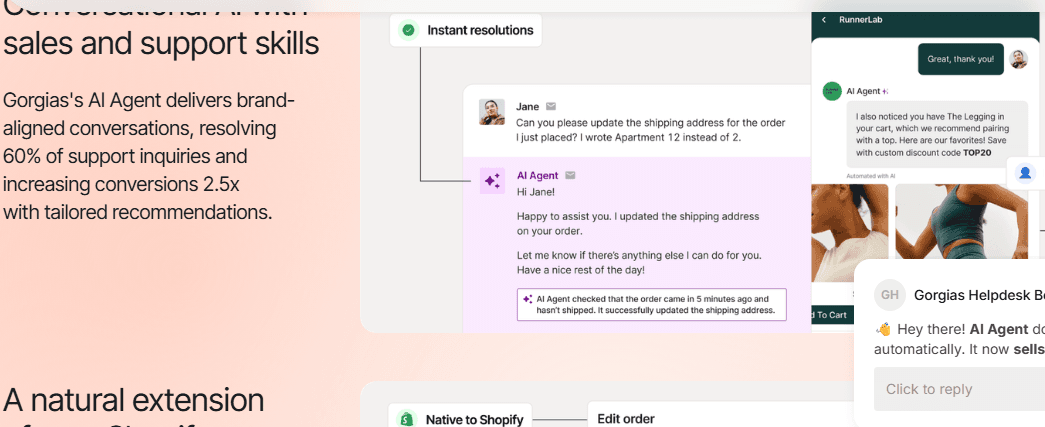
8. Gorgias
Best suited for:
agent-assisted support teams
macro-based workflows
high-volume ecommerce support operations
Gorgias is widely used among larger Shopify brands with dedicated customer support teams.
Its strength lies less in autonomous AI support and more in helping human agents operate efficiently.
The platform excels at:
ticket organization
macros
support workflow automation
and agent productivity
For support teams handling large daily ticket volumes, Gorgias can significantly improve response management efficiency.
However, stores looking for highly autonomous AI-driven support may find that Gorgias still relies heavily on:
agent workflows
manual review
and predefined support structures
compared to more AI-native automation platforms.
It is generally strongest for:
support team augmentation
operational workflows
and ecommerce helpdesk management
rather than fully autonomous support systems.
9. Freshdesk Messaging
Best suited for:
businesses already using the Freshworks ecosystem
omnichannel customer support teams
traditional support operations
Freshdesk Messaging integrates naturally into the broader Freshworks customer support environment.
Its strengths include:
ticket synchronization
omnichannel inbox management
and integration with existing customer support workflows
For businesses already operating within Freshworks products, Freshdesk can simplify operational management across channels.
The platform performs adequately for:
FAQ automation
customer routing
and support queue handling
However, it is generally less specialized for Shopify-specific ecommerce automation compared to more ecommerce-native tools.
Stores with highly complex ecommerce support requirements may require additional customization to achieve deeper operational automation.
10. ManyChat
Best suited for:
Instagram automation
WhatsApp commerce
social-media-driven stores
ManyChat remains one of the strongest platforms for social commerce automation.
The platform is particularly effective for:
Instagram DM automation
WhatsApp engagement
comment-to-message flows
and lead capture campaigns
For ecommerce brands generating significant traffic from:
Instagram
TikTok
or influencer campaigns
ManyChat can be extremely effective at handling top-of-funnel customer engagement.
Its strongest use cases are:
pre-purchase conversations
lead nurturing
promotional messaging
and social-channel engagement
However, ManyChat is generally less focused on:
deep Shopify operational workflows
complex post-purchase support
or advanced order-management automation
than more ecommerce-support-oriented systems.
11. Gobot
Best suited for:
conversational product discovery
quiz-style shopping experiences
guided ecommerce recommendations
Gobot focuses heavily on helping customers discover products through guided conversations.
Rather than functioning primarily as a support tool, Gobot is optimized for:
product matching
buyer qualification
and recommendation workflows
This works especially well for stores selling:
skincare
supplements
apparel
technical products
or products requiring customer guidance before purchase
The platform helps reduce product-selection friction by turning catalog exploration into a conversational experience.
However, Gobot is generally less focused on:
operational support automation
omnichannel customer service
and complex post-purchase workflows
than platforms built specifically for support operations.
12. Chatfuel
Best suited for:
WhatsApp-first businesses
conversational marketing
social messaging automation
Chatfuel has evolved heavily toward WhatsApp Business automation in recent years.
Its strengths include:
WhatsApp workflows
automated lead qualification
conversational campaigns
and messaging automation
For businesses using WhatsApp as a primary customer communication channel, Chatfuel can streamline:
inquiries
customer onboarding
promotional messaging
and lead handling
The platform is generally more marketing-oriented than support-oriented.
While it can assist with customer service workflows, it is not primarily designed for:
deep Shopify operational automation
advanced order management
or complex ecommerce support logic
in the same way as more ecommerce-native support platforms.
13. LiveChat with ChatBot.com
Best suited for:
human-agent-first support teams
live customer engagement
hybrid support workflows
LiveChat has traditionally focused on enabling strong human support experiences.
The ChatBot layer adds automation capabilities on top of the live-chat environment, allowing businesses to:
automate simple questions
qualify inquiries
and reduce repetitive support load
However, the overall philosophy of the platform remains heavily centered around:
live agents
human escalation
and manual support workflows
This makes it a strong fit for businesses that:
prioritize high-touch customer service
want AI-assisted support
but do not intend to fully automate support operations
Compared to AI-native ecommerce automation platforms, LiveChat generally places more emphasis on:
customer engagement
real-time human interaction
and agent experience
than fully autonomous support handling.
What Bad Shopify Automation Looks Like
A chatbot does not become “AI-powered” simply because it responds automatically.
Weak ecommerce automation usually shows up in patterns like:
redirecting customers to generic tracking pages
repeating refund policies without checking the actual order
losing context between channels
escalating too aggressively
failing silently on unknown questions
providing confident but inaccurate responses
treating emotional complaints like standard FAQs
Poor automation often increases support frustration instead of reducing it.
Strong ecommerce AI systems prioritize:
clarity
escalation handling
operational logic
and customer reassurance
not just response generation speed.
Which Shopify AI Chatbot Fits Your Store Stage?
Store Situation | Better Fit |
|---|---|
New Shopify store | Tidio |
Omnichannel ecommerce support | AeroChat |
Enterprise support operations | Zendesk AI or Intercom Fin |
Social-commerce-heavy brand | ManyChat |
Product recommendation flows | Certainly or Gobot |
Self-service support focus | Richpanel |
There is no universally perfect Shopify chatbot.
The best fit depends on:
support complexity
customer channels
operational workflows
and the type of conversations your customers actually have.
Final Thoughts
The Shopify AI chatbot market has matured significantly over the past few years, but many platforms still prioritize polished demos and scripted FAQ responses over solving the real operational challenges ecommerce businesses face daily. While most chatbots today can answer simple questions like shipping fees or return policies, far fewer are capable of handling the messy, real-world situations that make up a large portion of customer support volume.
For Shopify merchants, the real value of an AI chatbot is no longer about whether it can generate conversational replies. What matters is whether the system can understand operational context, retrieve live Shopify data accurately, maintain continuity across channels like WhatsApp and Instagram, and support customers through complex post-purchase situations without creating additional frustration.
As ecommerce support expectations continue to rise in 2026, the gap between basic FAQ bots and operationally capable AI support systems is becoming increasingly obvious. The strongest platforms are no longer defined by how “human” they sound, but by how effectively they can manage real ecommerce workflows such as order tracking, partial shipments, returns, product inquiries, escalation handling, and omnichannel continuity.
For Shopify store owners evaluating AI support tools today, the most important question is no longer:
“Does this chatbot use AI?”
The better question is:
“Can this system actually handle the realities of ecommerce customer support?”
FAQs
Can a Shopify AI chatbot fully replace a customer service team?
For stores where the majority of queries are order tracking, standard product questions, discount codes, and return policy requests, yes. Our 3-month test showed that 5 of the 13 tools handled these categories at 80% or higher without human involvement. The remaining 20% (complex complaints, fraud suspicion, bespoke requests) still benefit from human judgment.
Which Shopify chatbot has the highest automation rate?
In our 3-month test on a live Shopify store, AeroChat achieved the highest automation rate at 87%, followed by Intercom Fin at 83% and Zendesk AI at 80%. All three handled WISMO, product questions, and returns flows without human escalation in the majority of test scenarios.
How important is response speed for a Shopify AI chatbot?
Critical for live chat. Our test found that responses over 10 seconds triggered customers to re-send the same message or abandon the chat. The fastest tools (ManyChat at 1.8s, AeroChat at 2.1s) held conversation engagement significantly better than slower tools during our active-hours test periods.
Do I need coding skills to set up these chatbots?
Most tools on this list require no coding for basic setup. AeroChat, Tidio, ManyChat, Gobot, and Reamaze are fully no-code. Intercom Fin and Zendesk AI are low-code for core features but require developer involvement for deep Shopify custom integrations.
How long did your 3-month test take to set up each tool?
Setup times ranged from 3 hours (Tidio) to 3 days (Zendesk AI). Most tools fell in the 6-16 hour range for a configuration that could run without human monitoring. The setup time correlates with automation depth: tools that required more configuration generally performed better on edge cases.
Is it worth paying more for enterprise chatbot tools like AeroChat, Intercom or Zendesk?
For stores above approximately 2,000 monthly orders with complex product catalogues, yes. For stores under that threshold, tools like AeroChat and Certainly matched or exceeded the automation rates of enterprise tools at a fraction of the cost. Price does not predict automation quality. Our test confirmed this directly.
What should I do about queries the chatbot cannot answer?
Every automation setup needs a defined fallback path. Our test revealed that the best fallback is a combination of: acknowledge the query honestly, collect customer contact details, set a response time expectation, and flag the conversation for human review. Chatbots that go silent on unknown queries generate more follow-up volume than chatbots with a clear escalation message. For high-traffic periods like flash sales, having a tested fallback path is especially important.