
How to Win Back Lost Customers For Ecommerce Brands in 2026

To win back lost customers in ecommerce, brands must re-engage past buyers using personalized messaging, timely follow-ups, and automated communication. By identifying why customers stopped buying and using tools like AI chatbots, WhatsApp automation, and targeted offers, businesses can turn inactive customers into repeat buyers.
What Are Lost Customers in Ecommerce?
Lost customers are people who:
-
purchased once but never returned
-
stopped engaging with your store
-
abandoned carts and didn’t complete purchases
-
became inactive over time
These customers already know your brand, which makes them easier to convert compared to new visitors.
Why Customers Stop Buying From Ecommerce Stores
Before trying to win customers back, you must understand why they leave.
Common reasons
|
Reason |
Explanation |
|---|---|
|
poor experience |
slow support or confusion |
|
no follow-up |
brand disappears after purchase |
|
lack of personalization |
generic communication |
|
better competitors |
customers find alternatives |
|
delayed responses |
unanswered questions |
Many stores lose customers simply because they fail to reply faster during key decision moments.
Why Winning Back Customers Is Important
Re-engaging existing customers is more cost-effective than acquiring new ones.
Key benefits
-
higher conversion rates
-
lower marketing costs
-
increased lifetime value
-
stronger brand loyalty
Customers who return are more likely to trust your brand.
12 Proven Strategies to Win Back Lost Customers
1. Identify Inactive Customers
Start by segmenting customers who haven’t interacted recently.
Examples:
-
no purchase in 30–60 days
-
abandoned carts
-
no email or message engagement
Understanding these segments helps you create targeted campaigns.
2. Send Personalized Re-Engagement Messages
Generic messages don’t work.
Instead, send messages based on:
-
past purchases
-
browsing behavior
-
interests
Example:
“We thought you might like these new arrivals based on your last purchase.”
Many brands use customer engagement automation to send personalized messages at scale.
3. Offer Incentives to Return
Give customers a reason to come back.
Examples include:
-
discount codes
-
free shipping
-
limited-time offers
These incentives reduce hesitation and encourage action.
4. Use WhatsApp for Direct Engagement
WhatsApp has higher open rates compared to email.
Use it to:
-
send reminders
-
promote offers
-
answer questions
Automation tools help businesses automate customer messages and maintain consistent communication.
5. Recover Abandoned Carts
Cart abandonment is a major reason for lost customers.
Send follow-up messages like:
“You left items in your cart. Complete your order today.”
Many ecommerce stores use systems to reduce abandoned carts.
6. Improve Response Time
Slow replies lead to lost sales.
Customers expect instant answers.
Businesses that respond quickly are more likely to convert.
Many brands focus on reduce response time to improve engagement.
7. Reintroduce Your Brand With Value
Sometimes customers forget about your brand.
Reconnect by sharing:
-
new product launches
-
updates
-
improvements
This reminds customers why they chose your store in the first place.
8. Use AI Chatbots for Re-Engagement
AI chatbots can automatically reconnect with inactive customers.
They can:
-
send personalized messages
-
suggest products
-
answer questions
Businesses often use best ecommerce chatbot software to automate this process.
9. Provide Better Post-Purchase Support
Poor post-purchase experience leads to customer loss.
Ensure you:
-
send order updates
-
provide support
-
follow up after delivery
Automation tools help scale customer support without increasing workload.
10. Create Urgency With Limited-Time Offers
Urgency motivates action.
-
“Offer expires in 24 hours”
-
“Limited stock available”
This encourages customers to return quickly.
11. Ask for Feedback and Improve
Sometimes customers leave because of issues.
Ask questions like:
-
“What could we improve?”
-
“How was your experience?”
Use feedback to improve your store.
12. Build Long-Term Relationships With Automation
Winning back customers is not a one-time action.
You need continuous engagement.
Automation helps:
-
maintain communication
-
send reminders
-
provide personalized experiences
Many brands adopt ecommerce support automation to manage this process.
Customer Win-Back Strategy Comparison
|
Strategy |
Goal |
Result |
|---|---|---|
|
personalized messages |
reconnect customers |
higher engagement |
|
incentives |
encourage return |
increased conversions |
|
automation |
scale communication |
consistent follow-ups |
|
faster responses |
reduce frustration |
better experience |
Using multiple strategies together creates stronger results.
How AeroChat Helps Win Back Lost Customers
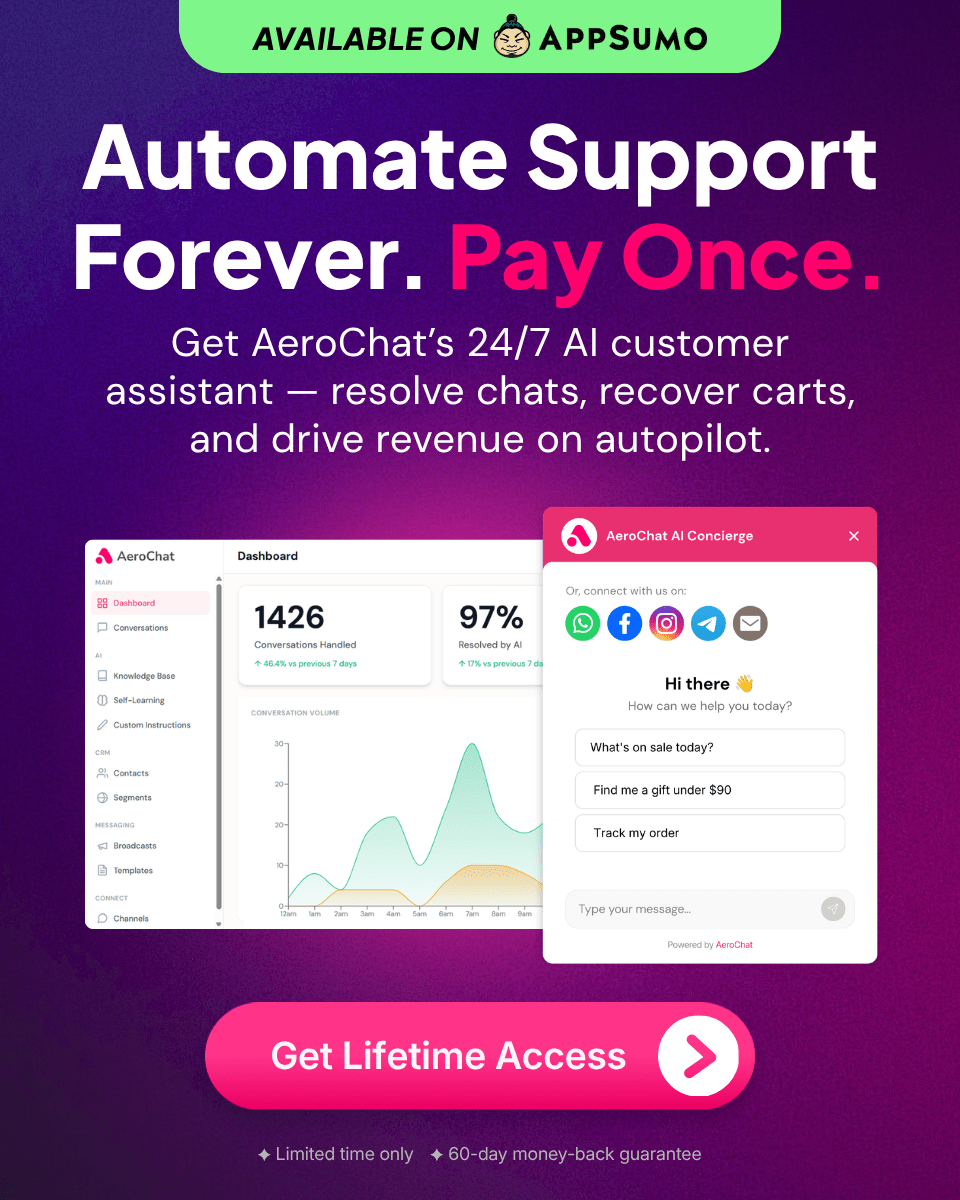
AeroChat helps ecommerce brands reconnect with inactive customers through automated conversations.
-
sends personalized follow-ups
-
recommends products based on behavior
-
answers customer questions instantly
-
reduces response time
Instead of losing customers, AeroChat helps bring them back into the sales funnel.
Businesses often explore tools like best chatbot for online stores to improve retention and re-engagement.
Common Mistakes to Avoid
No follow-up
Customers are forgotten after purchase.
Generic messaging
Lack of personalization reduces effectiveness.
Slow support
Delayed responses lead to lost trust.
Over-discounting
Too many discounts reduce brand value.
Future of Customer Retention in Ecommerce
Customer retention strategies will continue evolving with AI.
Future trends include:
-
predictive re-engagement
-
automated messaging journeys
-
hyper-personalization
-
conversational commerce
Brands that adopt these strategies early will gain a competitive advantage.
Final Thoughts
Winning back lost customers is one of the most powerful growth strategies in ecommerce.
Instead of constantly acquiring new customers, businesses should focus on:
-
re-engaging past buyers
-
improving communication
-
using automation tools
By combining personalization, automation, and timely engagement, ecommerce brands can turn lost customers into loyal, repeat buyers.