

Why Shoppers Drop Off When You Reply Late (and How Shopify Merchants Can Fix It)

Slow replies on Shopify cause shoppers to drop off because customers expect instant answers at the decision stage. When response time goes beyond a few minutes, buyers lose confidence, switch tabs, compare competitors, or abandon the cart altogether. Reducing reply time with automation, clearer product pages, and AI chat can keep shoppers engaged and stop the drop-offs that cost your store sales.
This guide explains why slow replies hurt conversions and how Shopify merchants can fix it fast.
Why Do Slow Replies Make Customers Leave?
Slow replies interrupt buying momentum. When shoppers pause to wait for an answer, their attention breaks and doubt increases.
Here’s why late responses cause drop-offs:
-
People shop while multitasking. If your message takes too long, they forget to return.
-
Most shoppers want answers within 2–3 minutes. Anything longer feels like poor service.
-
Competitors are one click away. If they reply faster, the sale goes to them.
-
Questions usually come at the moment of purchase. Hesitation kills conversions.
A Forrester study shows that 53% of online shoppers abandon a site if they can’t get quick answers — proving that reply speed directly influences sales.
What Questions Are Most Time-Sensitive?
The questions that trigger drop-offs are usually the ones that stand between “interested” and “buying.”
Common examples:
-
“How long is delivery?”
-
“What size should I choose?”
-
“Is this item in stock?”
-
“What’s your return policy?”
-
“Is this safe for sensitive skin?”
-
“Can you ship to my country?”
If these questions take five, ten, or thirty minutes to answer, shoppers move on especially on mobile.
How Slow Replies Impact Shopify Conversions
Here’s the real cost of replying late:
1. Higher Cart Abandonment
If a shopper is unsure about size, fit, or delivery timing and you reply late, the checkout gets abandoned.
2. Lost Price Comparisons
While waiting, customers compare you with competitors. Whoever answers first wins the sale.
3. Lower Trust
Waiting feels like poor service. Fast replies increase confidence in the brand.
4. Shorter Attention Span
Most online shoppers won’t return after leaving the page — even if you eventually reply.
5. Reduced Repeat Purchases
Slow support early on signals future frustration, making customers less likely to buy again.
Why Replying Quickly Is Hard for Most Shopify Stores
Replying instantly requires:
-
Staff availability
-
Consistent coverage
-
Knowledge of product details
-
Ability to handle busy hours
-
Quick recall of policies
Small merchants especially struggle because they manage operations, packaging, inventory, and support at the same time.
This leads to delayed replies — not because of poor service, but because the workload is heavy.
How Shopify Merchants Can Prevent Drop-Offs Caused by Slow Replies
Here are the most effective ways to fix the issue without hiring a large team.
1. Use AI Chatbots for Instant Answers (Most Impactful Fix)
AI chatbots answer customer questions instantly — even during peak hours.
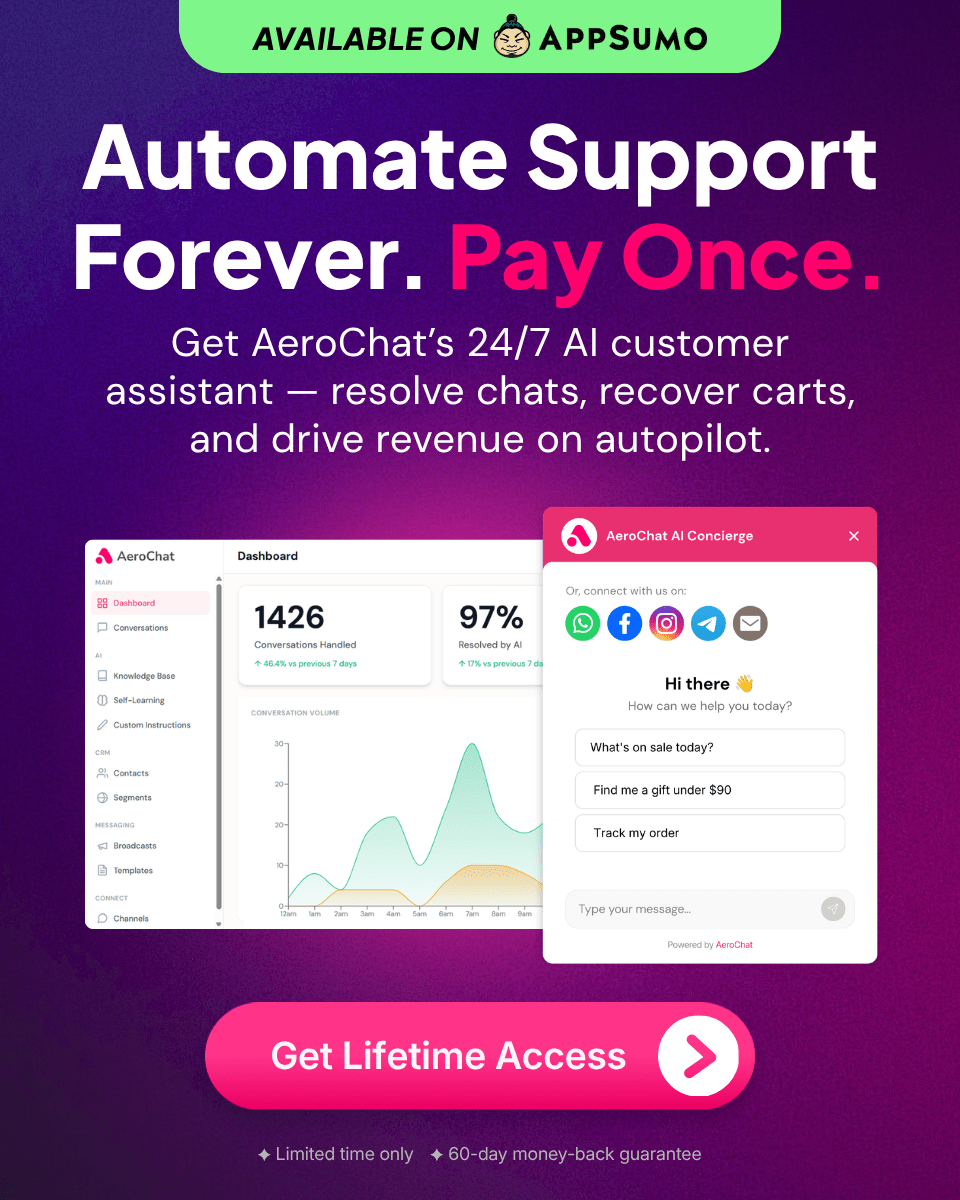
Our AI assistant inside AeroChat is trained directly on your:
-
Product descriptions
-
FAQs
-
Store policies
-
Delivery and return details
So it can respond instantly and accurately without manual input.
They handle questions like:
-
“When will my order arrive?”
-
“What size should I get?”
-
“Do you ship to the UK?”
-
“What’s your return window?”
Why it works
-
Replies are instant
-
No waiting
-
Customers stay on the page
-
Cart abandonment drops
-
Shoppers feel supported
Most Shopify stores that install AI chatbots see 20–35% more conversions from chat-initiated shoppers.
2. Add Quick-Access FAQs on Product Pages
Shoppers don’t want to navigate to a long FAQ page — they want answers next to the product.
Add short FAQs directly under:
-
Add to Cart
-
Size chart
-
Delivery details
-
Material information
This reduces question volume and boosts confidence.
Read our full guide: how to automate FAQs on Shopify.
3. Offer Self-Service Order Tracking
“Where is my order?” is a major cause of slow-reply frustration.
Provide:
-
Real-time tracking pages
-
Chat-based order lookup
-
Auto-sent tracking links
AI assistants like AeroChat.ai can show live tracking inside chat, removing the need to reply manually.
4. Shorten Your Response Workflow
If you still rely on manual replies, streamline the process:
-
Use pre-saved replies
-
Keep shipping times ready to copy/paste
-
Use a desktop + mobile app for chat
-
Route messages to the right person
-
Enable notifications during peak hours
Small workflow changes can improve reply time by 30–40%.
5. Improve Policy Visibility
Most questions come from unclear expectations.
Place key policies in:
-
Header/footer
-
Cart page
-
Product pages
-
Chat widget
-
Shipping calculator
Clear visibility reduces confusion and incoming questions.
What’s the Ideal Reply Time for Shopify Stores?
Most consumers expect a reply:
-
Within 2 minutes on live chat
-
Within 10 minutes on Messenger/WhatsApp
-
Within 1 hour via email
Anything slower leads to engagement drop-off.
AI-powered tools solve this by replying instantly 24/7.
Key Takeaway
If customers wait, they leave. If customers get instant answers, they buy.
To fix reply-related drop-offs:
-
Use AI chat for instant responses
-
Add FAQ blocks on product pages
-
Provide self-service tracking
-
Improve policy visibility
-
Streamline manual workflows
Want to reduce reply time dramatically?
Explore AeroChat for Shopify, an AI chat assistant that replies instantly so you never lose a customer to slow support again.