
7 Best Enterprise AI Chatbot Solutions for Ecommerce in 2026

The best enterprise AI chatbot solution for ecommerce is the one that fits your customer-service channels, commerce systems, governance requirements and internal technical capacity. There is no universal winner: a retailer that wants a managed omnichannel service platform has different needs from an organisation building tightly controlled workflows on its own infrastructure.
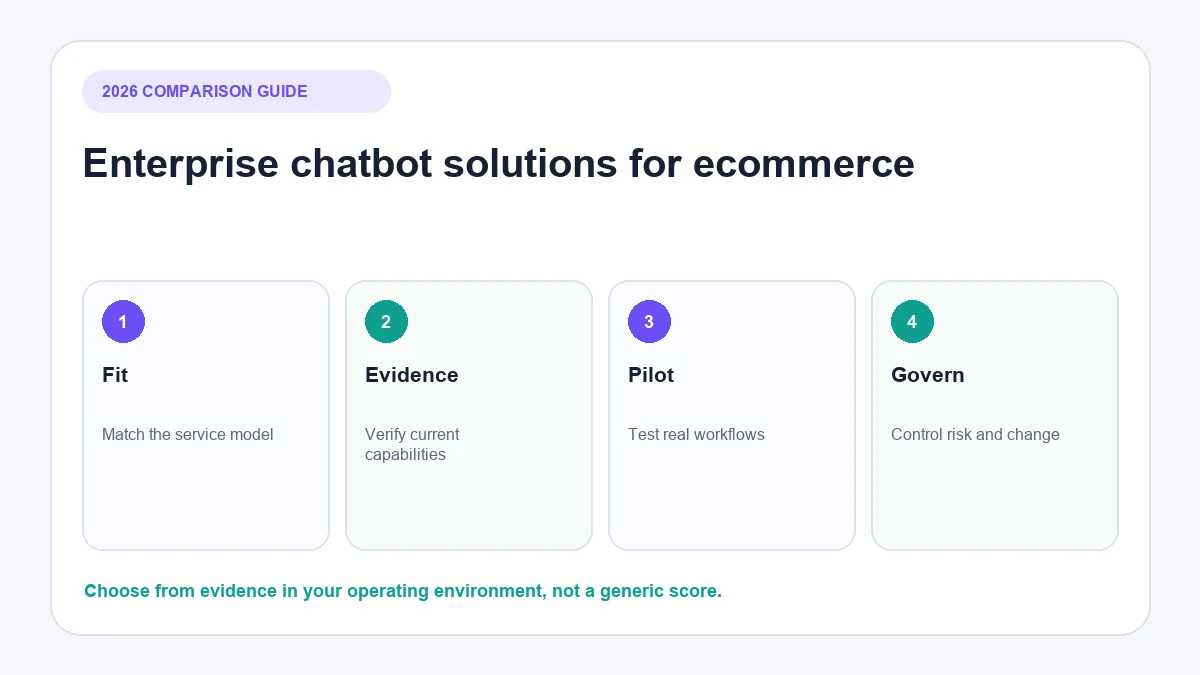
This comparison covers seven credible options for ecommerce and customer service. It uses current first-party documentation, checked on 15 July 2026, and avoids invented performance scores. Shortlist platforms by fit, then validate the claims that matter to your organisation in a controlled pilot. If you’re not yet sure what “enterprise” actually changes about a chatbot plan, what is an enterprise AI chatbot covers that before you get into vendor comparisons.
Enterprise chatbot solutions compared at a glance
| Platform | Best suited to | Delivery model | Notable consideration |
|---|---|---|---|
| AeroChat | Ecommerce teams wanting managed omnichannel customer-service automation | No-code SaaS | Confirm required governance, volume and service commitments during procurement |
| IBM watsonx Assistant | Organisations building configurable virtual agents across service channels | Enterprise cloud platform | Usually needs solution design, integration and ongoing ownership |
| Google Dialogflow CX | Developer-led teams with complex text or voice conversation flows | Google Cloud platform | Generative features and deterministic flows have different controls and service conditions |
| Microsoft Copilot Studio | Microsoft-centred service operations and agent workflows | Microsoft cloud platform | Channel and handover design can depend on the wider Microsoft stack |
| Salesforce Agentforce | Businesses already running customer service in Salesforce | Salesforce platform | Value depends heavily on CRM data quality, permissions and implementation |
| LivePerson | Established conversational-service programmes combining automation and agents | Enterprise conversational platform | Procurement should confirm the exact channel, AI and integration package |
| Rasa | Engineering teams requiring extensive customisation or on-premises deployment | Pro-code platform | Flexibility brings more development and operational responsibility |
| Zanus AI | Enterprise IT teams wanting on-premises AI across internal operations, not chat specifically | On-premises hardware + software, one-time purchase | Website chatbot is one of 15+ bundled modules, not built specifically for ecommerce customer service |
This is a fit comparison, not a league table. Product names, packaging and availability can change, so confirm the shortlisted configuration directly with each vendor.
How we evaluated enterprise chatbot platforms
We reviewed current vendor documentation against criteria that affect real ecommerce deployments. We did not assign star ratings because a single score can conceal important trade-offs.
Ecommerce and customer-service fit
A useful enterprise AI chatbot solution for ecommerce must do more than answer general questions. It should be evaluated against product discovery, order status, delivery, returns, account problems, promotions and post-purchase support. These workflows expose whether the platform can use current business data, apply rules and pass exceptions to a person.
Integrations, data and governance
Check where answers come from, how permissions are applied and how updates reach the chatbot. Enterprise buyers should also ask about data location, retention, audit records, access controls, incident response and subcontractors. A product page is not a substitute for the evidence required by your legal, security and procurement teams.
Channels, handover and operating effort
Channel coverage matters only if conversations retain the right context and reach the right team. We considered web and messaging support, human escalation and the effort needed to build, test and maintain the system.
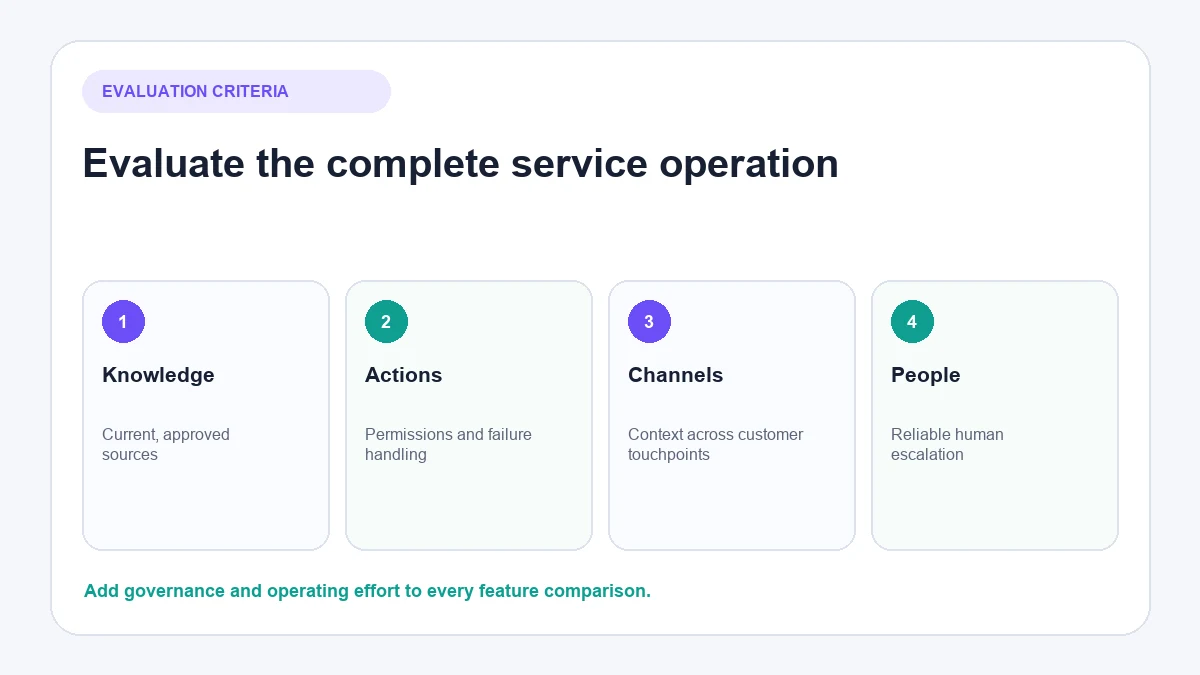
The best enterprise chatbot solutions for ecommerce
1. AeroChat: best suited to omnichannel ecommerce customer service
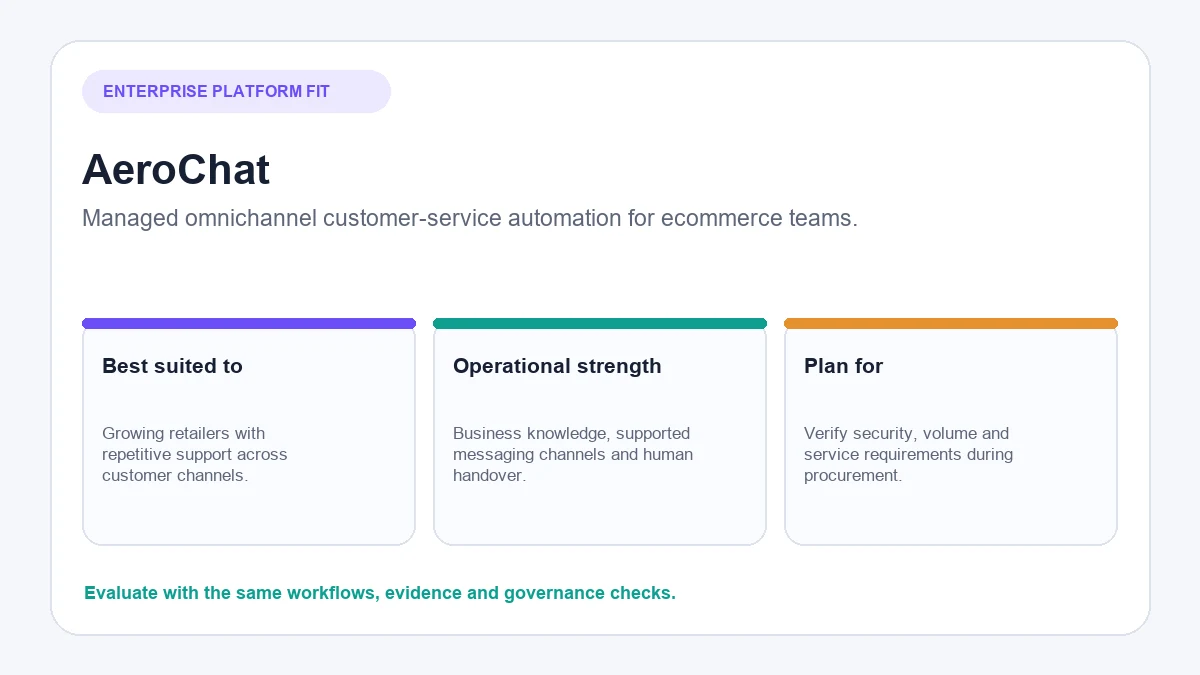
AeroChat is an AI agent platform that helps ecommerce brands run customer service on autopilot. It is designed for teams that want to answer common product, order, delivery and policy questions across supported customer channels without building every conversation as a flowchart.
Its current documentation shows support for training the AI on selected website content and uploaded business files. Teams can include or exclude sources, while human handover carries the conversation context when a person needs to take over. Supported channels include website chat, WhatsApp, Instagram, Facebook Messenger, Telegram and email. If social messaging represents a substantial share of support demand, compare the workflows in the dedicated WhatsApp chatbot and Instagram AI chatbot guides before choosing a platform.
Why it may fit: the combination of ecommerce knowledge, multiple messaging channels and handover is relevant to growing retailers whose repetitive enquiries are spread across several inboxes.
Consider before choosing: AeroChat should not be treated as the default answer for every enterprise. Buyers with formal security, data-residency, procurement or guaranteed-volume requirements should request the applicable evidence and service terms. AeroChat is generally a growth-stage support investment rather than a required launch cost.
Best for: Ecommerce brands that want to automate and scale customer service without adding the same amount of manual support work.
Enterprise buyers vetting the company behind a shortlisted vendor can learn more about the team on the AeroChat About Us page.
2. IBM watsonx Assistant: best suited to configurable enterprise virtual agents
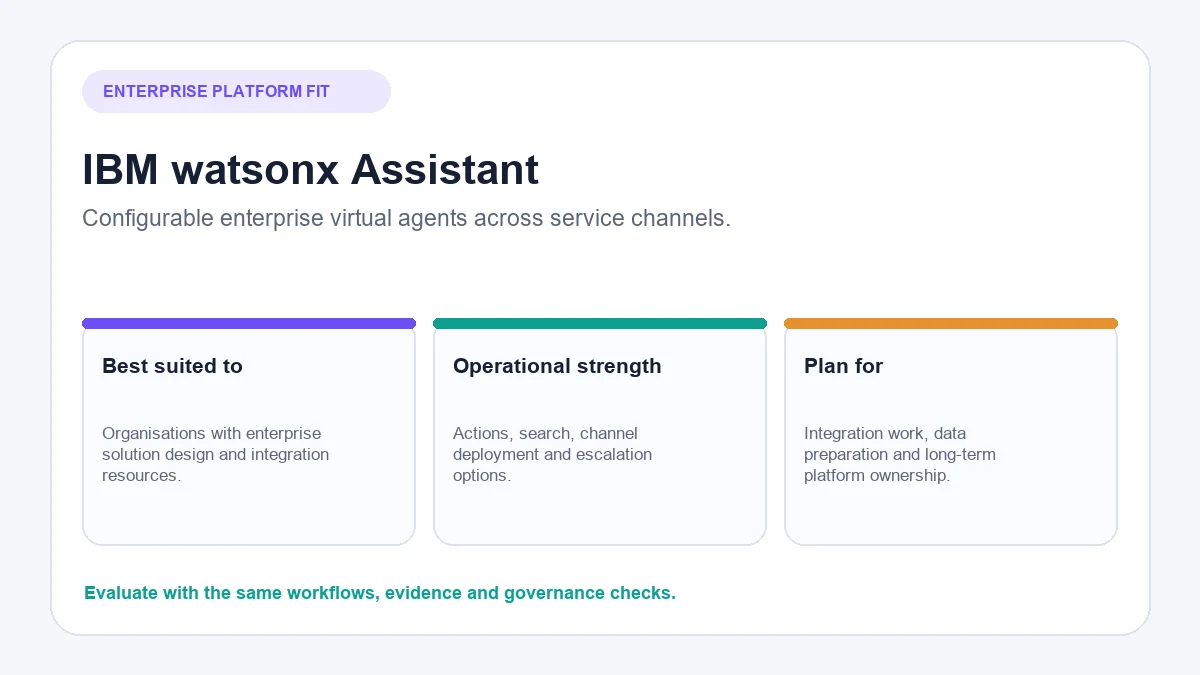
IBM watsonx Assistant supports virtual agents for web chat and other service channels, with actions, search and escalation options. IBM's current watsonx Assistant documentation positions it as a configurable enterprise platform rather than a ready-made ecommerce helpdesk.
Why it may fit: organisations already using IBM technology or working with an implementation partner can design a branded assistant around their systems and service processes.
Consider before choosing: implementation quality depends on conversation design, integrations, knowledge preparation and ownership after launch. Confirm the exact regional availability, channels and commercial terms required for the project.
3. Google Dialogflow CX: best suited to complex, developer-led conversation flows
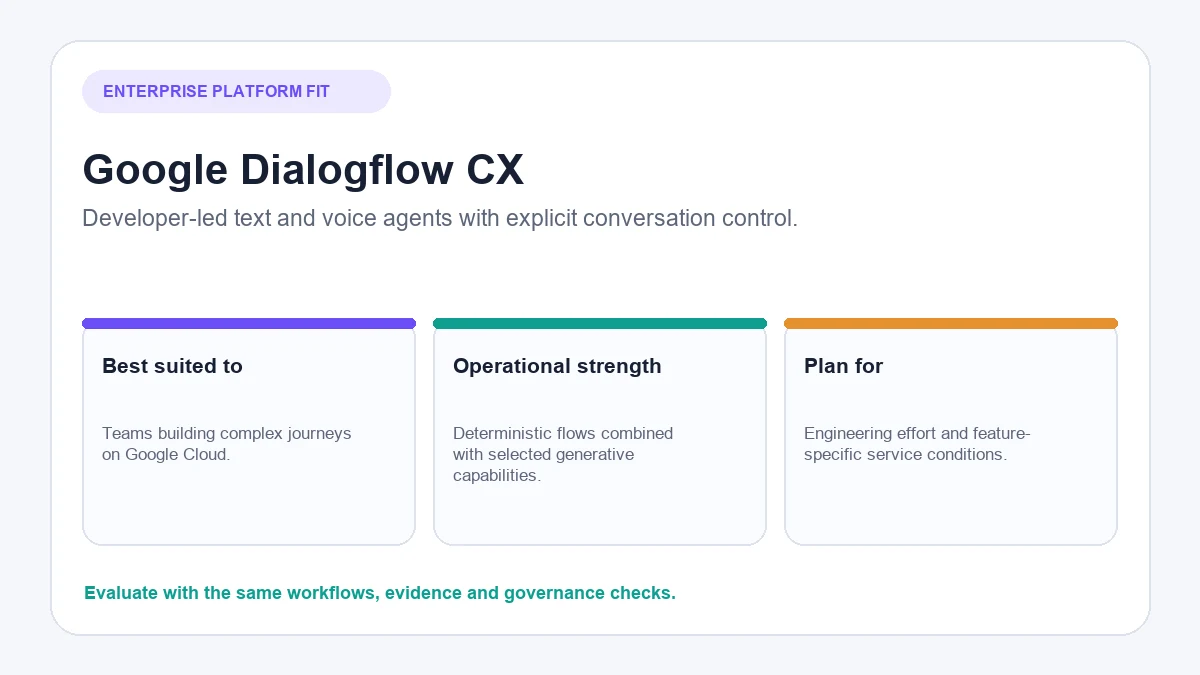
Dialogflow CX combines generative models with explicit flows for controlling conversations. Google documents text and audio input, text or synthetic-speech responses, APIs and integrations for web, mobile, devices and interactive voice systems in its Dialogflow CX documentation.
Why it may fit: developers can model complex journeys, connect external services and decide where deterministic control or generative behaviour is appropriate. This can be useful for high-stakes steps such as authentication, order changes or structured returns.
Consider before choosing: it is a platform for building, not a finished ecommerce support operation. Google also notes that some generative features are excluded from the Dialogflow CX service-level agreement, so the project team must check the conditions applying to each component.
4. Microsoft Copilot Studio: best suited to Microsoft-centred organisations
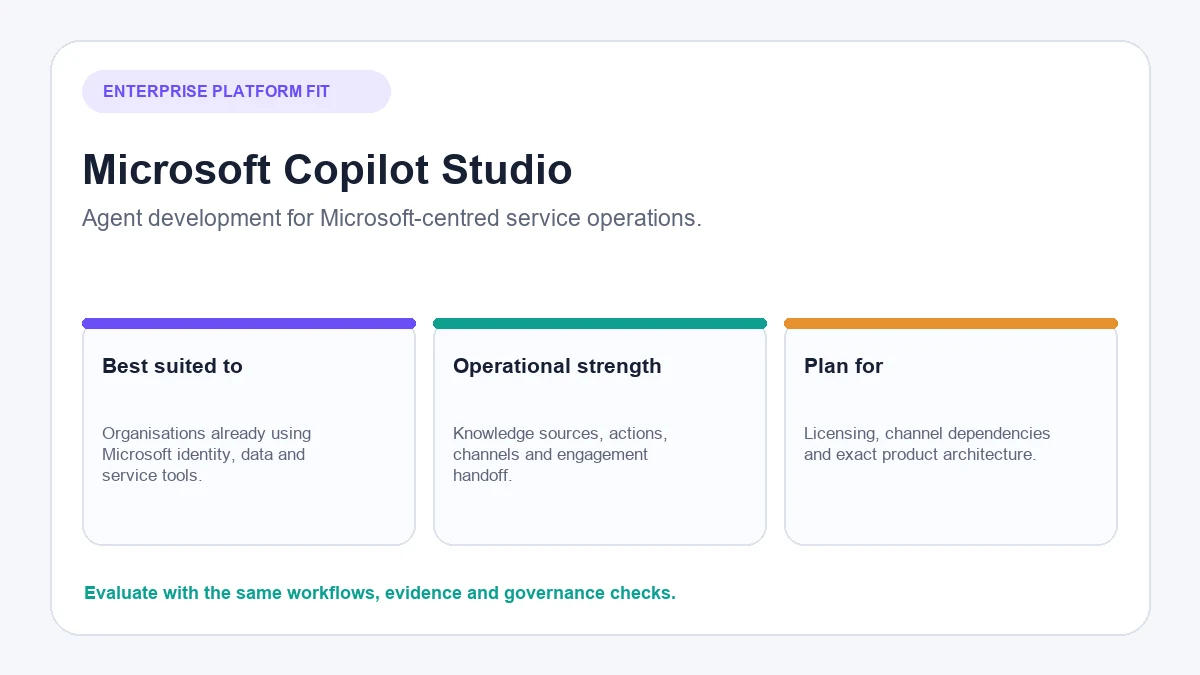
Copilot Studio lets organisations create agents using knowledge sources, actions and channels. Microsoft's customer engagement guidance describes handoff options to Dynamics 365 and supported third-party engagement hubs, while its current development guidance points teams towards the Microsoft 365 Agents SDK for coded agents.
Why it may fit: businesses already using Microsoft identity, data and service tools may benefit from keeping agent development and administration in a familiar ecosystem.
Consider before choosing: “Microsoft chatbot” can refer to several products and older Bot Framework material is still common online. Define whether the project uses Copilot Studio, custom agents, Dynamics 365 or a combination, then confirm licensing and channel dependencies.
5. Salesforce Agentforce: best suited to Salesforce service operations
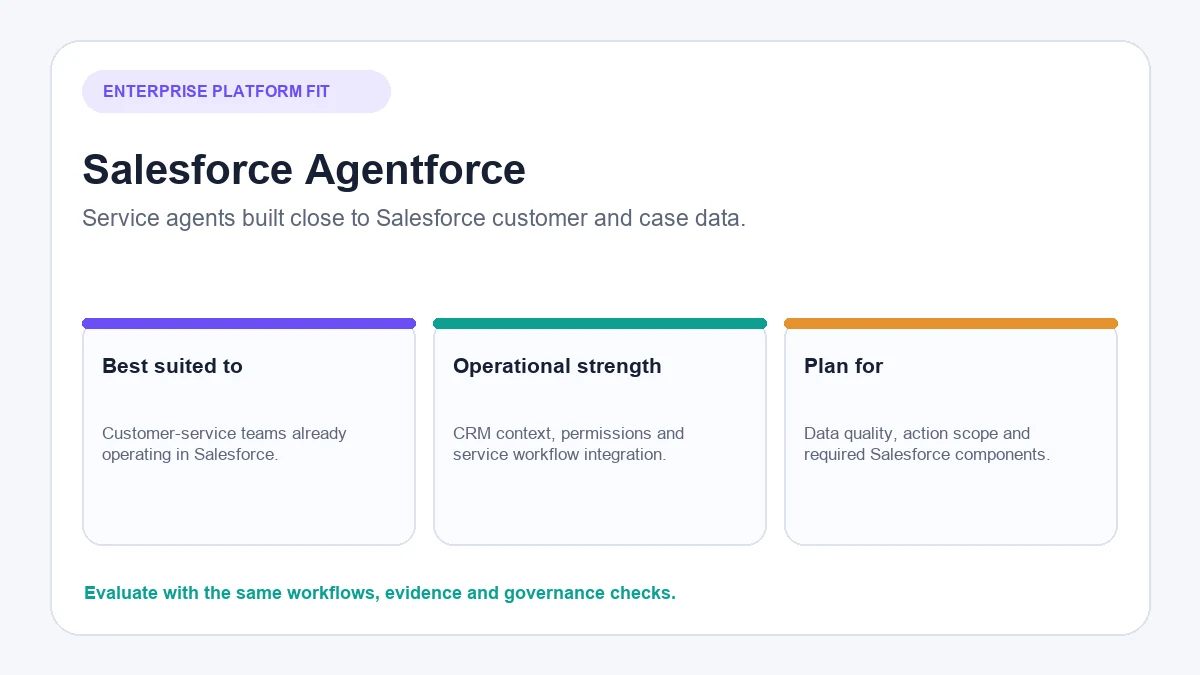
Agentforce is Salesforce's current agent platform. Salesforce's documentation explains how an existing Einstein Bot can be used as the basis for a service agent, while the original bot remains active. This makes the current Agentforce name more accurate than treating “Einstein Bots” as Salesforce's complete enterprise AI offer.
Why it may fit: teams whose customer profiles, cases, orders and service workflows already live in Salesforce can keep the AI close to those records and permissions.
Consider before choosing: the result depends on clean CRM data, correctly scoped actions and disciplined access controls. Confirm which Service Cloud, Data Cloud and Agentforce components are necessary rather than assuming they are included together. See the official transition guidance for the current bot-to-agent route.
6. LivePerson: best suited to established conversational-service programmes
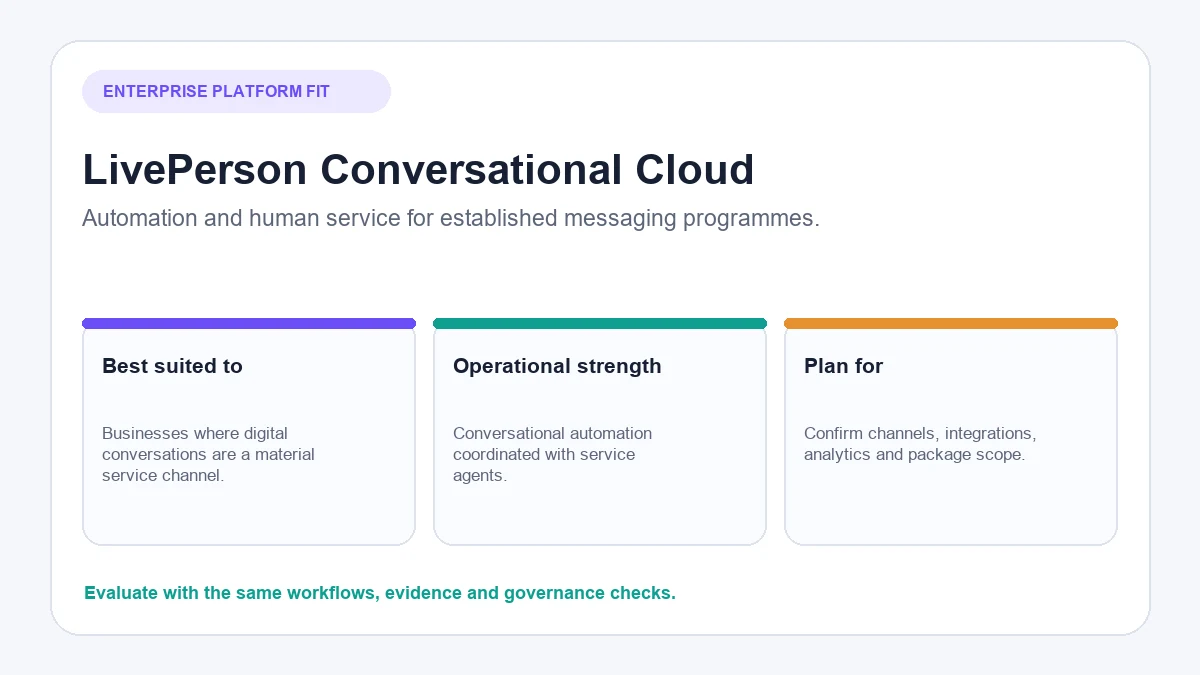
LivePerson's Conversational Cloud is aimed at businesses running customer conversations across automation and human service teams. It is most relevant when messaging is already a material operating channel rather than an experimental widget.
Why it may fit: established service organisations can use a single conversational programme to coordinate automation, agents and messaging experiences.
Consider before choosing: product bundles and implementation models can vary. Ask LivePerson to demonstrate the precise ecommerce integrations, channels, analytics, handover behaviour and governance controls included in the proposed package. Use the current Conversational Cloud product information as a starting point, not as procurement evidence on its own.
7. Rasa: best suited to engineering-led custom deployments
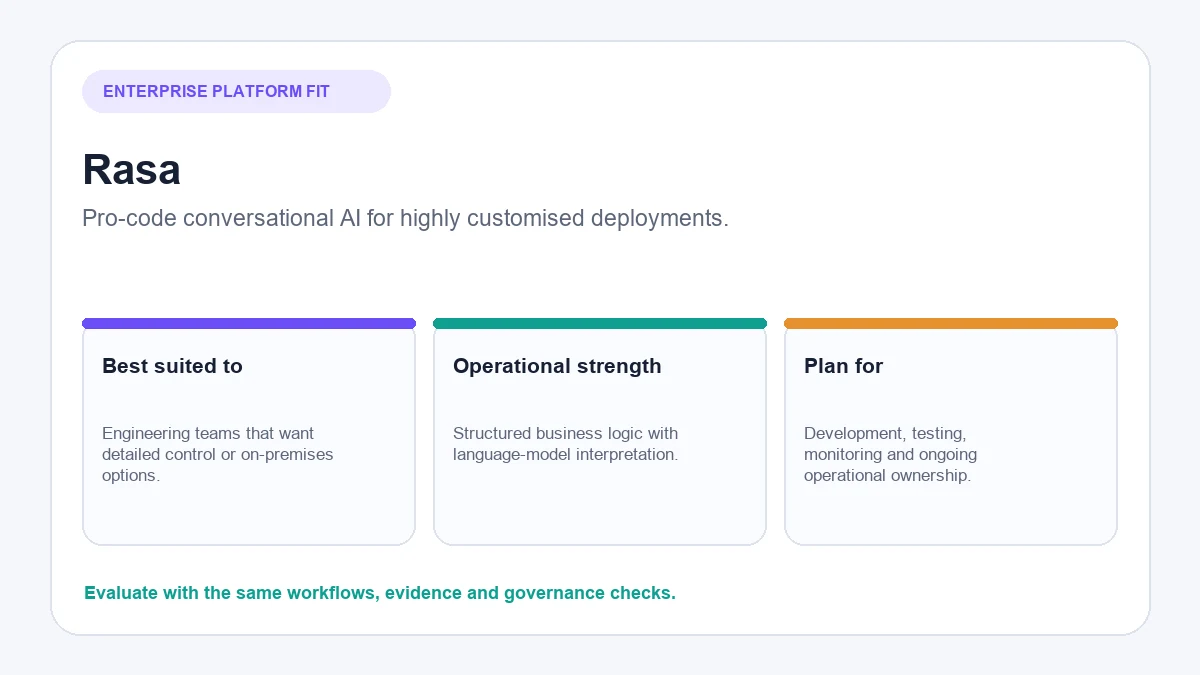
Rasa is a pro-code conversational AI platform for teams that want greater control over dialogue logic and deployment. Its current platform uses CALM, which combines structured business logic with language-model interpretation, and Rasa documents on-premises deployment options.
Why it may fit: engineering teams can build specialised assistants, connect proprietary systems and retain detailed control over the conversation architecture.
Consider before choosing: flexibility transfers responsibility to the buyer. The organisation needs people to design flows, develop integrations, test changes, monitor behaviour and maintain the deployment. Review Rasa's current platform documentation before estimating this effort.
What about Zanus AI?
Zanus AI doesn’t get its own numbered entry above because it isn’t really a like-for-like option for this comparison. It’s on-premises AI hardware built for internal enterprise operations: document generation, scheduling, workflow automation and role-based access, with a website chatbot bundled in as one of 15+ modules rather than a platform built specifically for ecommerce customer service. It’s included in the table above for buyers researching it directly, but if you’re evaluating it against dedicated customer-service platforms like the ones on this list, this Zanus AI comparison breaks down exactly where the categories diverge.
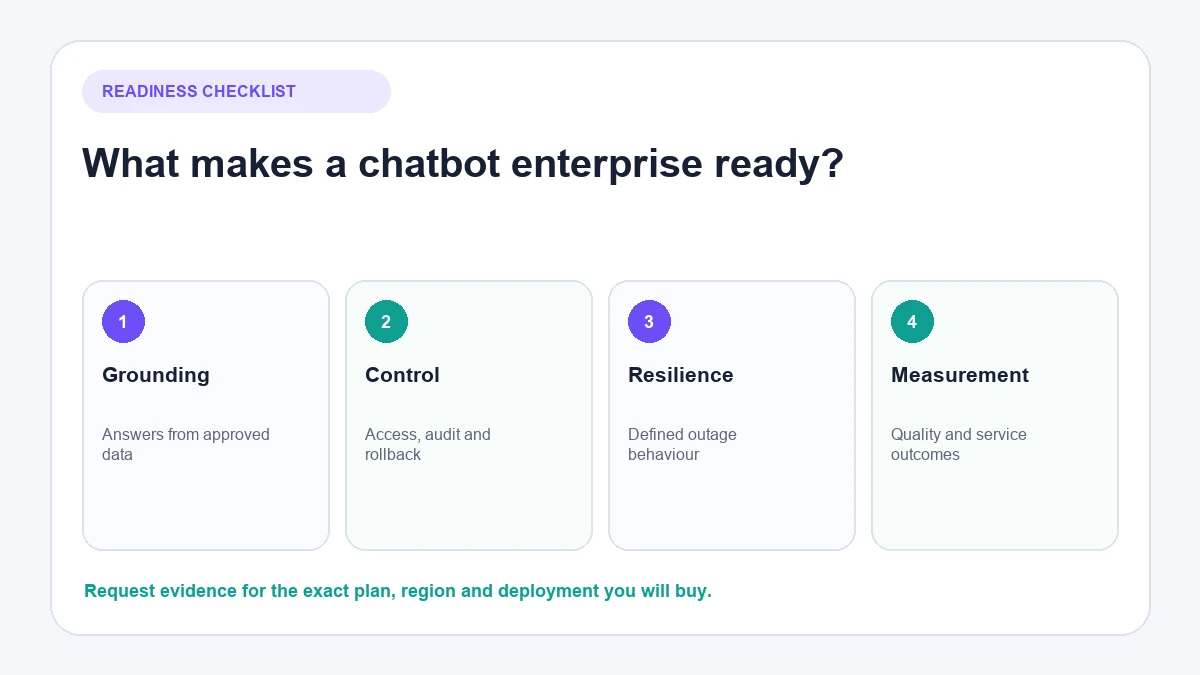
What makes a chatbot platform enterprise-ready?
“Enterprise” should describe operating capability, not simply a high price or a long feature list. Look for evidence in these areas:
- Grounded answers: the platform can use approved, current business sources and show how knowledge is updated. For example, AeroChat lets teams train AI on selected business knowledge.
- Controlled actions: sensitive actions such as refunds, address changes or account access require authentication, permissions and clear failure handling.
- Human escalation: customers can reach the right person with the conversation context intact.
- Governance: administrators can control access, review changes and investigate incidents.
- Operational resilience: the team knows what happens during an integration failure, model failure or service outage.
- Measurable service outcomes: reporting connects conversations to containment, escalations, resolution quality and customer outcomes without disguising failures.
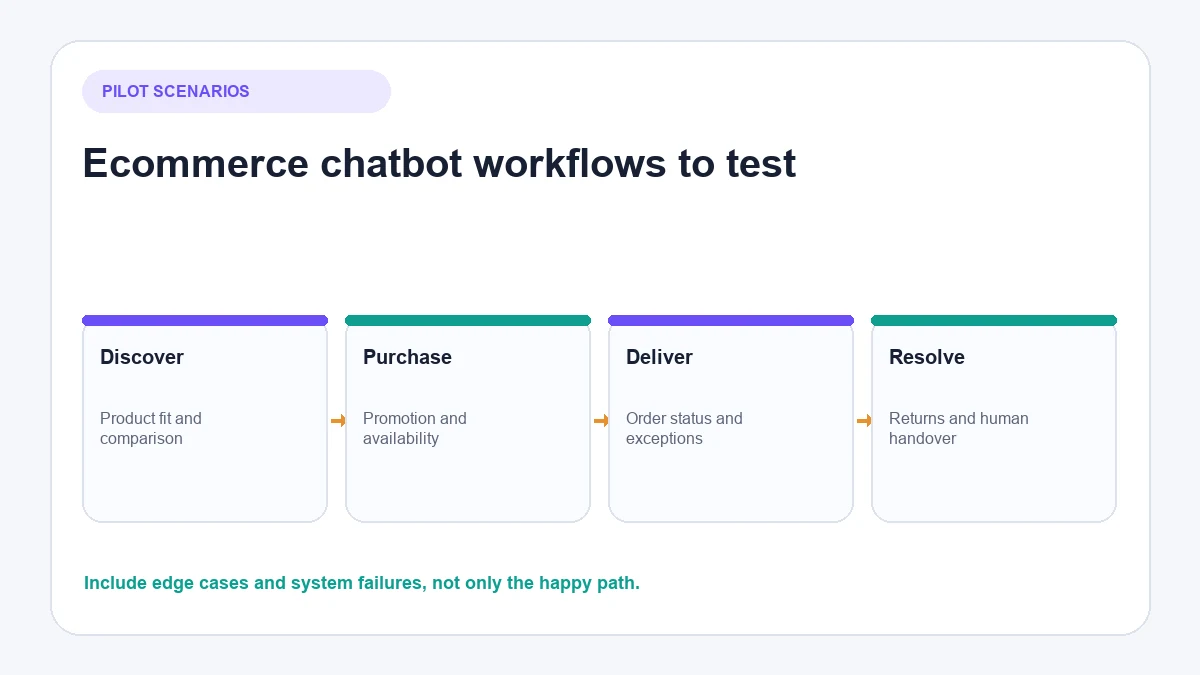
Ecommerce workflows to test before buying
A polished product demonstration is not enough. Give each shortlisted vendor the same realistic scenarios and score the evidence.
- Product comparison: ask for a recommendation with conflicting requirements, then check whether the answer uses current catalogue data and explains its reasoning.
- Order status: test authenticated and unauthenticated requests, missing orders and delayed fulfilment.
- Delivery exception: see whether the system distinguishes a general delivery question from a specific damaged or missing parcel.
- Return eligibility: test policy boundaries, sale items, expired windows and cases that require discretion.
- Promotion question: check dates, exclusions and whether the chatbot avoids applying an invalid discount.
- Human request: ask for a person directly and confirm routing, context transfer, queue behaviour and after-hours messaging.
- Knowledge conflict: place contradictory information in two approved sources and observe how the platform handles it.
For Shopify operations, also verify how catalogue and order data are synchronised and which actions require separate approval. The broader Shopify chatbot comparison helps merchants assess ecommerce-focused options, but every shortlist candidate should still be tested against the same store scenarios.
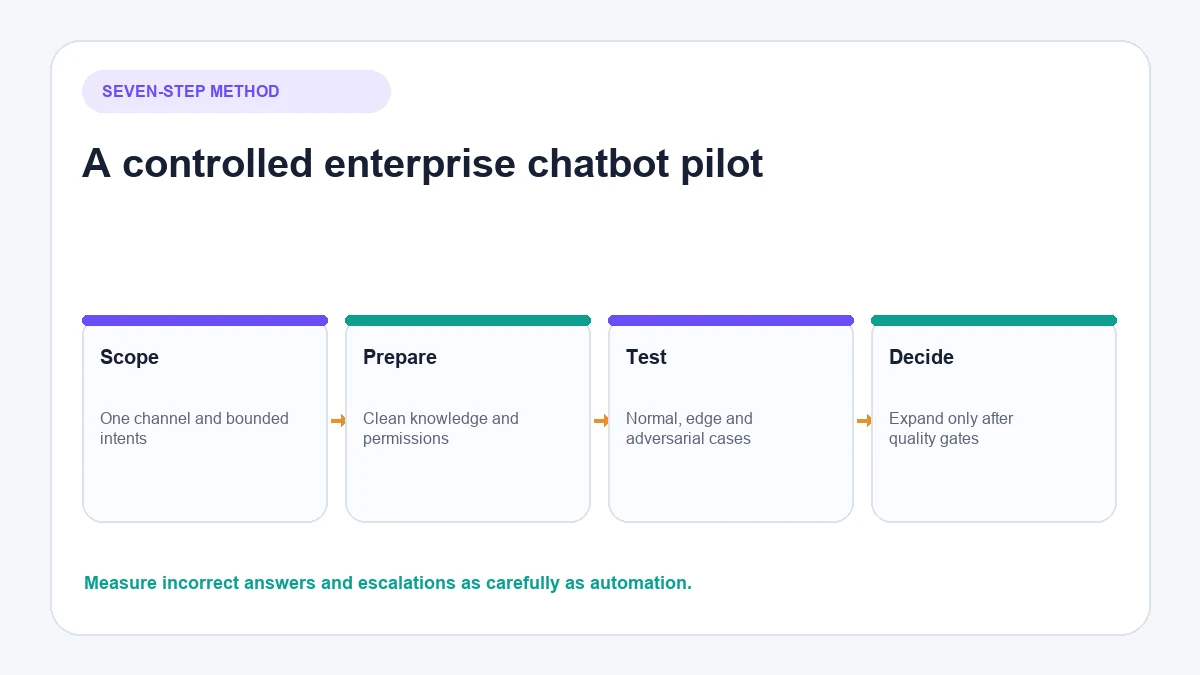
A practical enterprise chatbot pilot plan
Run a narrow pilot before attempting a full service transformation.
- Choose one channel and a bounded intent set. Start with high-volume, low-risk questions such as product details, delivery policies and order-status guidance.
- Define success and failure. Include answer accuracy, appropriate escalation, unresolved cases and customer effort. Do not judge the pilot on deflection alone.
- Prepare approved knowledge. Remove duplicate policies, identify source owners and set an update process.
- Connect only necessary systems. Apply least-privilege access and keep irreversible actions outside the first pilot.
- Test ordinary and adversarial cases. Include vague requests, policy exceptions, prompt injection, personal data and integration outages.
- Review transcripts with service staff. Front-line teams often spot misleading answers and poor escalation earlier than a dashboard does.
- Set expansion gates. Add more intents or channels only after the current scope meets agreed quality and governance standards.
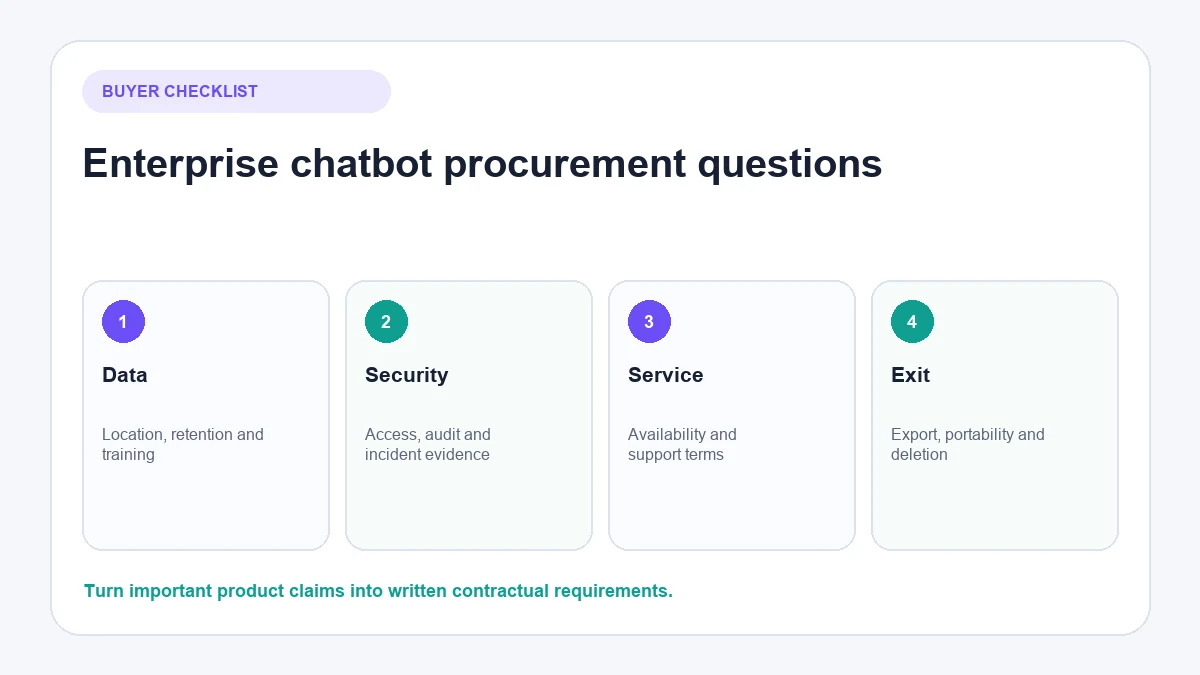
Procurement questions to ask every vendor
- Which data is stored, where is it processed and how long is it retained?
- Can our data or conversations be used to train provider models, and what controls apply?
- Which identity, access, audit and encryption controls are included in the proposed plan?
- Which features, channels and integrations are generally available in our target countries?
- How are knowledge changes reviewed, tested and rolled back?
- What happens when the AI lacks confidence or a connected system fails?
- Can a human take over with the full context, and how is the conversation routed?
- Which usage measures affect cost, limits or performance?
- What service commitments and support response terms are contractual?
- How can we export conversation data and exit the platform?
Which enterprise chatbot solution should you choose?
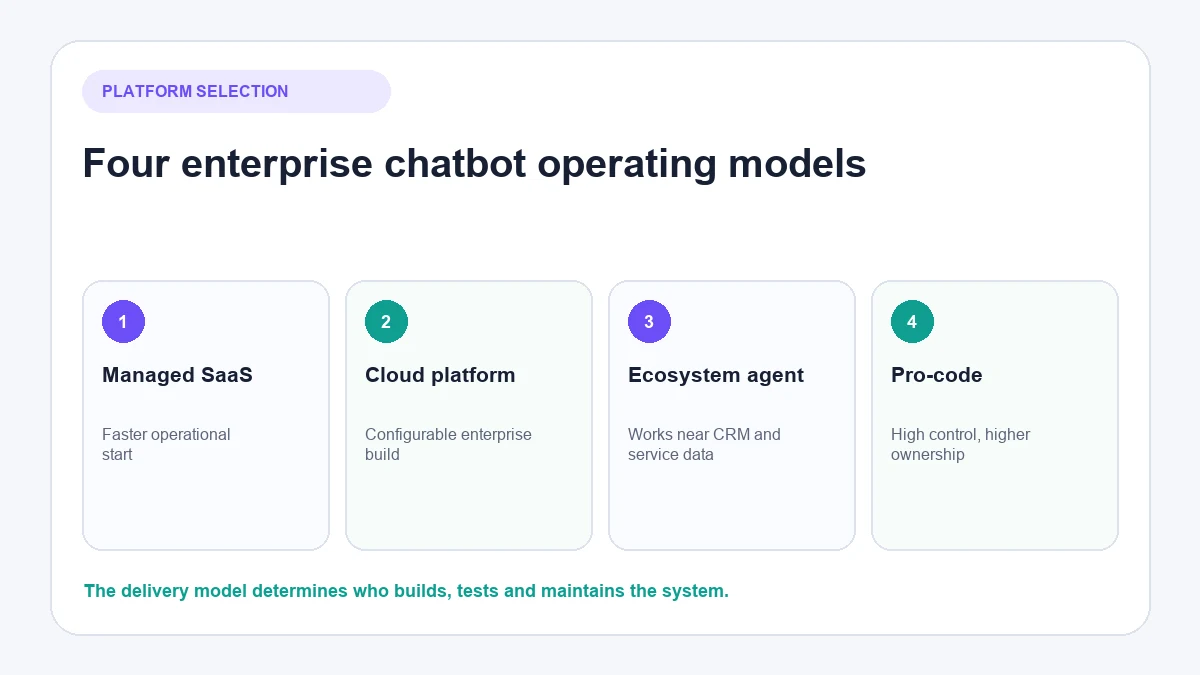
Choose by operating model. AeroChat is a relevant shortlist option for ecommerce teams seeking managed omnichannel support automation. IBM watsonx Assistant and Google Dialogflow CX offer configurable platforms for broader enterprise builds. Copilot Studio and Agentforce make the most sense when Microsoft or Salesforce already anchors service operations. LivePerson suits established conversational programmes, while Rasa suits teams prepared to own a highly customised deployment.
Before committing, test the same workflows, failure cases and governance questions across the shortlist. The strongest proposal is not the one with the longest feature list; it is the one that can demonstrate safe, maintainable performance in your actual service environment.
If your immediate problem is repetitive ecommerce support across several customer channels, explore how AeroChat can automate repetitive customer support while retaining human handover for exceptions.
Frequently asked questions
What is the best enterprise AI chatbot solution for ecommerce?
There isn’t a single best enterprise AI chatbot solution for ecommerce, because the right choice depends on your channels, commerce stack and governance needs. For a managed omnichannel service platform that a non-technical team can run, AeroChat fits growing retailers. IBM watsonx Assistant and Google Dialogflow CX suit organisations building configurable agents on their own infrastructure. Microsoft Copilot Studio and Salesforce Agentforce make sense when that vendor already anchors your service operations. Shortlist by operating model, then validate in a controlled pilot.
What makes a chatbot solution “enterprise-grade” rather than just expensive?
Genuine enterprise readiness shows up in specifics: grounded answers from approved, current business sources; controlled actions with authentication and permissions; human escalation that carries full context; administrator-level governance and audit records; and measurable service outcomes rather than vanity metrics. A higher price tag with none of these is not an enterprise solution.
How is an enterprise chatbot solution different from a standard plan?
The core technology is often the same. What changes is scale and commercial terms: more agent seats, custom integrations into existing systems, a priority SLA and named account support instead of a shared queue. For a plainer breakdown, see what is an enterprise AI chatbot.